Additive Packages for Heat Driven Failure Boundaries
At what point does heat exposure exceed the protection available from a lubricant formulation? This is the practical question behind high temperature duty cycles, extended oil residence time, and systems with frequent air contact. A lubricant may remain usable under one operating pattern but deteriorate quickly when temperature, oxygen exposure, contamination, and drain intervals combine unfavorably.
Additive packages should therefore be assessed against the real duty cycle rather than selected only by product category. For an industrial buyer, the relevant issue is not whether an additive system contains oxidation control, antiwear chemistry, corrosion protection, or extreme pressure components. The issue is whether those functions remain available for the expected service period under the actual heat and air exposure of the equipment.
This article provides a bounded technical framework for lubricant formulators and industrial buyers evaluating hot operating conditions. It does not claim a universal temperature limit for any product family. Such a limit depends on the base oil, component chemistry, dosage, equipment design, contaminants, air entrainment, and maintenance practice. Instead, it explains what evidence should be collected before a package is approved for high heat duty.
Why Heat Exposure Must Be Assessed as a Duty Cycle
Heat is rarely the only cause of lubricant deterioration. It acts with oxygen, water, metallic particles, fuel or process fluid ingress, and repeated circulation through hot zones. A fluid held at a steady moderate temperature in a closed system may behave very differently from the same fluid repeatedly passing through a hot bearing, gear mesh, compressor discharge area, or hydraulic restriction.
The practical observation is evergreen: lubricant life is governed by exposure history, not only by a nominal operating temperature. Buyers should separate three conditions that are often grouped together:
- Bulk oil temperature: the temperature measured in the reservoir, sump, or circulating line. This is useful for routine trending, but it may not represent the hottest local surface contact.
- Local temperature peaks: short periods of higher heat near friction zones, compressed gas zones, pumps, bearings, or loaded gear contacts. These peaks may consume protective chemistry faster than bulk readings suggest.
- Thermal residence time: the duration for which the oil remains hot before cooling, filtration, replenishment, or replacement. Long residence time raises the chance that oxidation products remain in circulation.
The conclusion is straightforward: do not approve a formulation solely because it performs acceptably in a short laboratory exposure or in a lower heat application. That approach fits a controlled, low air contact system with frequent oil changes. It does not fit equipment that operates continuously, draws in air, or retains the same lubricant for a long interval.
When comparing industrial gear lubricants, for example, ask whether the duty includes sustained load, repeated start stop cycles, limited sump cooling, or air entrainment. For a compressor or turbine system, prioritize the fluid’s oxidation behavior, deposit tendency, air release behavior, and the condition of the oil during extended circulation. Application category is only the starting point.
Where Package Protection Declines Faster Than Service Control
The failure boundary is the operating temperature, residence time, and air exposure condition where package protection declines faster than replenishment or oil change intervals can compensate. This is not a fixed number. It is a relationship between chemical consumption and the maintenance actions available to the operator.
Below the boundary, the formulation may retain enough active protection through the planned service interval. Beyond it, oxidation inhibitors, metal deactivators, antiwear components, and other functional materials can be consumed or destabilized before the next planned corrective action. Increasing top up volume may delay the visible symptom without restoring the original balance of the formulation.
| Exposure factor | What changes near the boundary | Evidence to collect | Buyer decision affected |
|---|---|---|---|
| Operating temperature | Oxidation reactions and additive consumption can accelerate, while viscosity and deposit behavior may change. | Trend bulk temperature and identify known local hot zones during loaded operation. | Whether the selected lubricant category and package require a higher heat validation program. |
| Oil residence time | Hot oil remains exposed for longer before it is cooled, replenished, filtered, or drained. | Document circulation pattern, sump volume, refill practice, and planned drain interval. | Whether oil analysis and replacement plans can realistically control chemical depletion. |
| Air exposure | Air entrainment and headspace contact provide oxygen that can support oxidation. | Inspect breather condition, foaming behavior, tank agitation, and return line design. | Whether aeration control is needed alongside a different formulation. |
| Contaminant load | Water, metal particles, process fluids, and reactive deposits can alter the apparent thermal response. | Review used oil samples, filtration records, water control measures, and wear debris trends. | Whether the problem is chemical depletion, contamination, or both. |
A useful rule is to treat the boundary as a validation question, not a marketing label. If an oil change interval is based on calendar time but the equipment experiences more heat and air exposure than assumed, the interval may no longer match the chemistry consumption rate. Conversely, a system with effective cooling, clean oil, limited air contact, and monitored condition may not require the same response.
This distinction matters when specifying industrial gear oil additive packages. A loaded gearbox with poor heat removal cannot be judged by the same acceptance logic used for a lightly loaded unit with stable bulk temperature and routine oil replacement.
Separate Observed Symptoms From Possible Causes
High heat duty is a plausible explanation for lubricant failure, but it is not the only explanation. A disciplined evaluation avoids assigning every darkened oil sample, friction increase, or wear result to insufficient oxidation resistance. The same symptoms can arise from contamination, wrong viscosity selection, incompatible components, poor blending control, or an equipment fault.
The following comparison helps technical teams distinguish what has been observed from what still requires verification.
| Observed signal | Possible heat related explanation | Alternative explanation | Immediate check |
|---|---|---|---|
| Oil darkening or odor change | Oxidation products may be forming under sustained heat and air contact. | External contamination, process fluid ingress, or residual material from a prior fill. | Compare fresh and used samples and inspect possible contamination routes. |
| Rising viscosity or deposits | Oxidation and thermal stress may create higher molecular weight products. | Incorrect base oil selection, mixing error, or incompatible top up oil. | Review batch records, top up material, reservoir cleanliness, and used oil condition. |
| Higher friction or wear indicators | Antiwear or friction control chemistry may be depleted or unable to maintain a protective film. | Misalignment, overload, surface damage, inadequate viscosity, or particle contamination. | Inspect operating load, mechanical condition, filtration, and test results. |
| Weak extreme pressure results | Heat affected chemistry may no longer provide expected load carrying support. | Incorrect treat rate, poor additive dispersion, or use outside the intended application. | Confirm formulation, blending sequence, and relevant load testing. |
| Corrosion or metal staining | Oxidation byproducts or depleted metal protection may contribute. | Water ingress, unsuitable inhibitor chemistry, or incompatible metal surfaces. | Measure water exposure and identify the affected metal type. |
For friction and load carrying concerns, SRV testing can be part of a controlled comparison when the buyer needs to examine friction coefficient, wear scar behavior, and the response of a formulation under defined test conditions. However, an SRV result is not a direct substitute for equipment validation. It supports screening and comparison; it does not reproduce every combination of heat, oxygen, contamination, and mechanical design found in service.
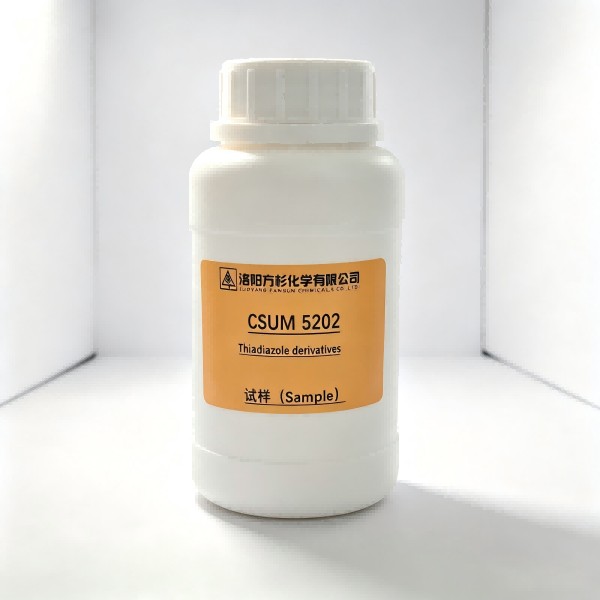
Where copper or yellow metal protection is relevant, assess the corrosion control system alongside thermal stability. Chemistry selection may include materials from the thiadiazole-based metal corrosion inhibitors range, but suitability still depends on the complete formulation and the metals present in the system.
A Practical Validation Procedure Before Product Selection
The recommended approach is to define the operating boundary first and then test the formulation against it. This is more useful than asking for a generic “high temperature” product recommendation. The procedure below fits formulators evaluating a new blend and industrial buyers qualifying an alternative lubricant.
- Map the actual duty cycle. Record the normal operating temperature, highest known temperature periods, run time, shutdown pattern, oil circulation route, reservoir conditions, and expected drain or top up practice. Do not rely only on a catalog equipment rating.
- Identify the dominant failure concern. Decide whether the primary risk is oxidation, viscosity change, deposits, wear, friction instability, corrosion, foam, or a combination. This decision determines which tests deserve priority.
- Define the base oil and component constraints. Confirm the base oil type, existing additive system, seal materials, metals, and any process fluid contact. A package that performs in one base oil system may require compatibility review in another.
- Create a control formulation. Use the current approved formulation or lubricant as a reference. Compare samples under the same blending, storage, and test conditions. Without a control, a disappointing result cannot be assigned confidently to heat exposure.
- Run staged thermal stability testing. Evaluate fresh and aged samples using conditions that represent the duty cycle. Include oxidation related changes, viscosity behavior, deposits where relevant, corrosion protection, and tribological testing where load or friction is a concern.
- Review condition after exposure. Compare the results to the acceptance criteria set before testing. Record changes in appearance, viscosity, friction response, wear indication, and corrosion behavior rather than relying on a single pass fail statement.
- Conduct a controlled field trial if laboratory evidence supports it. Monitor operating conditions and used oil trends. Do not extend drain intervals simply because an alternative formulation passes an initial screen.
This procedure is best suited to buyers with access to formulation data and used oil information. It is less useful when neither the equipment duty nor the existing lubricant composition can be identified. In that situation, obtain basic operating data first; otherwise, a technical recommendation will rest on assumptions.
Selection Questions That Change the Buying Decision
Procurement teams often request a product specification before the operating requirements have been fully stated. That can lead to a comparison based on price per kilogram rather than suitability in service. A lower initial formulation cost may not be meaningful if the resulting oil requires shorter drain intervals, produces more deposits, or demands extra maintenance control.
- What is the highest sustained and intermittent heat exposure? This affects whether the supplier should recommend a standard formulation, a heat focused option, or further testing. It does not by itself determine suitability because air contact and residence time also matter.
- How long does oil remain in the hot zone? This affects oxidation risk and replenishment planning. It matters less in a system with rapid cooling and frequent oil turnover.
- Is the system open to air or prone to entrainment? This affects how strongly oxygen exposure should influence the evaluation. It may be secondary in a tightly controlled system with minimal air contact.
- Which metals and seals contact the lubricant? This affects corrosion inhibitor selection and compatibility assessment. It does not replace assessment of water ingress or external contamination.
- What proof is required before release? This determines whether screening tests, formulation review, field monitoring, or a staged qualification plan is necessary.
- What is the maintenance response if warning signals appear? This determines whether a package can be supported by monitoring and timely oil changes, or whether the underlying formulation needs adjustment.
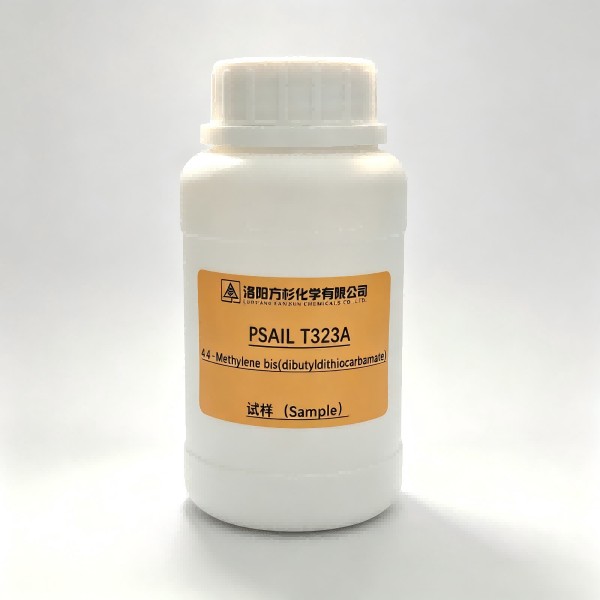
Luoyang Fangshan Chemical Co., Ltd. can support this evaluation with additive components and custom blends rather than forcing a fixed minimum purchase volume. There is no MOQ stated for supply, which can help buyers arrange a controlled qualification quantity before committing to a larger formulation program. Samples can be sent within three days, while bulk goods can be sent within seven days, subject to the stated company capability and the requirements confirmed for the order.
Our production capacity for functional chemicals exceeds 10,000 tons, and our management systems include ISO 9001:2015, ISO 45001:2018, and ISO 14001:2015. These facts support supplier due diligence, but they do not prove that any particular formulation will meet a specific heat duty. Product approval should still follow compatibility review and validation testing.
For a broader component review, consult our professional lubricant additive manufacturer resources when comparing individual functional materials with a finished package approach. Where friction control is part of the concern, the selection may also require review of organic molybdenum chemistry, antiwear chemistry, and the full formulation balance rather than an isolated additive choice.
Warning Signals and Responses During Field Qualification
A field trial should have defined warning signals before the oil is put into service. The purpose is not to predict failure from one measurement. It is to identify a trend early enough to protect equipment and preserve useful evidence.
| Signal to monitor | Recommended response | What would change the assessment |
|---|---|---|
| Increasing operating temperature | Check cooling performance, loading, lubrication flow, and local hot zones before changing the formulation. | Evidence that temperature rise is caused by mechanical fault rather than oil condition. |
| Unexpected oil appearance change | Retain a sample, compare with fresh oil, and inspect contamination sources. | Confirmation of water, process fluid, or foreign oil ingress. |
| Wear or friction concern | Review lubricant condition together with load, alignment, filtration, and relevant SRV screening data. | Mechanical inspection showing a component defect or operating overload. |
| Deposit formation | Check thermal history, oxidation condition, circulation areas, and the timing of top up additions. | Evidence that deposits originated from prior service residue or incompatible mixing. |
The central uncertainty remains equipment specific exposure. Without measured temperature history, residence time, air contact conditions, and used oil data, no supplier can responsibly define a universal service boundary. The evidence that would justify a different decision is clear: controlled test results, representative field monitoring, confirmed contamination findings, or proof that a mechanical condition is the primary cause.
Request a sample and share your duty cycle data for formulation selection advice and thermal validation planning.
 WhatsApp
 Email
 +8616638861155