Amine-Neutralized Hexyl Phosphate Blend FAQs for Practical Trial Planning
Can an amine-neutralized phosphate additive be moved directly from a supplier sample into a water-based lubricant or metalworking fluid? Not safely without checking water quality, pH behavior, foam, metal compatibility, and the acid-number position of the finished blend.
Amine-neutralized hexyl phosphate is generally evaluated as a phosphorus-containing anti-wear and boundary-lubricity component whose blend behavior is shaped by its neutralization state and the complete formulation around it. For technical buyers, the first task is not to assume a universal dosage. It is to define the base fluid, dilution water, target metals, operating conditions, and acceptance tests before making a pilot batch.
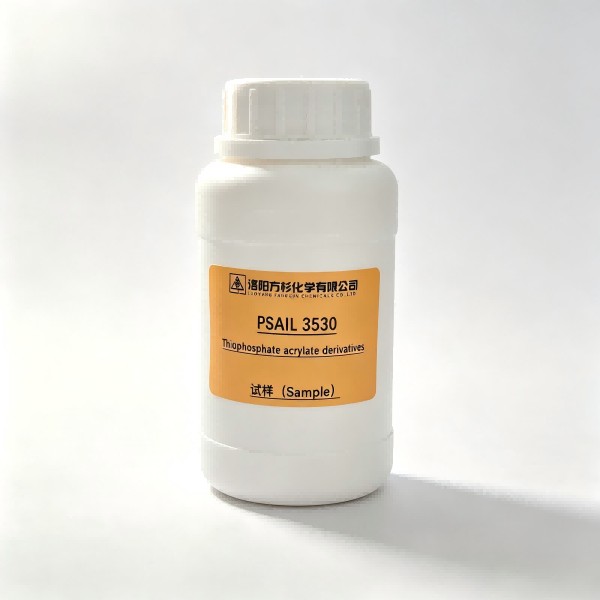
This FAQ focuses on the questions that determine whether a sample trial should proceed, what to measure, and what results require reformulation rather than a simple dosage adjustment. Luoyang Fangshan Chemical Co., Ltd. supplies lubricant additive components and additive packages, with no stated minimum order quantity. That can help formulators request a trial quantity suited to controlled lab validation rather than committing to a production-scale purchase before compatibility is established.
Start the trial by defining the fluid system and failure mode
Answer: Define the application first: soluble metalworking fluid, semi-synthetic fluid, synthetic aqueous fluid, industrial lubricant, or another system. The same additive can show different solubility, foam, corrosion, and film-forming behavior in each. A trial that starts with only “improve lubricity” is too broad to produce a decision-ready result.
The most useful opening question is: what failure are you trying to correct? Excessive friction, weak extreme-pressure behavior, large wear scars, poor load-carrying results, oxidation concerns, staining, or corrosion each call for a different evaluation plan. A phosphate amine salt may contribute boundary-film performance, but it is not automatically the only component needed to solve a severe-load or corrosion issue.
| Trial input to define | Why it changes the result | Best use case | Limit or caution |
|---|---|---|---|
| Base oil or aqueous base | Controls solubility, hydrolysis exposure, and additive interactions | Any new formulation trial | A result in one base does not prove compatibility in another |
| Target metal and process | Steel, cast iron, aluminum, copper alloys, and mixed-metal systems can respond differently | Metalworking fluids and industrial lubricants contacting mixed metallurgy | Testing only steel can miss yellow-metal or aluminum concerns |
| Water source | Hardness salts can alter physical stability and deposit tendency | Water-dilutable concentrates and in-use emulsions | Deionized-water results may not represent plant make-up water |
| Primary performance gap | Sets the right screening test and companion additives | Wear, friction, load, corrosion, or foam correction | One test result should not replace a full release panel |
| Target pH and acid number | Shows whether the additive shifts formulation balance | Systems controlled by pH or acid-value specifications | Neither result alone proves field stability |
For example, if the current fluid has weak lubricity but acceptable corrosion protection, begin with a comparative blend containing the proposed component and keep the existing corrosion inhibitor system unchanged. If corrosion performance is already marginal, do not change the phosphate component and inhibitor package at the same time. You will not know which change caused the result.
For broader selection work, review phosphate amine salt EP/AW additives alongside the intended fluid type. This helps separate an additive-component discussion from a finished-package decision.
Answers formulation-critical questions on water hardness, treat rate, foam, corrosion testing, and acid-number interpretation
Does water hardness matter in an aqueous blend?
Yes. Water hardness must be tested with the actual make-up water or with laboratory water adjusted to represent it. Calcium and magnesium salts can change emulsion appearance, create haze or separation, affect reserve alkalinity, and alter the behavior of surfactants, soaps, corrosion inhibitors, and phosphate-containing materials.
The practical conclusion is simple: screen the concentrate first, then screen its intended dilution using representative water. This approach fits water-based metalworking fluids, cleaners, and aqueous processing fluids. It does not apply in the same way to a fully oil-soluble industrial lubricant, although water contamination can still affect that lubricant during service.
Record appearance immediately after mixing and after the stability period specified in your internal method. Check for sediment, surface oil, gel particles, haze, viscosity shift, and changes after temperature exposure if temperature cycling is part of your normal release procedure. Do not assume a clear concentrate guarantees a stable diluted emulsion.
What treat rate should be used for the first blend?
Use a controlled dose-response ladder rather than one guessed dosage. The supplier’s product specification, the active content, the neutralizing amine, the base-fluid composition, and the desired performance all affect the starting point. Without those inputs, publishing a universal rate would be misleading.
Prepare an untreated control and several blends that step upward from a deliberately low addition to the highest addition you are prepared to approve. Keep all other variables fixed. Measure the requested lubrication metric, foam, corrosion behavior, appearance, pH where relevant, and acid number where relevant. Plot performance against addition level instead of selecting the sample that merely gives the strongest single anti-wear result.
- Use a low addition first when the current formula is nearly acceptable and you are correcting a narrow friction or wear issue. This limits unnecessary effects on foam, acidity, and cost.
- Use a wider ladder when building a new formulation or replacing an existing phosphorus chemistry. It shows whether the performance curve levels off or whether side effects rise before the desired result is reached.
- Do not raise the level blindly when corrosion, foam, or emulsion stability declines. The correct action may be to adjust a companion inhibitor, defoamer, emulsifier, or pH-control approach rather than adding more of the same material.
This method is suitable for development screening, not for replacing plant-scale validation. Mixing energy, addition order, tank cleanliness, and local water quality can change the production result.
Will it increase foam?
It may, depending on the formulation. Foam is not determined by the phosphate component alone. Surfactant package, water hardness, mixing shear, entrained air, temperature, contamination, and defoamer compatibility all matter. In aqueous fluids, the same blend can look acceptable in a low-shear beaker and foam excessively in a recirculating system.
Test the candidate blend under the procedure that resembles service conditions. Measure both initial foam and foam break time. Also inspect whether a defoamer resolves the foam without causing surface oil, emulsion instability, or loss of lubrication. A quick defoamer fix that destabilizes the fluid is not a valid formulation solution.
For formulations where aqueous performance is central, compare the additive with related water-based metalworking additives rather than borrowing assumptions from oil-only systems.
How should corrosion testing be planned?
Test the metals that the finished fluid will contact, at the intended use dilution and with representative water. A phosphate amine component should not be assumed to provide complete corrosion protection on its own. Corrosion response depends on the total system, including pH, water quality, inhibitor chemistry, metal fines, and the operating environment.
Use your established customer, industry, or internal corrosion method. Include the untreated base formula as a control, the proposed blend, and the current approved formulation where one exists. Evaluate steel and cast iron when they are relevant, then add aluminum and copper-containing alloys if the process includes them. Document discoloration as well as visible rust because a visually clean steel result does not answer a yellow-metal compatibility question.
If additional protection is needed, formulate it as a system decision. Options can include thiadiazole-based metal corrosion inhibitors for applicable metal-protection needs. Compatibility still requires testing; inhibitor selection cannot be made from additive family alone.
What does an acid-number change mean?
An acid-number change is a diagnostic signal, not a stand-alone pass or fail result. It can indicate the contribution of acidic phosphate species, neutralization balance, blend interactions, oxidation or hydrolysis during aging, or a change caused by another raw material. Interpret it against the formula’s target range and against a retained control sample.
For an amine-neutralized product, an acid-number result must be considered together with pH in aqueous systems, appearance, corrosion results, and storage behavior. A lower acid number is not automatically better if it comes with poor corrosion protection or reduced lubricity. A higher acid number is not automatically a failure if the fluid remains within its specified target and passes stability and corrosion testing.
When acid number shifts unexpectedly, first check raw-material identity, addition order, water contamination, mixing temperature, and sample handling. Then compare fresh and aged samples. Do not correct the number with extra amine before identifying whether the issue is incomplete dispersion, water exposure, aging, or a mistaken raw-material charge.
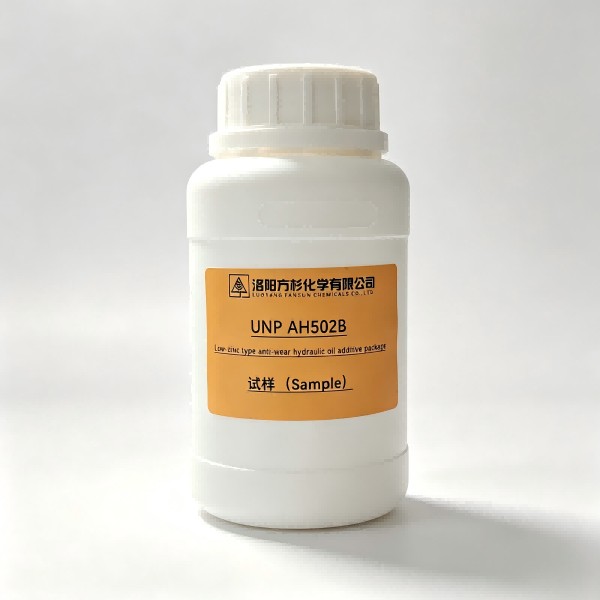
Use a staged blend procedure instead of a single-pass sample test
Recommendation: Run the work in stages so that physical compatibility is proven before expensive performance testing. This is faster and makes failures easier to diagnose. It is especially suitable when a buyer is evaluating an unfamiliar additive component before requesting a larger sample or a finished additive package.
- Collect the formulation baseline. List base fluid, existing additive package, water source, target metals, dilution ratio where applicable, test methods, and current failure mode.
- Request product documentation. Confirm the product identity, handling guidance, and the parameters needed for the intended blend. Do not substitute a generic phosphate ester specification for an amine-neutralized material.
- Prepare a control batch. Use the current formula or a base formula without the candidate component. Keep a retained sample for every comparison.
- Add the candidate under repeatable conditions. Record addition sequence, mixing time, mixing intensity, and batch temperature. These notes are needed if the first result cannot be reproduced.
- Check immediate compatibility. Inspect clarity or emulsion condition, separation, sediment, odor changes, viscosity behavior, and any visible reaction.
- Run the initial chemistry checks. Measure the parameters your formulation controls, such as pH and acid number, before moving to wear, friction, foam, or corrosion work.
- Screen functional performance. Use the test that reflects the stated problem. If the concern is boundary lubrication, compare against the control under the same conditions.
- Age and re-test. Repeat the key observations after the stability period required by your internal practice. Fresh performance alone is not enough for release.
- Confirm at larger scale. Only after the lab blend is acceptable should you assess production mixing, packaging compatibility, and plant water variation.
This procedure does not replace customer-specific qualification requirements. It gives formulators a traceable way to determine which variable changed and whether the candidate belongs in the formula.
Know when a single component is the wrong purchasing choice
Choose a single component when your technical team controls the full formula and needs to tune lubricity, anti-wear response, or compatibility one variable at a time. This fits a development lab that already has its own emulsifier, corrosion inhibitor, defoamer, and pH-control system.
Consider an additive package when several functions need coordinated adjustment, such as wear control, corrosion resistance, oxidation control, and foam management. This fits a buyer who wants to reduce the number of raw materials and the formulation variables that must be reconciled internally. It does not remove the need for finished-fluid testing, especially in variable water conditions.
| Buying route | Best suited to | Main advantage | What still requires validation |
|---|---|---|---|
| Single phosphate component | Formula optimization and targeted replacement work | More control over individual formulation variables | Interactions with existing surfactants, inhibitors, defoamers, and base fluid |
| Multiple individual additives | Custom fluids with specialized metallurgy or process demands | Maximum formulation flexibility | Higher screening workload and more interaction risk |
| Pre-designed additive package | Buyers seeking a more integrated route | Fewer components to manage in the initial formula | Compatibility with local base stocks, water, and customer tests |
Fangshan Chemical has produced functional chemicals since 2017 and states production capacity exceeding 10,000 tons. Its R&D team includes more than 30 PhD and master’s degree holders. These are useful sourcing signals when a project may progress from a lab sample to repeat supply, but they are not a substitute for application-specific qualification.
For a package-based route, review high-performance lubricant additive packages and compare the package scope with the functions already present in your formulation.
Avoid the blend mistakes that hide the real result
- Testing only with deionized water. This can hide hardness-related instability. Use representative plant water before approving the formula.
- Changing several additives at once. The result becomes impossible to interpret. Change one performance variable at a time during early screening.
- Using friction or wear data as the only release criterion. A positive tribology result can still accompany foam, corrosion, separation, or acid-number drift.
- Comparing samples with different mixing histories. Mixing order and shear can affect dispersion and foam. Record them for every batch.
- Neutralizing an acid-number shift immediately. First identify the cause. Extra amine may obscure hydrolysis, raw-material error, or aging behavior.
- Testing the concentrate but not the use dilution. Many aqueous-fluid issues appear only after dilution with real water.
- Assuming one corrosion test covers all alloys. Select test coupons and methods that match the metals in the actual process.
Plan the sample request around the information still missing
Before requesting a sample, send the technical details that control blend behavior: base-fluid type, whether the fluid is oil-based or aqueous, current additive list, intended water source, target metals, service temperature range, primary performance gap, and required test methods. This allows a supplier to provide selection guidance without guessing at the formulation.
Luoyang Fangshan Chemical Co., Ltd. states that samples can be dispatched within 3 days and bulk goods within 7 days, with no MOQ. Its quality-management, occupational-health-and-safety, and environmental-management systems are certified to ISO 9001:2015, ISO 45001:2018, and ISO 14001:2015. If a product-quality issue occurs, return arrangements are handled through consultation. These are commercial and quality-system terms; the technical pass decision should still rest on your documented trial results.
Request a sample and specification review with your base-fluid, water-hardness, foam, corrosion, and acid-number test requirements.
 WhatsApp
 Email
 +8616638861155