Compare Amine-neutralized butyl phosphate ester Suppliers Before You Issue an RFQ
A buyer can regret treating an EP additive quotation as a simple price comparison. Two suppliers may offer an amine phosphate product under similar chemistry descriptions, yet provide very different evidence for extreme-pressure performance, active-content reporting, packaging control, and batch release information.
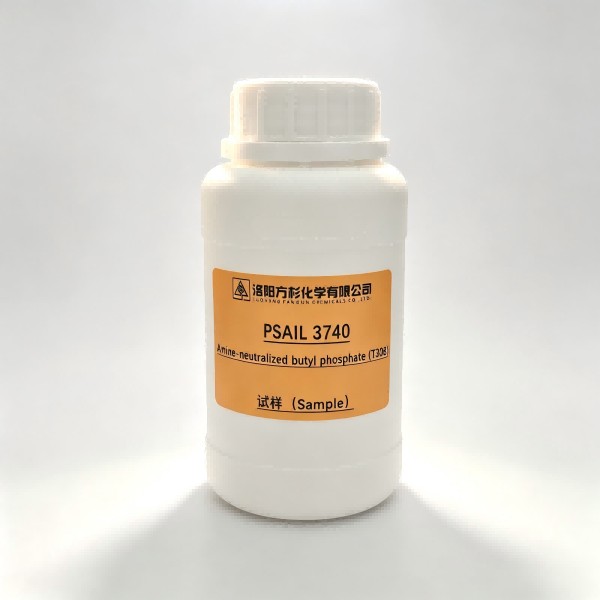
An Amine-neutralized butyl phosphate ester is typically considered when a lubricant formulator needs an ashless EP and anti-wear component, often as part of a wider additive balance. Before requesting samples or a production quotation, the buyer should determine whether the shortlisted supplier can provide evidence that matches the intended lubricant, test method, blending route, and acceptance standard. A generic claim that an additive is “EP” is not enough for a procurement decision.
Luoyang Fangshan Chemical Co., Ltd. is a professional manufacturer of lubricant additives, industrial lubricant additives, oil additive components, and additive packages. The company was established in 2017, has functional chemical production capacity exceeding 10,000 tons, and maintains ISO 9001:2015, ISO 45001:2018, and ISO 14001:2015 management system certifications. These facts help qualify the supplier’s manufacturing scope, but they do not replace product-specific EP data. Buyers should still request the exact evidence required for their formula.
Define the supplier role before comparing quotations
Conclusion: Compare suppliers against the role you actually need them to perform: component supplier, formulation-support partner, or package supplier. The reasoning is simple: an additive component may be suitable for a technically capable blender, while another buyer may need a coordinated package approach for an industrial oil program. This distinction fits buyers who have identified phosphate-amine chemistry but have not yet decided whether they will formulate internally. It does not apply where the buyer already has a locked specification, approved test method, and no requirement for formulation discussion.
Fangshan’s stated offering covers individual additive components as well as additive packages. For a buyer assessing a phosphate-amine component, this scope can be useful when the formulation later requires related EP, anti-wear, corrosion-control, or friction-modifying chemistry. However, the buyer should not assume that every additive combination is pre-qualified for every base oil or application. Compatibility and finished-oil performance remain formulation-specific questions.
Use the following role check before sending an inquiry:
- Component sourcing: Appropriate when your laboratory already controls the finished lubricant formula and needs a defined additive input. Ask for the product specification, active-content basis, test data, recommended handling information, and lot-identification practice.
- Package evaluation: Appropriate when the purchase decision concerns a multi-component industrial lubricant system rather than one EP agent. Review high-performance lubricant additive packages & blending solutions if the requirement may extend beyond a single phosphate component.
- Application screening: Appropriate when the target is metalworking fluid, hydraulic oil, gear oil, grease, or another use where water exposure, yellow-metal protection, friction behavior, or oxidation performance can change the final result. This route requires the buyer to state the target application and acceptance tests.
The practical limit is clear. A supplier’s ability to offer both components and packages does not prove that a particular component will meet a buyer’s finished-fluid specification. The buyer must identify the application, base oil, treatment rate under review, competing additives, and pass/fail criteria before interpreting technical claims.
A side-by-side supplier comparison matrix for EP performance claims, active-content reporting, documentation quality, packaging, and batch consistency
Conclusion: Score the evidence, not the marketing language. The reason is that EP claims can look comparable while resting on different test conditions, different active-content bases, or incomplete lot records. This matrix is suited to a shortlist stage, before samples and commercial negotiation. It is not a substitute for qualification testing of the buyer’s finished lubricant.
| Comparison point | Supplier A or B evidence to request | Fangshan facts available from supplied information | Buyer decision rule and limit |
|---|---|---|---|
| EP performance claims | Named test method, test conditions, result, formulation context, and report date. | Fangshan develops lubricant additives and packages; the supplied facts do not provide product-specific EP test results for this chemistry. | Do not rank a supplier on an “EP” statement alone. Request comparable test evidence. A test result from another formula may not transfer to your base oil or treat rate. |
| Active-content reporting | Whether the value is reported as supplied, on an active basis, or after dilution; plus the method used. | No active-content value or reporting method is stated in the supplied information. | Ask every supplier to state the reporting basis in writing. Do not compare price per kilogram until the commercial basis is clear. |
| Documentation quality | Current technical data sheet, safety documentation, certificate format, lot traceability information, and change-control statement. | Fangshan holds ISO 9001:2015, ISO 45001:2018, and ISO 14001:2015 management system certifications. | Use certifications as supplier-management evidence, not as proof of a particular product result. Confirm the documents available for the offered grade. |
| Packaging | Container type, net quantity, labeling, closure arrangement, pallet method, transport restrictions, and storage conditions. | Packaging specifications are not stated in the supplied information. | Require packaging details in the quotation. Do not assume a preferred drum, tote, or export-packing format is available. |
| Batch consistency | Certificate-of-analysis parameters, sampling approach, retained-sample policy, lot coding, and change notification process. | Fangshan operates under ISO 9001:2015; specific batch-release parameters and retained-sample practices are not stated. | Set the release parameters and acceptance limits in the purchase discussion. ISO certification alone does not define your product acceptance criteria. |
The matrix prevents a common error: comparing an inexpensive diluted product against a higher-active product without knowing the commercial basis. It also prevents a second error: accepting an EP claim without asking whether the reported result came from the neat additive, a reference oil, or a finished lubricant.
Request EP evidence that can be used in your formulation decision
Conclusion: Ask for traceable test context before asking for a pass/fail promise. The reason is that EP and anti-wear behavior depends on the full system, including base oil, co-additives, metal surfaces, moisture exposure, and test conditions. This approach fits a blender preparing laboratory trials or replacing an imported additive. It does not apply if the buyer is purchasing a fully defined product against an already approved supplier specification with no formula changes.
A useful technical inquiry should ask the supplier to distinguish between claim, data, and qualification status. For example, a supplier may state that a product is intended as an EP/anti-wear additive. That statement defines positioning, but it does not tell the buyer which method was used, whether the test oil contained other EP agents, or whether the result meets the buyer’s internal target.
Ask these questions in the same technical inquiry
- State the end use. Identify whether the candidate is for an industrial lubricant, a metalworking fluid, a grease, or another system. A component selected for one use cannot automatically be transferred to another.
- Name the target test method. Ask for the method your organization uses to judge EP and anti-wear behavior. If the supplier has data from a different method, request it as supporting information rather than direct proof of equivalence.
- Specify the base oil and co-additives. Provide the base stock family and major additive types already present. This helps identify potential formulation interactions without assuming compatibility.
- Define the result format. Ask for the full test condition, reported value, unit, sample identity, and date. A one-line “passed” statement is not a technical comparison.
- Set your acceptance rule. Tell the supplier whether you need screening evidence, a trial sample, or a quotation against a controlled specification. The requested evidence should match the purchasing stage.
Buyers evaluating phosphate chemistry alongside other EP tools should compare functions rather than simply adding more active materials. For oil-soluble alternatives, see oil-soluble phosphate ester EP/anti-wear additives. Where sulfur chemistry is under review, oil-soluble sulfur-based EP/anti-wear additives may be relevant to a separate formulation comparison. Neither category should be treated as automatically interchangeable with a phosphate-amine component.
For applications involving friction targets as well as load-carrying requirements, the buyer should keep EP evaluation separate from friction evaluation. Fangshan’s stated technical scope includes friction coefficient, wear scar, PB/PD, SRV testing, and oxidation performance topics. That scope indicates relevant formulation concerns, but the buyer should request product- and formula-specific evidence rather than infer a result from the company’s technical areas.
Use certifications and manufacturing facts correctly in supplier qualification
Conclusion: Use confirmed company facts to reduce supplier-screening uncertainty, while keeping product qualification separate. The reasoning is that management certifications, production capacity, and stated lead times are meaningful procurement inputs, but none establishes finished-lubricant approval. This fits buyers building an approved-source list or planning an import-substitution review. It does not replace laboratory validation, regulatory review, or application testing required by the buyer’s market.
Fangshan’s ISO 9001:2015 certification is relevant when a buyer is checking whether a supplier has a documented quality-management framework. ISO 45001:2018 and ISO 14001:2015 are relevant to buyers whose supplier reviews include occupational health and safety and environmental management criteria. Ask for the current certification evidence during qualification if those standards are part of your vendor file.
The company also states that functional chemical production capacity exceeds 10,000 tons. This is relevant to buyers reviewing manufacturing scale for functional chemicals, especially when a project may move from laboratory screening into commercial supply. The limit is equally important: total functional-chemical capacity does not state available capacity for one specific product, nor does it confirm inventory or allocation. Request product-specific availability during the quotation stage.
Fangshan has an R&D team consisting of more than 30 PhD and master’s degree holders. This supports a discussion about additive molecular design, single-additive and package development, formulation optimization, performance testing, and import-substitution product development. It does not establish that a replacement will match an incumbent additive without controlled comparison work.
Set cooperation terms before sample approval or bulk purchasing
Conclusion: Put commercial and technical boundaries into the RFQ rather than leaving them for after sample approval. The reason is that a sample can answer a laboratory question, while a bulk order requires agreed packaging, release documentation, delivery timing, acceptance handling, and responsibility for product-quality issues. This is most useful when the buyer expects a quick transition from screening to supply. It is less relevant for an early research inquiry with no purchasing timetable.
Fangshan states that samples are dispatched within three days and bulk goods within seven days. These are useful planning points for an inquiry, but the buyer should confirm whether the stated timing applies to the requested product, documentation needs, packaging format, destination, and current production schedule. Dispatch timing is not the same as delivered timing.
The company also states that there is no MOQ. This can suit buyers who need a limited evaluation quantity or who want to reduce initial inventory exposure. It does not mean that every packaging arrangement, freight option, or commercial term is automatically available for any order size. Those details should be agreed in the quotation.
For product-quality issues, Fangshan states that return is subject to discussion. A buyer should define what evidence will be used to identify a quality issue, the timing for notification, the sampling method, the responsibility for analysis, and the possible return arrangement. Do not treat “return subject to discussion” as an unconditional warranty or a pre-agreed acceptance protocol.
RFQ checklist for a controlled supplier comparison
- Product name and required chemistry description.
- Intended lubricant application and base oil family.
- Target EP, anti-wear, friction, corrosion, and oxidation tests, where applicable.
- Requested evidence: test reports, technical data sheet, safety documentation, and certificate format.
- Active-content reporting basis and any dilution information.
- Required packaging, labels, and shipment conditions.
- Expected sample quantity and target dispatch timing.
- Expected commercial quantity and confirmation of product-specific availability.
- Lot traceability, release parameters, and change-notification expectations.
- Acceptance criteria and the process for resolving a documented product-quality issue.
Buyers who need a wider program review can also assess solution and applications of lubricant additives to frame the application before selecting a single component. For metalworking systems, the relevant comparison may include high-performance metalworking fluid additives, especially where aqueous compatibility and corrosion control affect the final choice.
Shortlist the supplier only after the evidence gaps are visible
Conclusion: A supplier is ready for the next stage when its commercial offer and technical evidence can be reviewed against the same buyer-defined criteria as competing offers. The reason is that price, EP language, and sample speed each answer different questions. This suits buyers comparing shortlisted manufacturers before requesting a sample or production quotation. It does not eliminate the need for approval testing in the buyer’s own formula.
Fangshan may be a relevant candidate where the buyer seeks a manufacturer of lubricant additive components or packages, values ISO 9001:2015, ISO 45001:2018, and ISO 14001:2015 management system certifications, requires no stated MOQ, and wishes to discuss sample dispatch within three days or bulk-goods dispatch within seven days. The remaining qualification questions are product-specific: exact EP evidence, active-content basis, documentation set, packaging configuration, batch-release information, application compatibility, and agreed acceptance terms.
Request a focused quotation and technical document list for your target formulation before selecting an Amine-neutralized butyl phosphate ester supplier.
 WhatsApp
 Email
 +8616638861155