 Eric Lee, Sales Engineer
Eric has rich experience selling lubricant single additives and additive packages. He masters additive application for hydraulic oil, gear oil and grease. He delivers product selection and import substitution proposals, supports global clients and resolves formula matching inquiries efficiently.
Selecting Extreme Pressure (EP) Additives Involves More Than Just Load Capacity
When formulators evaluate extreme pressure (EP) additives, the first data points reviewed are often from standard load-carrying capacity tests like Four-Ball EP (ASTM D2783) or Timken (ASTM D2782). A high weld point or OK load value seems like a clear indicator of performance. However, relying on these numbers alone can lead to significant in-field problems, including component corrosion, premature additive depletion, or complete formulation incompatibility. A high load test result doesn't guarantee success if the additive's chemistry is wrong for the application's temperature, metallurgy, and other formulation components.
The real challenge is understanding the chemical trade-offs. An additive that performs exceptionally well under one set of high-pressure conditions might be corrosive or ineffective in another. This requires looking beyond the spec sheet and analyzing how different EP chemistries behave in the finished lubricant. Making the right choice prevents costly issues like failing to meet PB/PD standards, excessive wear, and ultimately, having to negotiate product returns due to quality problems.
Diagnosing Formulation Failures Linked to EP Additive Choice
When a finished lubricant fails qualification testing or performs poorly in the field, the root cause can often be traced back to a mismatch between the EP agent and the operational demands. Simply increasing the treat rate is rarely the solution and can often worsen issues like corrosion or deposit formation. Here are some common failure modes and their likely connection to EP additive selection.
Common EP Formulation Problems & Potential Causes
- Failure: High Wear Scar (SRV or Four-Ball Wear Test)
Potential Cause: The chosen additive's activation temperature is too high for the application. The chemical reaction needed to form the protective sacrificial layer isn't being triggered under the system's normal operating conditions. The EP agent is present but remains dormant, offering little protection beyond the base oil's film strength. - Failure: Inconsistent or Low Timken OK Load / Last Non-Seizure Load (LNSL)
Potential Cause: The additive has poor solubility or stability in the selected base oil, causing it to drop out of the solution over time or when temperatures fluctuate. Our ISO 9001:2015 certified production process ensures consistent solubility profiles, but compatibility with the final base stock must always be verified. - Failure: Staining or Corrosion of Yellow Metals (ASTM D130)
Potential Cause: An overly "active" sulfur-based additive was used in a system containing bronze, brass, or copper components (e.g., worm gears, synchronizers). The sulfur chemistry, while excellent for steel-on-steel protection, is aggressively attacking the softer yellow metals. - Failure: Additive Package Instability (Haze, Sediment)
Potential Cause: The EP additive is chemically antagonistic with another component in the formulation, such as certain rust inhibitors or detergents. For example, some phosphorus-based additives can compete with or hinder the function of overbased calcium sulfonates, leading to instability.
Effectively diagnosing these issues requires a deeper understanding of how different chemical families function. This is where our R&D team, with over 30 PhD and master’s degree holders, focuses its efforts—on creating additives that solve these complex interaction challenges and serve as effective import-substitute products.
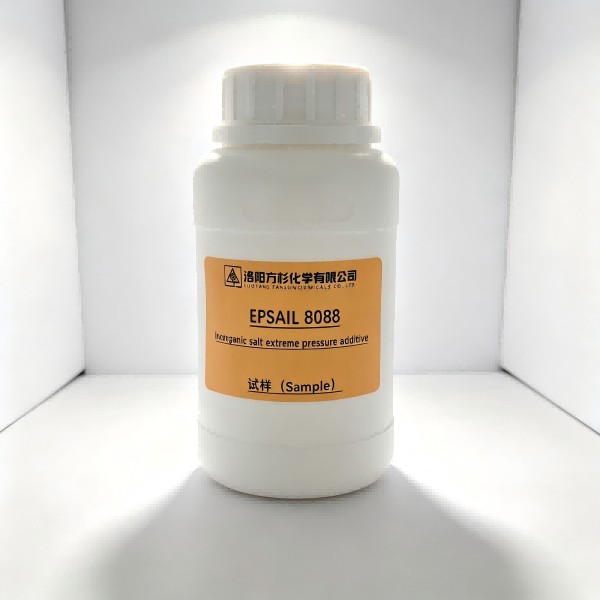
Comparing EP Chemistries: Activation, Corrosion, and Formulation Fit
The four primary families of EP additives—sulfur-based, phosphorus-based, chlorinated, and overbased sulfonates—all work by forming a protective film on metal surfaces. However, *how* and *when* they form that film, and what side effects they produce, differ significantly. Focusing only on load-test results ignores these critical distinctions that determine real-world performance.
The table below contrasts these chemistries not by their maximum load capacity, but by the factors that matter most during formulation.
| Characteristic | Sulfur-Based | Phosphorus-Based | Chlorinated | Overbased Sulfonates |
|---|---|---|---|---|
| Activation Behavior | Temperature-activated. Requires heat from friction to react and form an iron sulfide layer. | Primarily temperature-activated, forming an iron phosphate film. Often works at lower temps than sulfur. | Activates at relatively low temperatures to form an iron chloride film. Very effective quickly. | Forms a physical barrier of calcium carbonate within a sulfonate shell. Less reliant on chemical reaction with the surface. |
| Activation Temp. | Medium to High (Varies by S-S bond length and "activity"). | Low to Medium. Often used for anti-wear (AW) protection as well as moderate EP. | Low. Can be highly effective in slow-speed, high-pressure applications. | N/A (Primarily a physical mechanism). Effective across a wide temperature range. |
| Corrosion Risk | Can be high for yellow metals (copper, bronze), depending on sulfur "activity." Requires careful selection. | Generally low corrosion risk for both ferrous and non-ferrous metals. | High risk of rust (iron chloride is hygroscopic) and disposal concerns due to potential dioxin formation at high temps. | Low. Also provides excellent rust inhibition and detergency as a secondary benefit. |
| Best Formulation Fit | Industrial gear oils, axle oils (often with P), metal cutting fluids. Explore options like our oil-soluble sulfur-based EP/AW additives. | Hydraulic fluids, engine oils, turbine oils, and moderate-duty gear oils. Often found in oil-soluble phosphate ester EP/AW additives. | Heavy-duty metal forming/drawing operations. Use is declining due to environmental regulations. | Greases, rust preventives, and metalworking fluids where detergency and anti-rust are also needed. |
Matching EP Additive Chemistry to Specific Industrial Applications
Theory is useful, but the right choice always depends on the target application. A powerful EP agent for a hypoid gear would be destructive in a hydraulic system with bronze pump components. Here’s how to approach selection for common industrial scenarios.
For Heavy-Duty Industrial Gearboxes (Steel-on-Steel)
These systems experience both sliding and rolling contact under high loads, generating significant heat. This is the ideal environment for a synergistic sulfur-phosphorus (S-P) system.
- Primary Chemistry: Sulfur-based additives. The high temperatures at the gear tooth interface activate the sulfur to form a durable iron sulfide film that prevents welding.
- Supporting Chemistry: Phosphorus-based additives. These provide anti-wear protection during lower-temperature startup and shutdown phases, before the sulfur becomes fully active.
- Consideration: The "activity" of the sulfur is key. A highly active sulfur source provides maximum protection but can be corrosive if temperatures are too high or if yellow metals are present. It's a balancing act. This is where well-designed industrial gear oil additive packages & blending solutions become valuable.
For Hydraulic Systems
Hydraulic oils operate under high pressure but generally lower temperatures than gearboxes. The primary need is anti-wear protection, with EP as a secondary consideration for high-pressure vane or piston pumps.
- Primary Chemistry: Phosphorus-based additives, particularly Zinc Dithiophosphates (ZDDP) or ashless phosphate esters. They provide excellent anti-wear protection without being overly aggressive.
- Avoid: Active sulfur and chlorinated additives. They are generally too corrosive for the mixed metallurgy (steel, bronze, aluminum) found in hydraulic pumps and valves.
For Greases in High Shock-Load Environments
Grease formulation adds another layer of complexity, as the EP agent must be compatible with the thickener system (e.g., lithium, calcium, polyurea).
- Primary Chemistry: A mix of solids (graphite, MoS₂), sulfur-phosphorus chemistry, and/or overbased calcium sulfonates can be used. Overbased sulfonates are particularly effective as they also contribute to the grease's structure and provide inherent rust protection.
- Consideration: The EP additive's impact on the grease's mechanical stability (cone penetration) and oil bleed characteristics must be tested. Our range of specialized grease additives & ep/aw agents are designed for compatibility with common thickener types.
A Practical Checklist for Evaluating and Sampling EP Additives
Before committing to an EP additive, a structured evaluation process can save significant time and resources. This checklist helps ensure you are asking the right questions—both of your application and your potential supplier.
- Define the Full Operating Environment.
- What is the maximum sustained temperature?
- What are the peak pressures and is shock loading a factor?
- What are the gear/component materials (e.g., steel, bronze, cast iron)?
- Confirm Base Oil and Additive Compatibility.
- Is the EP additive soluble and stable in your target base oil (e.g., Group I, II, III, PAO, Ester)? Request solubility data.
- Are there known antagonisms with other additives in your package (e.g., specific detergents, corrosion inhibitors)?
- Review Performance Data Beyond Load Capacity.
- Request Copper Strip Corrosion (ASTM D130) data at relevant temperatures and times.
- Ask for oxidation stability test results (e.g., RPVOT) with the EP additive present.
- If available, review SRV or other tribometer data that shows friction and wear behavior over time.
- Verify Supplier Capability and Consistency.
- Does the supplier hold relevant quality certifications, such as ISO 9001 for quality management, ISO 14001 for environmental standards, and ISO 45001 for occupational health and safety?
- What are their standard lead times for samples and bulk orders? (We offer 3-day sample dispatch and 7-day dispatch for large orders).
- Do they have a Minimum Order Quantity (MOQ)? (Luoyang Fangshan Chemical has no MOQ).
- Can they provide technical support for formulation and troubleshooting? Be sure you are working with a professional lubricant additive manufacturer.
Using a systematic approach ensures that the selected EP additive not only passes a single lab test but also delivers sustained, reliable protection in its final application.
If you are facing challenges in selecting the right additive or are looking for a reliable import-substitute solution, contact our technical team to discuss your formulation requirements and request a sample.
 WhatsApp
 Email
 +8616638861155