A Friction Modifier Must Balance Torque Transfer and Fuel Economy
How can a lubricant reduce parasitic friction without reducing the traction needed to transmit torque? This is the central formulation question for product managers and lubricant blenders evaluating a friction modifier for driveline oils, automatic transmission fluids, limited-slip differential oils, and other systems with controlled-friction contacts.
The answer is not simply “use less friction.” Some contacts benefit from reduced sliding resistance because lower friction can support efficiency goals and limit heat generation. Other contacts depend on a defined friction response to engage smoothly, avoid shudder, transmit torque, or control differential behavior. A treatment that improves one target can impair another if it is used in the wrong fluid, at an unsuitable concentration, or without confirming compatibility with the rest of the additive system.
This is an evergreen formulation issue rather than a documented market trend. The supplied search insight shows that broad definitions and limited-slip differential noise are common discussion points, while the underlying trade-off between efficiency and traction receives less attention. That gap matters because blenders should not use a consumer-oriented noise solution as a substitute for an application-specific friction-control strategy.
Define the Contact Function Before Selecting the Additive Strategy
Conclusion: Start with the function of the contacting surfaces, not with a general claim of lower friction. The same additive direction cannot be assumed suitable across gears, wet clutches, synchronizers, limited-slip mechanisms, and bearings.
Reasoning: Friction is not one fixed value across a lubricant system. It changes with surface materials, load, temperature, speed, lubricant film condition, and the type of motion involved. A gear tooth operating mainly under elastohydrodynamic film conditions has a different requirement from a wet clutch that repeatedly moves through engagement. A limited-slip mechanism may also require enough controlled friction to manage torque bias while avoiding objectionable stick-slip behavior.
Best-fit scenario: Use a contact-function review when developing a new driveline fluid, substituting an imported additive component, or investigating an unexpected change in shift feel, noise, clutch engagement, or efficiency.
Limit: A contact-function review does not replace finished-fluid testing. It identifies what must be tested and which trade-offs need attention. It cannot predict final behavior from an additive name alone.
| Contact or system | Primary friction objective | Why lower friction may help | What can go wrong if friction falls too far |
|---|---|---|---|
| Gear meshes | Limit losses and control wear under operating conditions | Reduced sliding resistance may support mechanical efficiency | Focusing only on friction can overlook extreme-pressure, anti-wear, oxidation, and corrosion-control requirements |
| Wet clutch packs | Deliver stable engagement and torque capacity | Controlled friction behavior can reduce heat and improve engagement consistency | Low friction may reduce torque capacity, increase slip, or contribute to shudder |
| Limited-slip differential mechanisms | Control stick-slip and preserve intended torque-transfer behavior | A suitable treatment may reduce chatter or noise associated with unstable friction | Excessive friction reduction can alter differential response or reduce functional locking action |
| Synchronizer contacts | Maintain predictable engagement characteristics | Appropriate lubrication can reduce unwanted wear and heat | Incorrect friction behavior can affect engagement feel and shift performance |
The table is a formulation screen, not a universal property map. For example, a fluid serving both gear meshes and limited-slip components needs a balanced package. It may require anti-wear or extreme-pressure support alongside friction control, rather than a single-component decision made in isolation.
Compare Low-Friction Efficiency Targets With Traction and Torque-Transfer Requirements Across Driveline Applications
Conclusion: Treat efficiency and torque transfer as competing design targets whenever a fluid contacts friction-dependent hardware. The correct choice is the one that meets the application’s required friction curve, not the one with the lowest possible friction.
Reasoning: Lower sliding friction may reduce energy losses in some interfaces. Yet torque transmission depends on friction at other interfaces. In wet clutches and differential friction packs, the lubricant must allow predictable engagement rather than simply minimizing resistance. This distinction is especially relevant when a product specification groups multiple functional demands into a single fluid.
Best-fit scenario: Apply this comparison when a product team is making fuel-economy claims, reformulating for improved efficiency, or replacing a component in a transmission or axle fluid.
Limit: The relative priority cannot be determined from the lubricant’s viscosity grade, base oil type, or additive family alone. Hardware design and OEM performance requirements remain controlling factors.
| Decision target | Low-friction efficiency direction | Traction and torque-transfer direction | Buyer implication |
|---|---|---|---|
| Parasitic loss reduction | Seek lower resistance at sliding contacts where this supports efficiency | Do not assume that the same reduction is acceptable at clutch interfaces | Separate gear and bearing loss targets from clutch engagement targets during formulation review |
| Wet clutch operation | Manage friction to reduce unwanted heat and unstable engagement | Preserve friction sufficient for torque capacity and smooth engagement | Evaluate engagement behavior, shudder tendency, and torque response together |
| Limited-slip differential behavior | Control stick-slip that may contribute to chatter or noise | Maintain the intended friction-dependent differential function | Do not treat a noise symptom as proof that the mechanism needs the maximum possible friction reduction |
| Multi-function driveline fluid | Reduce losses where permitted by the system | Protect friction-sensitive components from an over-correction | Build a test plan around the most friction-sensitive component, not only the efficiency objective |
An observed complaint such as chatter, harsh engagement, or lower-than-expected efficiency can have several causes. Additive chemistry may be involved, but so may base oil composition, viscosity behavior, contamination, component wear, friction-material variation, or interactions with anti-wear and extreme-pressure agents. The appropriate interpretation is therefore conditional: change the friction-control approach only after the competing causes have been checked.
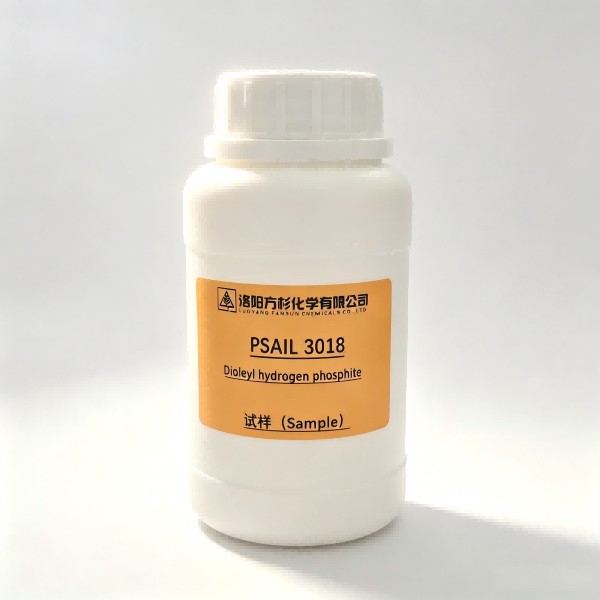
For formulations that also need load-carrying support, selection should consider the full additive balance. For example, phosphate amine salt ep/aw additives may be evaluated as part of an anti-wear strategy, but they should not be assumed to solve a clutch-friction issue without finished-fluid validation.
Use Evidence Boundaries to Avoid Misreading Noise and Efficiency Claims
Conclusion: Separate observations, likely explanations, and confirmed causes. This avoids reformulating a fluid around a symptom that originates outside the friction-control system.
Reasoning: Limited-slip differential noise is frequently associated with friction behavior, which makes it a useful diagnostic starting point. It is not proof of a single root cause. Likewise, an efficiency claim may reflect changes in multiple fluid properties and hardware conditions rather than the isolated effect of one additive component.
Best-fit scenario: Use this discipline during troubleshooting, competitive replacement work, and supplier qualification. It is also useful when a sales claim is based on a bench result but the buyer needs confidence in a specific driveline application.
Limit: Bench screening, field feedback, and laboratory friction testing answer different questions. None should be presented as complete proof unless the test conditions match the intended application.
- Observation: A differential produces chatter or noise during turning. This supports checking friction behavior, but does not establish that the additive concentration is the only cause.
- Possible explanation: The friction response may be unstable under the relevant motion and load conditions. Alternative explanations include mechanical wear, contamination, incorrect lubricant grade, or hardware variation.
- Buyer implication: Request the fluid history, component condition, base oil information, and current additive treat approach before selecting a replacement component.
- Observation: A proposed fluid aims to reduce energy losses. This supports an efficiency evaluation, but does not demonstrate that clutch performance will remain acceptable.
- Buyer implication: Define pass/fail criteria for both efficiency-related screening and friction-dependent function before approving a formula change.
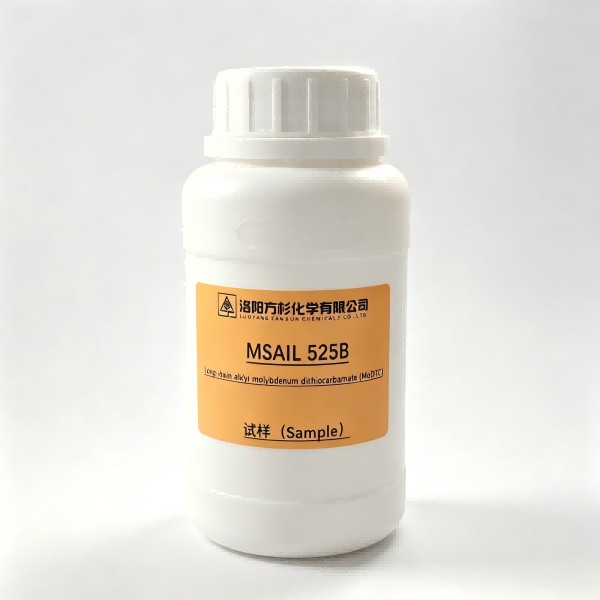
A practical formulation review also needs to consider oxidation and protection chemistry. Lower friction does not compensate for weak oxidation resistance, poor corrosion control, or inadequate extreme-pressure response. Where the formula calls for such functions, blenders can review organic molybdenum friction modifiers alongside other additive components as part of a controlled package evaluation rather than treating any one component as a complete formulation.
Build the Evaluation Plan Around the Finished Fluid
Conclusion: Qualify the finished lubricant against the intended hardware function. Component-level data are useful for screening, but they are not enough for final selection.
Reasoning: Additives can interact with base oils and with other additives. A material that appears suitable in a simple blend may behave differently after adding anti-wear agents, extreme-pressure chemistry, antioxidants, corrosion inhibitors, viscosity modifiers, or other functional components. The finished fluid is what reaches the machinery.
Best-fit scenario: This process fits additive-package development, import-substitution projects, and changes involving new base oil sources or revised component supply.
Limit: Testing should reproduce the relevant equipment and operating requirement as closely as practical. A generic laboratory result may be useful as a screen, but should not be treated as an automatic approval for every driveline system.
- Identify all friction-dependent contacts. List wet clutches, limited-slip elements, synchronizers, gears, bearings, and any other relevant hardware.
- State the required function for each contact. Distinguish torque transfer, shudder control, chatter reduction, shift quality, wear control, and energy-loss reduction.
- Document the existing fluid system. Record base oil type, additive package, known anti-wear or extreme-pressure chemistry, and any known performance concern.
- Set test questions before blending. Decide what evidence will support approval, what outcome will require adjustment, and which component has the highest risk if friction changes.
- Screen the proposed formulation. Compare the candidate fluid with the existing reference using application-relevant friction, wear, oxidation, and compatibility evaluations.
- Review trade-offs as one decision. Do not approve an efficiency improvement if it creates an unresolved torque-transfer or durability risk.
- Control the commercial handover. Confirm packaging, documentation, sampling needs, and the agreed approach to quality concerns before routine supply begins.
Luoyang Fangshan Chemical Co., Ltd. supports this type of selection work as a professional lubricant additive manufacturer with additive components and additive package options. Our R&D team includes more than thirty PhD and master’s degree holders, and our functional chemical production capacity exceeds ten thousand tons. These facts support technical discussion and supply planning; they do not replace application testing or create a universal performance claim.
We operate under ISO 9001:2015 quality management, ISO 45001:2018 occupational health and safety management, and ISO 14001:2015 environmental management systems. For early formulation work, samples can be dispatched within three days, with no minimum order quantity stated for sampling or order planning. Bulk goods can be dispatched within seven days. Actual suitability still depends on the requested product, logistics arrangement, and the buyer’s validation process.
Prevent Common Formulation and Purchasing Errors
Conclusion: The most preventable errors happen when buyers specify an additive only by a desired benefit, such as “better fuel economy” or “less differential noise,” without defining the friction-dependent function that must remain intact.
Reasoning: Those descriptions identify a symptom or commercial target, not the operating requirement. Suppliers need enough application information to determine whether the candidate should reduce friction, stabilize it, preserve it, or work with a broader package.
Best-fit scenario: Use this checklist in RFQs, technical meetings, and supplier comparisons.
Limit: A detailed RFQ improves the chance of receiving relevant recommendations, but it cannot override proprietary OEM approvals or hardware-specific requirements.
- Mistake: Selecting solely for low friction. This fits contacts where reduced sliding loss is the main objective. It does not fit a clutch or friction pack that needs defined traction for torque transfer.
- Mistake: Using a limited-slip noise treatment as a universal gear-oil solution. Noise may indicate a friction issue, but the finished fluid must still meet wear, load-carrying, oxidation, and corrosion-control needs.
- Mistake: Changing several variables at once. Replacing base oil, anti-wear chemistry, and friction-control chemistry in a single trial makes root-cause analysis difficult. Change one controlled factor where possible.
- Mistake: Comparing additive treat rates without comparing active content or finished-fluid performance. A lower apparent dosage is not automatically lower cost or better value.
- Mistake: Ignoring supply-stage needs. Qualification plans should include sample timing, batch documentation, packaging requirements, and a process for addressing quality concerns. Product quality issues can be handled through return discussion by agreement.
Choose Between a Single Component and an Additive Package Based on Decision Risk
Conclusion: Choose a single component when the blender has the formulation knowledge and test resources to control interactions. Consider a package approach when several additive functions must be coordinated and the primary need is to reduce formulation complexity.
Reasoning: A single component gives flexibility. It can be useful when a blender is fine-tuning controlled friction within an established system or seeking an import-substitution option for one part of a formula. A package may reduce the number of compatibility decisions where anti-wear, extreme-pressure, oxidation, corrosion, and friction-related requirements must be considered together.
Best-fit scenario: Single-component work fits experienced blenders with a stable base formulation and defined test capability. A package discussion fits product managers planning a new industrial lubricant or revising a formula with several linked performance targets.
Limit: Neither route removes the need to confirm application compatibility. A package may simplify sourcing, but it should not be assumed to satisfy every friction-material or driveline requirement without validation.
| Selection route | Suitable when | Main advantage | Main control point |
|---|---|---|---|
| Single additive component | The existing formula is established and one function needs adjustment | Greater formulation flexibility | Check interactions with the full additive system and relevant friction contacts |
| Additive package | Multiple lubricant functions need coordinated development | May reduce formulation complexity | Confirm that the package aligns with the exact application and hardware requirement |
| Hybrid approach | A package is used as the base and one component needs controlled adjustment | Balances formulation speed with targeted tuning | Retest finished-fluid behavior after the adjustment |
For industrial formulation discussions beyond driveline fluids, review high-performance lubricant additive packages with the application function, base oil plan, and validation method clearly defined. This makes technical conversations more useful than a request for a generic “friction reducer.”
Send your application details and current formulation objective to request a sample or selection advice for the right friction-control approach.
 WhatsApp
 Email
 +8616638861155