Grease Additives EP Chemistry vs Thickener Type
Which extreme-pressure chemistry fits a given grease thickener without creating corrosion, poor mechanical stability, or unnecessary formulation cost? That is the practical question behind selecting Grease additives for lithium, lithium-complex, calcium sulfonate, and polyurea systems.
An EP additive is not selected only by its apparent load-carrying potential. The thickener, base oil, operating temperature, metal pair, water exposure, and existing additive balance all influence the result. A sulfur-containing EP agent that supports boundary lubrication in one lithium grease can require a different corrosion-control approach in a polyurea formulation. Likewise, calcium sulfonate grease may already provide strong inherent load-bearing and rust-protection characteristics, so adding a highly active EP chemistry without a defined failure mode can add cost and complicate compatibility work.
This is an evergreen formulation issue rather than evidence of a recent industry-wide change. The comparison below is limited to industrial lubricating greases formulated with the four named thickener families. It does not replace finished-grease validation, and it should not be used to predict field life without testing under the actual load, temperature, speed, and contamination conditions.
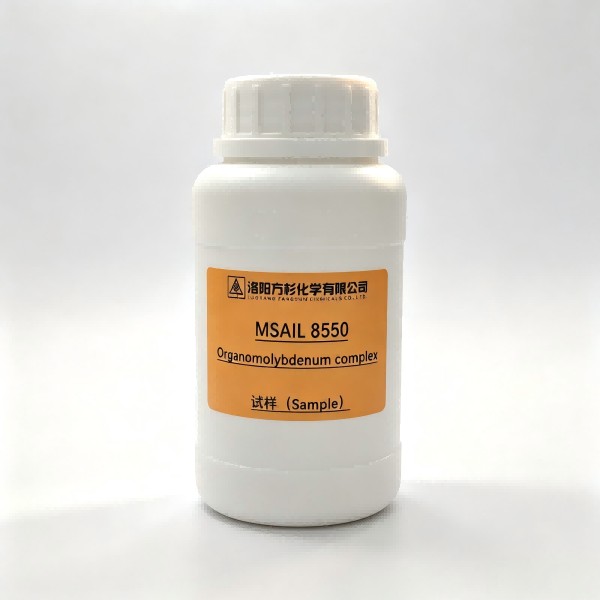
Start with the failure mechanism rather than the additive name
The first buying decision is to define what the additive must correct. “EP performance” is often used as a broad requirement, yet the underlying failure may be scuffing under shock load, high wear during oscillation, corrosion after water ingress, or oxidation-related hardening during storage and service. These mechanisms do not always respond to the same chemistry.
Conclusion: select the chemistry family after identifying the dominant failure mode and the thickener system. This approach fits new grease development, import-substitution work, and reformulation after a test failure. It does not apply when the only available requirement is a generic request for “better EP”; in that case, the first task is to obtain operating and test details.
- High-load or shock-load scuffing: consider sulfur-based, phosphorus-based, or inorganic EP options. The reason is that these chemistries are commonly evaluated for boundary-film support under severe contact. Their limit is that each may affect metal staining, seal behavior, thermal stability, or thickener structure differently.
- Wear under sliding or oscillating contacts: consider antiwear chemistry and friction modifiers alongside EP agents. A high-load test result alone may not predict wear behavior in slow, oscillating bearings or sliding guides.
- Rust or yellow-metal risk: prioritize corrosion-control screening before increasing active EP chemistry. Additives can interact with copper-containing alloys and ferrous surfaces differently, particularly when moisture or elevated temperature is present.
- High-temperature grease hardening: investigate base oil, oxidation control, and thickener selection before assuming that an EP additive is the primary cause. EP chemistry may be part of the package, but it cannot compensate for an unsuitable base formulation.
For component-level formulation work, buyers can review high-quality lubricant additive components alongside the intended thickener and base oil. This supports a more controlled comparison than changing several ingredients at once.
Comparison matrix for EP chemistry by thickener type
The following matrix is a formulation-screening guide, not a universal pass-or-fail chart. “Compatibility” means a reasonable starting point for laboratory assessment based on typical chemistry behavior. It does not mean that every commercial product in that chemistry class will perform identically. Active content, carrier oil, treat rate, base-oil polarity, metal type, and the rest of the additive package can change the outcome.
| EP chemistry family | Lithium and lithium-complex grease | Calcium sulfonate grease | Polyurea grease | Corrosion risk to investigate | Likely application fit |
|---|---|---|---|---|---|
| Sulfur-based EP agents | Often a practical starting point where high-load capability is needed; verify oil separation, worked penetration, and metal staining. | May be used selectively, but assess whether added EP response is needed beyond the thickener’s inherent load-bearing behavior. | Use a cautious screening plan because polyurea systems can be sensitive to additive interactions and high-temperature changes. | Potential copper or yellow-metal staining depends on sulfur activity, temperature, and contact metallurgy. | Heavily loaded gears, pins, sliding contacts, and industrial bearings where the duty cycle supports an active EP approach. |
| Phosphate ester or phosphate amine salt chemistry | Useful screening option for antiwear and EP balance; check water behavior and consistency retention. | Can complement the system where the application needs additional antiwear response, but avoid assuming that more phosphorus always improves results. | Evaluate carefully for compatibility with the polyurea network and for changes in storage stability. | Check corrosion behavior on the actual ferrous and non-ferrous metals in the equipment. | Industrial bearings and sliding contacts requiring a balanced antiwear and EP package. |
| Phosphorothioate chemistry | Suitable for controlled comparison where sulfur-phosphorus boundary-film chemistry is being considered. | Use only after confirming a clear performance gap; the thickener system may already meet the load target. | Requires staged compatibility and thermal-aging checks before scale-up. | Potential metal reactivity should be checked against copper alloys and steel surfaces. | High-load industrial duties where a single additive family must support both antiwear and EP screening. |
| Inorganic EP agents | Can be considered where solid or inorganic load-bearing support is appropriate; dispersion quality is a central concern. | May align with demanding load conditions, subject to processing and consistency evaluation. | Assess carefully because particle dispersion and thickener interaction can affect grease uniformity. | Risk depends on particle chemistry, moisture control, and the full package rather than the inorganic category alone. | Slow-speed, high-load contacts where the equipment and grease design accept this approach. |
| Organic molybdenum friction modifiers | Often assessed as a friction and wear-control supplement rather than a stand-alone EP replacement. | May be appropriate where reduced friction is the specific target and overall balance remains stable. | Screen for compatibility, deposit tendency, and grease structure changes during aging. | Corrosion behavior still requires separate verification; friction reduction does not automatically provide corrosion protection. | Sliding, oscillating, or mixed-lubrication conditions where friction reduction is as relevant as load capacity. |
Buyer interpretation: lithium and lithium-complex greases usually offer the broadest starting field for EP screening, but this does not remove the need for corrosion and mechanical-stability testing. Calcium sulfonate systems call for a more targeted question: what specific performance gap remains after considering the properties contributed by the thickener itself? Polyurea grease demands the most disciplined compatibility process because its thickener network can react differently to changes in additive chemistry and base oil.
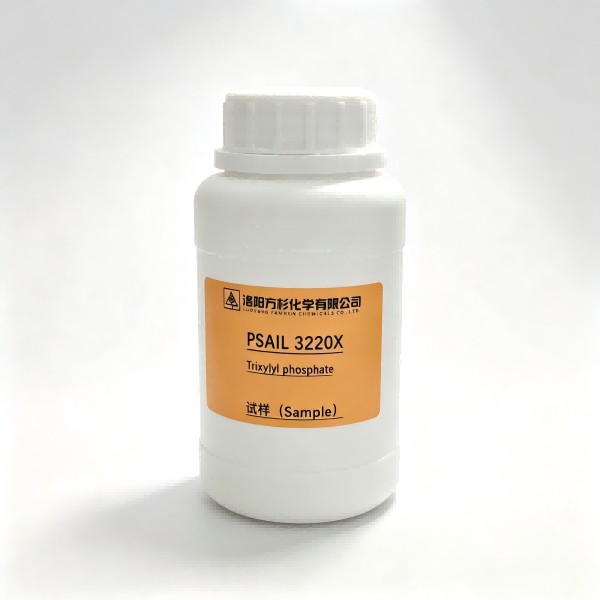
For sulfur-based candidates, formulators may compare sulfurized olefins and fats with the finished grease’s metal compatibility requirement. For phosphorus-led screening, review oil-soluble phosphate ester EP additives as a separate chemistry route rather than treating all EP agents as interchangeable.
Why the same EP chemistry can produce different grease results
Observed performance differences across thickener types are not automatically proof that one additive is better than another. Several variables can create the same apparent result. Procurement teams should separate documented test observations from possible explanations before changing suppliers or replacing an additive family.
| Observed result | Plausible explanation | Alternative explanation to rule out | Decision affected |
|---|---|---|---|
| Higher friction or a larger wear mark after adding an EP agent | The chemistry may not form an effective boundary film under that contact condition. | Base-oil viscosity, surface finish, test temperature, or insufficient dispersion may be the actual cause. | Whether to change the additive, base oil, or manufacturing process. |
| Metal discoloration or corrosion concern | The EP chemistry may be too reactive for the metal and temperature exposure. | Water contamination, residual process chemicals, or an inadequate corrosion inhibitor may be contributing. | Whether to add corrosion control, select a less reactive EP chemistry, or change the target application. |
| Grease consistency shifts after storage or worked shear | The additive carrier or chemistry may be affecting the thickener structure. | Mixing order, heating profile, cooling rate, or batch-to-batch thickener variation can also cause the shift. | Whether the issue is a formulation incompatibility or a processing-control issue. |
| Load test improves but field service remains unsatisfactory | The selected EP agent addresses one test mode but not water, oxidation, bearing speed, or contamination conditions. | The field failure may involve mechanical installation, ingress, or relubrication practices rather than grease chemistry. | Whether to reformulate or investigate equipment conditions first. |
Conclusion: do not interpret a single EP result as a full formulation verdict. This is especially relevant when a grease has failed PB/PD targets, produced a large wear scar, shown weak SRV behavior, or displayed oxidation concerns. These results identify a problem area, but they do not independently identify the chemical cause.
A staged evaluation procedure for formulators and procurement teams
A controlled trial reduces the risk of approving a component that improves one test while damaging another property. The procedure below suits technical evaluators narrowing shortlists for industrial grease production. It does not replace a customer-specific qualification plan where equipment makers require defined methods or approval sequences.
- Document the baseline formulation. Record thickener type, base oil family, current additive categories, target application, metal contacts, temperature exposure, water exposure, and the failed or missing performance requirement.
- Choose one chemistry question. For example: “Can a sulfur-based EP agent improve severe-load behavior without unacceptable yellow-metal risk?” Avoid trialing sulfur, phosphorus, molybdenum, and corrosion inhibitor changes in the same first batch.
- Prepare a control and one-variable comparison. Keep the thickener, base oil, manufacturing route, and non-target additives unchanged where possible. This makes the test result interpretable.
- Check physical grease behavior first. Examine appearance, homogeneity, worked consistency trend, oil separation tendency, and any visible signs of poor dispersion before relying on tribology data.
- Test the stated failure mode. Use the relevant established internal or customer-required method for EP, antiwear, corrosion, oxidation, or friction. If SRV testing is part of the acceptance route, retain the same loading and temperature conditions across the comparison set.
- Run corrosion checks against actual metallurgy. Steel-only results may be insufficient when bearings, cages, fittings, or adjacent components contain copper-containing alloys.
- Review trade-offs before scale-up. A candidate should be advanced only when it improves the identified gap without creating an unacceptable change in grease structure, corrosion response, or handling behavior.
When metal protection is part of the decision, consider the additive package rather than the EP component alone. Thiadiazole-based metal corrosion inhibitors are relevant candidates for a separate compatibility discussion, particularly where metal deactivation requirements must be evaluated alongside EP performance.
Common selection mistakes that increase formulation risk
- Choosing on EP test data alone. The conclusion may look positive, but corrosion, oxidation, water resistance, and grease consistency can remain unresolved. This approach fits only when the customer requirement is genuinely limited to one controlled test, which is uncommon for finished industrial grease.
- Assuming calcium sulfonate always needs more EP chemistry. The reasoning is weak because the thickener itself can materially influence load-bearing behavior. Add an EP component only when testing identifies a specific gap.
- Copying a lithium formulation into polyurea grease. The same additive family may require different screening because polyurea thickener behavior can differ during processing and aging. Use the lithium formula as a reference point, not as a direct transfer formula.
- Ignoring carrier oil effects. A component’s carrier can affect compatibility, viscosity balance, and grease structure. Request enough product information to assess the component as supplied, not merely its active chemistry category.
- Adding a corrosion inhibitor after a staining failure without diagnosis. This may help, but it may also mask a too-reactive EP chemistry or a water-contamination issue. Confirm the metal, temperature, and exposure condition first.
- Changing multiple variables during an import-substitution project. If the thickener source, base oil, EP agent, and process all change together, the result cannot reliably identify the cause of success or failure.
How supplier capability affects an additive comparison program
For a technical comparison to be useful, procurement needs a supplier that can support controlled sampling and component-level discussion. Luoyang Fangshan Chemical Co., Ltd. is an ISO 9001:2015, ISO 45001:2018, and ISO 14001:2015 certified professional lubricant additive manufacturer. The company offers lubricant additive components and additive packages, with functional chemical production capacity exceeding 10,000 tons.
Conclusion: use component trials when the buyer needs to isolate EP chemistry effects, and use a package discussion when several properties must be balanced together. Component trials fit a formulation team with its own grease manufacturing and testing capability. A package route may be more suitable when the target is a coordinated antiwear, EP, oxidation, and corrosion balance. Neither route removes the need for finished-grease qualification.
Fangshan Chemical can dispatch samples within 3 days and bulk orders within 7 days, with no MOQ stated in the company brief. These are practical sourcing signals for early-stage screening and small pilot batches, not a substitute for confirming product availability, shipping arrangements, and the required specification before purchase. The company also states that product-quality issues can be addressed through return discussions.
For a broader formulation route, buyers can also assess lubricant additive packages when a single-component EP adjustment no longer addresses the full performance requirement.
Buyer checklist before approving an EP additive for grease
- Have we identified whether the main issue is load carrying, wear, friction, corrosion, oxidation, or water contamination?
- Which thickener is used: lithium, lithium-complex, calcium sulfonate, or polyurea?
- What base oil family and viscosity grade are in the existing formulation?
- Are copper-containing alloys, silver-colored alloys, or other sensitive metals present in the lubricated assembly?
- Does the proposed chemistry have a clear role that the existing thickener and additive package do not already provide?
- Will the comparison include physical grease checks as well as the target tribology test?
- What evidence would reject the candidate: corrosion, poor dispersion, consistency shift, oxidation decline, or inadequate EP response?
- Can the supplier provide a sample for a controlled one-variable trial before procurement approval?
Request a sample and technical selection advice for your thickener type, target test method, and EP or corrosion concern.
 WhatsApp
 Email
 +8616638861155