High-performance lubricant additives when synergies fail
Why can a blend containing several proven additive chemistries deliver weak extreme-pressure protection, a larger wear scar, poor water separation, or unexpected haze? The missing answer is often not the quality of one component. It is the interaction between components after they enter the same base oil and compete under the same operating conditions.
High-performance lubricant additives should be judged as a working system, not as a collection of attractive individual data sheets. A friction modifier, antiwear agent, sulfurized extreme-pressure chemistry, corrosion inhibitor, antioxidant, and demulsifier can each have a valid role. Yet the same blend can underperform when adsorption behavior, solubility, reaction pathways, or treatment order conflict.
This is an evergreen formulation issue rather than a claim about a recent market change. It applies to lubricant developers reviewing industrial gear oils, hydraulic oils, compressor oils, turbine oils, greases, and metalworking formulations before pilot blending or production scale-up. The supplied operating concerns include high friction coefficient, weak extreme-pressure effect, large wear scars, PB and PD results that do not meet requirements, SRV testing concerns, and oxidation performance. Those are failure modes to investigate. They do not, by themselves, prove a single root cause.
Separate observed failures from assumed additive causes
The first decision is whether the performance loss is actually caused by additive interaction. A poor result may also come from the base oil, contamination, blending temperature, water ingress, test preparation, incorrect test method, or a mismatch between the target duty cycle and the product concept. Blaming one additive too early can remove a useful component while leaving the real cause unchanged.
Conclusion: Treat a disappointing finished-oil result as a formulation-system question until controlled comparison work identifies the responsible variable. This approach fits blends where individual components have acceptable incoming quality but the combined oil misses friction, wear, extreme-pressure, oxidation, haze, or water-separation expectations. It does not replace raw-material quality control, nor does it prove that an interaction exists before comparison testing.
| Observed result | Possible interaction explanation | Alternative explanation to rule out | Immediate formulation decision |
|---|---|---|---|
| High friction coefficient | Surface-active components may compete for the same metal sites. | Base oil viscosity behavior, test load selection, or inconsistent specimen preparation. | Compare the full blend with controlled omission blends. |
| Weak extreme-pressure result | One chemistry may interfere with the tribofilm produced by another. | Unsuitable base oil, incorrect additive balance, or test method mismatch. | Test antiwear and extreme-pressure components alone and in combination. |
| Large wear scar | A film-forming additive may displace a protective surface treatment. | Contamination, insufficient oxidation control, or unsuitable operating temperature. | Review adsorption competition and SRV test conditions. |
| Finished oil haze | Partial incompatibility can create dispersed material or incomplete solvation. | Water contamination, poor blend temperature control, or incompatible base oil mixing. | Hold samples under intended storage conditions and inspect clarity. |
| Reduced water separation | Polar additives can alter interfacial behavior and weaken demulsification. | Water quality, contamination, or an unsuitable demulsifier choice. | Run demulsibility testing on the complete formula, not a partial blend. |
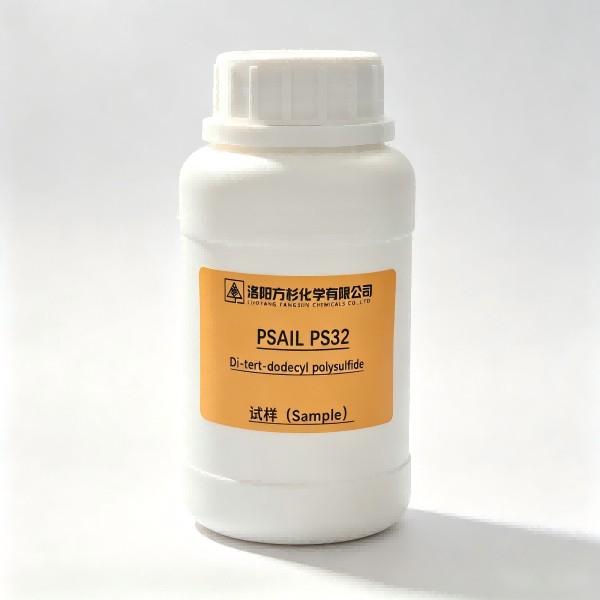
For example, a sulfurized chemistry may be selected to support load-carrying performance, while a polar friction modifier is selected to reduce friction. Both choices can be reasonable. The formulation question is whether their surface behavior remains complementary in the specific base oil and operating regime. Review available including sulfurized olefins and fats as component families, but do not assume that a component family automatically establishes finished-oil compatibility.
Define the operating boundaries where additive combinations become antagonistic
Antagonism begins when the addition of a component reduces a required property of the total blend, even though the component performs well in another formula or when tested alone. Buyers should define these boundaries before treating a combination as a synergy. Three boundaries deserve direct attention: competition for metal surfaces, haze formation, and reduced demulsibility.
Conclusion: A combination should move forward only when it improves the target property without creating an unacceptable loss in another required property. This applies especially to blends expected to carry load, manage friction, resist oxidation, protect metals, and separate water. It does not mean every property must be optimized by the same additive pair; some applications require a documented tradeoff.
| Antagonistic boundary | What can happen | Evidence to collect | Buyer implication |
|---|---|---|---|
| Metal surface competition | Two polar chemistries seek adsorption sites, changing film formation and friction behavior. | SRV results, wear-scar observations, friction trend, and comparison blends. | Do not select friction and antiwear chemistries from isolated data alone. |
| Finished oil haze | Components may have limited mutual solubility or form a dispersed phase during storage. | Visual clarity, storage observations, blend history, and base-oil comparison. | Require clarity checks at the intended blend and storage conditions. |
| Reduced demulsibility | Surface-active chemistry can stabilize water or disrupt the action of a demulsifier. | Demulsibility testing after all components are present. | Do not approve a hydraulic or turbine formula from component data only. |
| Corrosion protection tradeoff | Protective metal chemistry can interact with other polar materials or alter water behavior. | Corrosion testing alongside clarity and water-separation checks. | Assess corrosion inhibitor chemistry within the full formula. |
Metal surface competition is particularly easy to miss. A component that adsorbs rapidly can occupy sites that another additive needs to build a protective layer. This is a plausible explanation for weaker friction or wear performance, but it must be confirmed with controlled tests. It is not valid to infer competition simply because two additives are polar.
Haze is also not a cosmetic issue. In a clear industrial oil, haze can signal water contamination, precipitation, incomplete dissolution, or phase instability. Each explanation requires a different response. If the haze disappears after correcting blending conditions, the chemistry may be suitable. If it returns during storage or after adding one component, the compatibility question remains open.
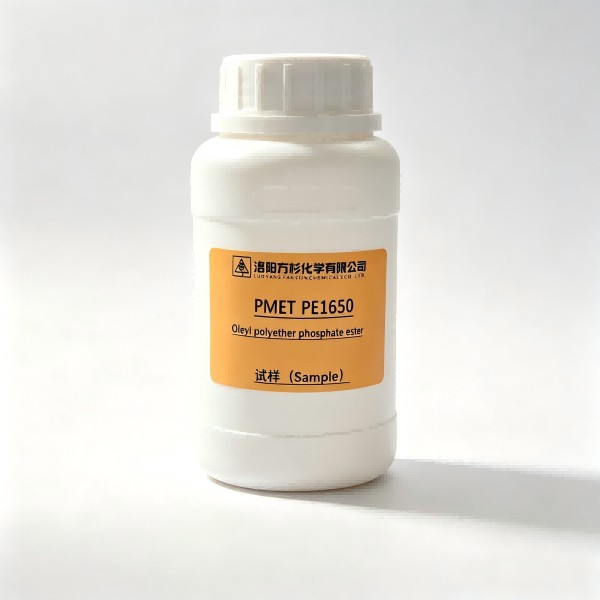
Reduced demulsibility matters most where water separation is part of equipment protection. A chemistry that improves lubricity may still be a poor fit for a water-sensitive hydraulic or turbine application if it disrupts the water-release profile. Relevant component screening can include phosphite & phosphate compounds for lubricants, but each candidate should be judged in the intended base oil and complete additive system.
Use a controlled procedure before approving a multi additive blend
A staged comparison plan gives a formulation team a practical route from suspicion to evidence. The aim is not to create the maximum number of test blends. It is to isolate the variable that changes the finished-oil outcome.
Conclusion: Start with the target formula, then compare intentional omission and replacement blends under the same preparation conditions. This fits formulation-review work before scale-up. It does not apply when the base oil or raw-material source is changing at the same time, because too many variables are moving together.
- Set the pass criteria first. Define the required friction, wear, extreme-pressure, oxidation, corrosion, clarity, and water-separation outcomes for the intended application. Include PB, PD, and SRV requirements where they are relevant to the product specification.
- Lock the baseline. Record base oil identity, blending order, temperature history, agitation method, storage condition, and test preparation. Without this record, an apparent interaction may be a processing variation.
- Test the complete formula. The full blend is the commercial candidate and must be the starting reference.
- Prepare omission blends. Remove one functional chemistry at a time while holding all other conditions constant. This shows whether the component is contributing, neutral, or linked to a loss.
- Prepare targeted pair blends. Where a loss appears, test the suspected pair together and separately. Focus on the function under review rather than generating unrelated data.
- Check physical stability. Inspect clarity and phase behavior after blending and under the storage conditions relevant to the buyer’s supply chain.
- Document the tradeoff. Record what improved, what declined, and whether the decline is acceptable for the application. A lower friction trend does not justify approval if water separation or corrosion protection falls outside the product need.
This procedure supports additive interaction testing and makes formulation approval easier to defend during procurement, technical review, and production transfer. It also reduces the common mistake of changing several additives at once after a poor test result.
Match the test package to the application rather than the additive label
Additive labels describe chemistry families and intended functions. They do not replace application testing. An extreme-pressure component may be appropriate for industrial gear oils but not solve the controlling risk in a turbine oil. A corrosion inhibitor may protect metal surfaces but influence water behavior. The selection logic must begin with the finished lubricant’s operating duty.
- For industrial gear oils: prioritize the balance among load carrying, wear control, friction behavior, oxidation performance, and corrosion protection. Extreme pressure additives should be screened with the other surface-active components, not evaluated as stand-alone candidates.
- For hydraulic oils: water separation, oxidation control, corrosion protection, and filter behavior may be as important as antiwear performance. A combination that causes reduced demulsibility is not suitable simply because it gives acceptable wear data.
- For turbine oils: use a conservative interaction screen around oxidation stability, rust protection, air release, and demulsibility. High polarity is not automatically a benefit in this application.
- For metalworking fluids: distinguish water-based and oil-based systems before transferring additive assumptions. Solubility, hard-water response, microbial control, and metal compatibility create a different set of formulation boundaries.
- For greases: assess the additive system with the chosen thickener and base oil. A component that remains clear in an oil blend can behave differently after thickener incorporation.
For metal protection questions, examine the intended chemistry alongside the full additive system. Our range includes thiadiazole-based metal corrosion inhibitors, but corrosion performance should be assessed with the actual base oil, additive package, metals, and water exposure expected by the end user.
The limit is straightforward: a laboratory result is only decision-useful when the test represents the application risk. A strong result in an unrelated test may be useful for screening, but it is not evidence that the formula will meet the final product requirement.
Watch for formulation review mistakes that hide antagonism
Many blend failures persist because the review process rewards individual component performance more than total-formula behavior. The following checks are practical before purchasing larger quantities or releasing a production blend.
- Do not stack additives by function alone. Selecting one additive for each desired property can create overlap in polarity or surface activity. Use pair and omission blends when functions overlap.
- Do not transfer treatment assumptions across base oils. A component can disperse or adsorb differently after a base-oil change. Repeat finished-oil checks after the base oil changes.
- Do not assess haze only at blend completion. Examine stability after storage and after exposure to the conditions relevant to handling or use. Immediate clarity does not settle the question.
- Do not treat a failed PB or PD result as proof of one defective additive. Review the complete chemistry, blend process, and test preparation before assigning blame.
- Do not approve corrosion chemistry without water-related checks. Corrosion inhibitor chemistry can affect other surface or interface properties. Test protection, clarity, and water separation together when the application requires all three.
- Do not scale a formula with unresolved uncertainty. If the mechanism is unclear, retain samples and records from each comparison blend. A traceable test history is more useful than repeating the same full-formula trial.
Luoyang Fangshan Chemical Co., Ltd. was established in 2017 and supports lubricant additive development with a research team of more than 30 PhD and master’s degree holders. Our listed production capacity for functional chemicals exceeds 10,000 tons. These facts support supply and technical discussion, but they do not replace formulation-specific compatibility testing. Our quality management system is identified as ISO 9001:2015, with ISO 45001:2018 occupational health and safety management and ISO 14001:2015 environmental management systems also listed.
For early-stage trials, samples can be dispatched within 3 days, and larger orders within 7 days according to the company brief. There is no MOQ. That flexibility is useful when a development team needs to compare a small set of candidates before committing to a final additive package, rather than purchasing a larger quantity before compatibility evidence is available.
Decide what evidence justifies a change in additive strategy
The final formulation choice should follow the evidence, not the assumption that more active chemistry produces more protection. When a blend underperforms, there are several valid outcomes: retain the combination, alter the selected component family, change the blending approach, adjust the base oil, or redefine a product claim that is not supported by test results.
Conclusion: Change the additive strategy only after the controlled blend set shows a repeatable link between a combination and the failed property. This fits technical teams deciding whether to reformulate before scale-up. It does not apply where incoming material quality, contamination, or test reproducibility has not yet been checked.
| Evidence pattern | Interpretation | Appropriate next action |
|---|---|---|
| The full blend fails, but omission blends improve the target result. | The removed component may be antagonistic in this formula. | Confirm with repeat testing and targeted pair comparisons. |
| All blends show haze or poor water separation. | The base oil, water quality, blending process, or a common component may be responsible. | Check shared inputs before replacing a single additive. |
| Individual components perform acceptably, but the pair fails. | A combination effect is plausible. | Review metal surface competition and physical compatibility. |
| Results vary between repeat samples. | Process control or test repeatability may be the main uncertainty. | Stabilize preparation and repeat the baseline before reformulating. |
A formulation compatibility assessment should therefore end with a decision record: the intended application, the pass criteria, the base oil, the component set, the blend sequence, the observed result, unresolved uncertainties, and the next test. That record helps procurement teams distinguish a promising component from a validated finished-oil solution.
For teams seeking a package route rather than selecting every component separately, review our position as a professional lubricant additive manufacturer and define the application conditions before requesting a recommendation.
Request formulation selection advice or a sample for controlled compatibility screening before your next production-scale blend.
 WhatsApp
 Email
 +8616638861155