How Do Grease Additives Control Oil Bleed?
A common challenge in grease formulation is managing oil bleed, also known as syneresis. While a controlled amount of oil separation is necessary for lubrication, excessive bleed leads to storage instability, inconsistent application, and eventual component failure. The solution lies in a carefully balanced selection of grease additives that modify the interaction between the base oil and the thickener matrix. Understanding these mechanisms is the first step toward formulating a stable, high-performance grease.
This article explains the specific roles of different additives in controlling oil bleed, the critical balance between oil retention and pumpability, and how to avoid common formulation errors that compromise grease stability. We will provide a framework for selecting and evaluating additives to achieve reliable performance in your applications.
The Fundamentals of Grease Structure and Oil Bleed
A grease is not a simple liquid. It is a semi-solid structure composed of three main components: a base oil (typically 70-95%), a thickener (5-20%), and a performance additive package (0-10%). The thickener forms a fibrous, sponge-like matrix that holds the base oil in place through capillary action and physical entanglement. For the grease to lubricate a bearing or gear, this matrix must slowly release a small amount of oil onto the contact surfaces.
This controlled release is oil bleed. However, when the thickener network is unstable or improperly formulated, the oil separates too quickly. This can be caused by:
- High Temperatures: Reduces base oil viscosity and can cause the thickener matrix to shrink, squeezing out oil.
- Mechanical Stress: High shear forces during operation can break down the thickener's fibers, reducing its ability to retain oil.
- Vibration during Storage: Prolonged vibration can accelerate the separation of oil from the thickener.
- Chemical Incompatibility: Poor interaction between the base oil, thickener, and additives can weaken the grease structure.
The goal is not to eliminate oil bleed entirely, but to control it within a specified range. The right grease additives reinforce the thickener matrix and manage the oil's behavior, ensuring the grease remains stable in storage and effective in service.
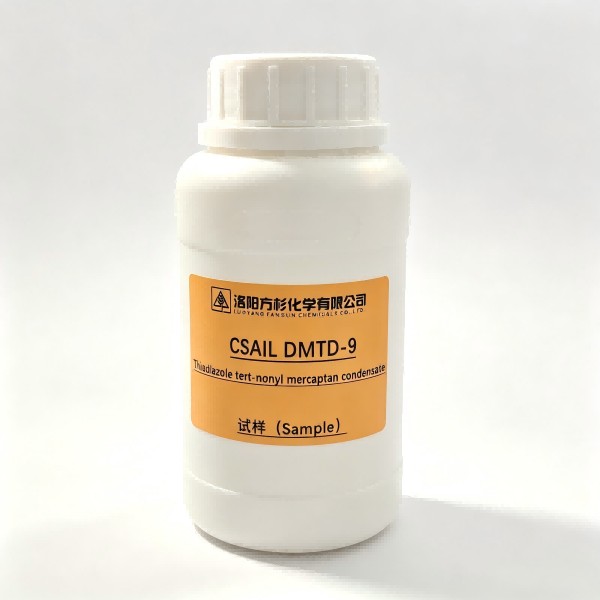
Balancing Oil Retention and Pumpability with Polymers and Tackifiers
Controlling oil bleed often involves a delicate trade-off. Additives that are excellent at holding oil in place can sometimes make the grease too stiff to be pumped through centralized lubrication systems, especially at low temperatures. The key is understanding how different additives work and interact. Polymers and tackifiers are the primary tools for this balancing act.
Here is a technical breakdown of how these components influence grease behavior:
-
Tackifiers (e.g., Polyisobutylene - PIB)
- Mechanism: Tackifiers are long-chain polymers that increase the adhesiveness (stickiness) and cohesiveness (internal strength) of the grease. They function by creating physical entanglements within the base oil and the thickener network, effectively weaving a secondary net that helps hold the oil in place.
- Practical Effect: Greatly reduces oil separation under static (storage) and dynamic (vibrational) conditions. Improves water washout resistance.
- Trade-Off: Over-treating with a high molecular weight tackifier can dramatically increase the grease's stringiness and resistance to flow. This can lead to pumpability issues (slumpability failure) and may cause dispensing equipment to cavitate or fail, particularly in cold environments.
-
Polymers (e.g., Olefin Copolymers as Viscosity Index Improvers)
- Mechanism: These polymers are added to the base oil and swell as temperature increases, counteracting the natural tendency of the oil to thin out. In grease, they act as "sponges" within the thickener's sponge. They absorb and hold base oil, increasing the overall viscosity of the liquid phase and making it harder for the oil to escape the thickener matrix.
- Practical Effect: Improves the viscosity index (VI) of the base oil, providing better film thickness at high temperatures. This swelling action also physically obstructs oil from bleeding out.
- Trade-Off: Polymers can be susceptible to mechanical shear. Over time, the long polymer chains can be broken down into smaller ones, a phenomenon known as shear-down. This results in a permanent loss of viscosity and a reduced ability to control oil bleed, leading to a decline in grease performance over its service life.
-
Base Oil & Thickener Interaction
- Mechanism: The solvency and polarity of the base oil determine how well it interacts with the thickener and how effectively polymers swell. For example, a polyurea thickener requires a specific type of base oil to form a stable, fibrous network. Using an incompatible base oil can result in a weak gel structure that bleeds oil excessively from day one.
- Practical Effect: A well-matched system results in a stable grease with predictable properties. A mismatch leads to poor yield, excessive bleed, or hardening over time.
- Trade-Off: High-performance synthetic base oils (like PAOs or esters) may offer superior thermal stability but can have different solvency characteristics than mineral oils, requiring a completely different additive approach to achieve the same level of stability.
As a professional lubricant additive manufacturer with ISO 9001:2015 certified facilities, we understand these complex interactions. Our R&D team helps clients select additive combinations that provide the necessary oil retention without compromising the essential flow characteristics required by their application.
Other Key Additives That Influence Grease Stability
While polymers and tackifiers are primary tools, a complete performance package uses several types of additives that indirectly or directly affect oil bleed and long-term stability.
Extreme Pressure (EP) and Anti-Wear (AW) Agents
The main function of EP/AW additives is to protect metal surfaces under heavy loads. However, their chemical nature (e.g., sulfur-phosphorus compounds, borates) can influence the overall polarity of the system. In some cases, these polar additives can compete with the thickener for interaction with the base oil, potentially disrupting the gel structure if not chosen carefully. A well-formulated package ensures these additives are compatible with the thickener system. We offer a range of specialized grease additives & ep/aw agents designed for maximum compatibility and performance.
Antioxidants
Oxidation is a primary cause of grease degradation. When the base oil or thickener oxidizes, the chemical byproducts can be acidic and polar, which attacks the thickener network. This breakdown of the thickener's structure is a leading cause of increased oil bleed and grease hardening over its service life. A robust antioxidant package, often using aminic or phenolic chemistries, is essential for long-term stability, especially in high-temperature applications.
Corrosion Inhibitors
Like EP/AW additives, corrosion inhibitors are surface-active molecules. They function by forming a protective film on metal surfaces. Additives like thiadiazole-based metal corrosion inhibitors have a specific polarity that must be balanced within the formulation. An improperly selected corrosion inhibitor can sometimes increase oil bleed by interfering with the thickener-oil bond. Compatibility testing is therefore essential.
Common Formulation Mistakes Leading to Excessive Oil Bleed
Achieving a stable grease is often a process of avoiding common pitfalls. Many issues with oil bleed stem from correctable formulation or processing errors. Here are some of the most frequent mistakes we see when assisting clients with their formulation challenges.
| Mistake | Consequence | Corrective Action |
|---|---|---|
| Mismatching Additive and Thickener Polarity | A highly polar additive (like certain corrosion inhibitors) in a non-polar lithium or calcium sulfonate grease can disrupt the soap-oil interaction, causing the structure to weaken and release oil. | Select additives with a polarity compatible with the base oil and thickener. Perform compatibility screening in the lab by observing a small blend for separation over 24-48 hours. |
| Over-treating with a High Molecular Weight Polymer | The formulator, trying to stop bleed, adds too much tackifier. The grease becomes excessively stringy and fails low-temperature pumpability tests (e.g., Lincoln Ventmeter), rendering it useless for automated systems. | Use a blend of low and high molecular weight polymers or tackifiers. This can achieve the desired oil retention without a dramatic negative impact on flow properties. Start with the lowest effective treat rate. |
| Ignoring the Manufacturing Process | The correct components are used, but the grease is cooled too quickly or not milled with enough shear. This results in a poorly formed, inefficient thickener network with large voids that cannot hold oil effectively. | Optimize the manufacturing parameters. The temperature profile, milling time, and shear energy are just as important as the chemical formula for creating a stable grease structure. |
| Relying on a Single Performance Test | A grease passes a static oil bleed test (e.g., ASTM D6184) at room temperature but fails in the field due to vibration or high temperatures. The static test alone did not predict real-world performance. | Use a battery of tests to qualify the grease. Include static bleed, cone penetration before and after mechanical working (ASTM D217), a low-temperature torque test, and a pressure separation test (ASTM D1742). |
A Practical Approach to Selecting Additives for Stability
As a global supplier of import-substitute additive products, Luoyang Fangshan Chemical works with formulators to solve these exact challenges. Our high-caliber R&D team, consisting of more than 30 PhD and master’s degree holders, can help you develop a robust formulation. The process involves a systematic approach to selection and testing.
Buyer's Decision Checklist for Grease Additive Selection
- Define the Application's Demands: What is the operating temperature range? What are the loads (low, high, shock)? Is water or corrosive chemical exposure a factor? What is the required re-lubrication interval?
- Establish the Foundation (Base Oil and Thickener): The choice of base oil (mineral, PAO, ester) and thickener (lithium, calcium, polyurea) defines the grease's core characteristics and limitations. This choice dictates which additive chemistries will be most compatible.
- Identify the Primary Performance Gap: Are you trying to improve EP performance (failing PB/PD tests), extend oxidation life, or specifically reduce oil bleed? Focus your initial additive selection on solving the most significant problem.
- Select a Compatible Additive Package: Choose a balanced package that addresses the primary gap without creating new problems. This is where collaboration with an additive expert is valuable. For example, instead of just a tackifier, a balanced solution might be one of our high-performance lubricant additive packages & blending solutions that includes dispersants, tackifiers, and antioxidants designed to work together.
- Conduct Laboratory Bench Testing: Prepare small-scale blends with varying treat rates. Evaluate them for consistency, oil bleed (at various temperatures), oxidation stability, and wear performance (e.g., 4-ball or SRV tests). Our no-MOQ policy and 3-day sample dispatch enable rapid screening and iteration.
- Validate with Application-Specific Tests: Once you have a promising candidate, test for properties critical to the end-use, such as pumpability, water spray-off, and roll stability. This ensures the lab performance translates to real-world reliability.
By following a structured process and partnering with a knowledgeable supplier, you can effectively use grease additives to control oil bleed and develop a product that meets the highest performance standards.
If you are developing a new grease formulation or looking to solve a specific oil bleed challenge, contact our technical team to discuss your requirements and request a sample.
 WhatsApp
 Email
 +8616638861155