How Do Industrial Lubricant Additives Protect Equipment?
Base oil alone cannot protect a gearbox, hydraulic pump or compressor for long. It carries heat and separates surfaces when the load is light. Under heavy load, high temperature or moisture, the film thins, metal touches metal, and the oil itself starts to degrade. Industrial lubricant additives are the chemistry that closes those gaps. This article explains which failure each additive function addresses, what goes wrong when the choice is off, and how to match function to equipment during early research.
What Actually Fails Inside Lubricated Equipment
Maintenance engineers usually see symptoms: noisy gears, scored cam surfaces, rust spots after a shutdown, dark and acidic oil, sludge on filters. Behind those symptoms are four mechanisms:
- Boundary wear. The oil film is too thin and asperities on both surfaces make contact.
- Scuffing and seizure under shock or high load. Local welding and tearing of metal occurs when the film collapses entirely.
- Corrosion and rust. Water, acids and air attack ferrous and yellow metal surfaces.
- Oxidation. Heat and oxygen break down the oil, forming acids, varnish and sludge that then accelerate the other three.
Each mechanism needs a different chemical response. An additive that solves one can do nothing for another, or worse, interfere with it. That is why selection starts from the failure mode, not from a product name.
How Antiwear, Corrosion Inhibiting and Antioxidant Chemistries Interrupt Damage
The table below breaks down what each function does at the surface or in the oil, and what happens if the selection or dosage is wrong.
| Function | How it interrupts damage | Typical chemistry | If chosen or dosed wrongly |
|---|---|---|---|
| Antiwear (AW) | Reacts with metal under moderate load and temperature to form a thin sacrificial film that shears instead of the base metal. | Phosphate esters, phosphate amine salts, phosphorothioates | Too little gives a large wear scar and shortened component life. Too much can raise corrosivity toward copper alloys or hurt water separation. |
| Extreme pressure (EP) | Forms iron sulfide or similar layers at very high local temperature, preventing welding during shock loads. | Sulfurized olefins, polysulfides, inorganic EP agents | Too weak and the load carrying capacity (PB/PD values) falls short. Too aggressive and active sulfur can stain or attack yellow metals. |
| Friction modification | Adsorbs or forms low shear layers that lower the friction coefficient and heat generation. | Organic molybdenum compounds, boric acid esters | A high friction coefficient persists, wasting energy and raising operating temperature. Some systems also need a compatibility check with other additives. |
| Corrosion and rust inhibition | Polar molecules adsorb on metal and block water and acids. Metal deactivators passivate copper and steel surfaces so they do not catalyze oxidation. | Amine, sarcosinate and imidazoline rust inhibitors, thiadiazole and triazole derivatives | Rust after storage or downtime, copper strip failures, or loss of demulsibility if the inhibitor is overly surface active. |
| Antioxidant | Neutralizes radicals and decomposes peroxides so oil thickening, acid formation and varnish develop more slowly. | Aminic and phenolic antioxidants, sulfur or phosphorus based synergists | Rapid viscosity rise, higher acid number, sludge in hydraulic servo valves, shorter drain intervals. |
Notice the interactions. Antiwear and EP additives act on the metal surface, while antioxidants and metal deactivators act in the bulk oil and on catalytic metal sites. A formulation that is strong on one side and thin on the other will pass one lab test and fail in the field.
Matching Additive Function to Equipment
Industrial lubricant additives are usually sold either as single components or as pre-balanced packages. The right form depends on how much formulation capability you have in house. For a quick screen, use this table.
| Equipment | Main failure risk | Priority functions | Limit to watch |
|---|---|---|---|
| Hydraulic systems | Pump vane and piston wear, oxidation, rust from water ingress | Antiwear, antioxidant, rust inhibitor, metal deactivator | Strong EP sulfur is rarely needed and may be unwelcome for yellow metal parts. |
| Industrial gearboxes | Scuffing, micropitting, shock loads | EP/AW, antioxidant, rust inhibitor | Check copper corrosion if bronze components are present. |
| Compressors | Oxidation at high discharge temperature, deposits | Antioxidant, rust inhibitor, light antiwear | Heavy EP loading adds little and can add deposits. |
| Turbines | Long service oxidation, rust in humid steam environments | Antioxidant, rust inhibitor, demulsibility retention | Surface active additives must not damage water separation. |
| Greases | Wear under slow high load, water washout | EP/AW, rust inhibitor, antioxidant | Additive solubility and thickener compatibility must be tested. |
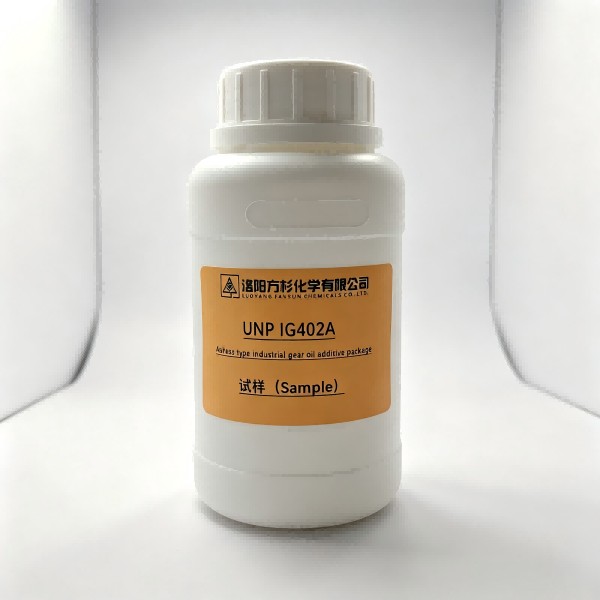
If you already know the machine type, a ready-made hydraulic oil additive packages or gear oil package shortens development time, because the functions are balanced against each other. If you are building your own formulation, single additive components give more control but require more compatibility testing.
Reading Test Symptoms Back to the Right Additive
Early-stage formulators often discover problems through bench tests. The table maps common results to the likely cause and the additive family worth examining first.
| Test symptom | Likely gap | Where to look |
|---|---|---|
| High friction coefficient in an SRV test | No effective friction modifier, or antagonism with other surface active additives | organic molybdenum friction modifiers |
| Weak extreme pressure result | Insufficient EP chemistry | Sulfur based EP additives such as polysulfides, or phosphorus sulfur combinations |
| Large wear scar diameter | Antiwear film forms too slowly or at too low a dosage | phosphate amine salt additives and phosphate esters |
| PB or PD values below target | Load carrying film too thin under step loading | Increase or change EP agent, then re-check corrosion |
| Poor oxidation stability | Antioxidant system too light, or copper catalysis not controlled | Antioxidants plus dmtd additives for lubricant or triazole deactivators |
One caution. A good SRV or four ball result does not guarantee a field result. Bench tests isolate one variable, while real equipment combines heat, water, contamination and long service time. Use them to screen, then confirm in an application-level test.
Common Mistakes When Selecting Additives
- Adding more EP to fix a wear problem. Wear at moderate load is an antiwear issue. Extra active sulfur may raise corrosion without helping.
- Ignoring yellow metals. Bronze bushings, copper coolers and brass cages react to active sulfur. Pair the EP choice with a metal deactivator and run a copper strip test.
- Treating rust protection as optional. Machines that sit idle, or run in humid sites, fail by rust before they fail by wear.
- Judging by one test. A formulation that wins on wear scar can still fail oxidation or demulsibility.
- Stacking components without compatibility checks. Surface active additives compete for the same metal sites. Overdosing several can weaken all of them.
A Step by Step Way to Shortlist Additives
- Define the failure. Write down the observed symptom: wear, scuffing, rust, sludge or high operating temperature.
- List the metals and seals. Steel only, or steel with copper alloys? This sets the limit on sulfur and phosphorus activity.
- Set the operating window. Record load, peak temperature, water exposure and drain interval.
- Pick the function first, the chemistry second. Decide on antiwear, EP, friction modification, rust inhibition or antioxidant need before choosing compounds.
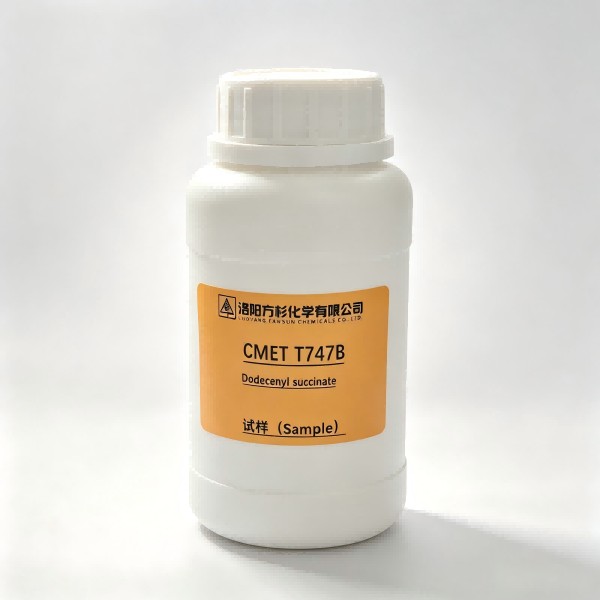
- Choose single components or a package. A package suits a defined machine type, while components suit a custom specification.
- Screen on the bench. Run SRV, wear scar, PB/PD, oxidation and corrosion tests against your target values.
- Confirm in the application. Check filterability, water separation, and compatibility with the seals in service.
Supply Facts That Matter for Early Evaluation
Technical fit is the first screen, but supply terms affect how fast you can test. Luoyang Fangshan Chemical was founded in 2017 and operates under ISO 9001:2015, ISO 45001:2018 and ISO 14001:2015 management systems. Its R&D team includes more than 30 PhD and master's degree holders, and production capacity for functional chemicals exceeds 10,000 tons. The company offers import-substitute additive products for global markets.
Practical terms for research teams: there is no MOQ, samples are dispatched within 3 days, and bulk orders within 7 days. If a delivered product has a quality problem, the return is handled by negotiation.
For a first trial, start with the failure mode and equipment type, and our sales engineer can suggest single components or an additive package to test. Send your target values and application details to request a sample or technical selection advice.
 WhatsApp
 Email
 +8616638861155