How Metalworking Fluid Additives Protect Surfaces During Machining
How can a machining fluid protect a cutting tool, workpiece, machine components, and fluid system at the same time? The answer is not simply “more additive.” Metalworking fluid additives protect surfaces by performing different jobs at different points in the machining process: reducing friction at the tool-workpiece interface, forming protective boundary films under load, limiting corrosion during wet exposure, controlling foam, and maintaining a stable emulsion that carries those functions through the system.
For formulators and technical buyers, the main question is therefore functional matching. A corrosion inhibitor cannot replace a lubricity agent. An antifoam agent cannot correct an unstable emulsion. An extreme-pressure component may improve severe-contact protection while creating compatibility questions elsewhere in the formula. Surface protection comes from a balanced package, verified in the intended fluid type and metal mix.
Start with the surface failure mode rather than the additive name
Conclusion: Select additive functions according to the actual surface failure you need to prevent, not according to a generic product category. The reason is straightforward: friction damage, corrosion staining, foam-related pump problems, and emulsion splitting arise from different mechanisms. One additive family may support more than one target, but it should not be assumed to solve all of them.
In a cutting or grinding operation, surfaces face several exposures in sequence. The tool and workpiece experience local pressure and heat. Freshly machined metal then contacts water, oxygen, salts, and fluid residues. The circulating fluid passes through pumps and return lines where air can become entrained. Meanwhile, the emulsion must remain sufficiently stable to distribute lubricity and protective chemistry throughout the tank.
Friction and adhesive wear
When the tool slides against the workpiece under load, direct metal-to-metal contact can increase friction, raise local temperature, promote material transfer, and shorten tool life. Lubricity agents and anti-wear or extreme-pressure chemistry are used to reduce this contact or form a sacrificial boundary layer.
This approach fits operations with high sliding contact, difficult-to-machine materials, heavy forming, tapping, broaching, or severe cutting conditions. It may not be the first priority for light-duty grinding where cooling, cleanliness, and foam control may be more influential than maximum load-carrying behavior.
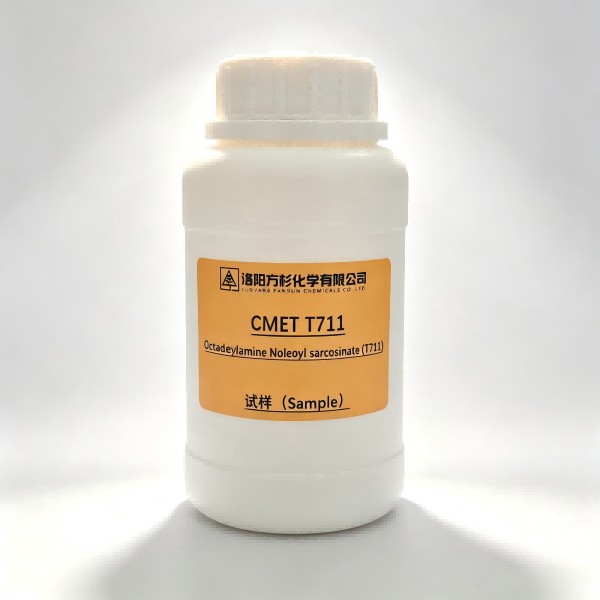
For formulations requiring oil-compatible boundary-film support, review organic molybdenum friction modifiers alongside the full base-oil, emulsifier, and metal-compatibility requirements. A friction modifier should be screened in the finished fluid, because a positive result in one base fluid does not establish suitability in another.
Corrosion after machining
Freshly cut metal is reactive. Water-based fluids can leave thin residues after machining, rinsing, or shutdown. Corrosion inhibitors help reduce the interaction between metal surfaces and corrosive species in the fluid environment. Their performance depends on the metal being protected, fluid pH control, water quality, contamination level, and contact time.
This function is especially relevant when the fluid contacts ferrous metals, copper-containing alloys, or mixed-metal assemblies. The limit is equally important: a corrosion inhibitor does not compensate for uncontrolled microbial contamination, unsuitable water, depleted alkalinity, or poor housekeeping. Those conditions must be addressed as system issues.
For copper and yellow-metal protection questions, formulators may evaluate thiadiazole-based metal corrosion inhibitors within the target formulation. The proper evaluation compares treated and untreated metal coupons after exposure to the actual fluid system, not merely the concentrate.
Foam and emulsion instability
Foam does not usually score a workpiece directly, but it can reduce delivered fluid flow, interfere with cooling, create overflow, and make concentration control less reliable. An antifoam component is intended to manage air-related behavior. It is not a lubricant, and excessive antifoam treatment can sometimes affect emulsion appearance or other formulation properties.
Emulsion stability is different. A stable metalworking emulsion distributes oil-phase lubricity components through the water phase and helps keep protection consistent from one part of the system to another. If the emulsion splits, oil-rich and water-rich zones may produce uneven corrosion control, lubricity, and cleanliness.
- Use lubricity and EP/AW chemistry when sliding contact, tool wear, galling, or poor load performance is the leading problem.
- Use corrosion inhibition when staining, rust, copper discoloration, or wet-storage exposure is the leading problem.
- Use antifoam control when circulation, overflow, entrained air, or unstable delivery is the leading problem.
- Use emulsifier and stability control when oil separation, inconsistent performance, or concentration variation is the leading problem.
The practical limit is that these functions interact. A change intended to improve one result should always be checked for its effect on the others.
Compare additive functions across the machining process
Conclusion: A process-stage map is more useful than a list of additive names because it shows when each protection mechanism matters and what failure it is intended to prevent. This method fits early formulation work, troubleshooting, and supplier comparison. It does not replace finished-fluid testing under the actual machining conditions.
| Process stage | Primary additive function | Friction mechanism | Corrosion mechanism | Foam mechanism | Emulsion-stability mechanism | What to verify |
|---|---|---|---|---|---|---|
| Concentrate preparation | Emulsifier, coupling chemistry, corrosion inhibitor, lubricity components | Ensures lubricity components can be carried into the intended fluid phase | Distributes inhibitors consistently after dilution | Controls the tendency of the concentrate to introduce air during mixing | Builds a stable oil-water structure before field dilution | Visual uniformity, dilution behavior, storage stability, component compatibility |
| Fluid circulation | Antifoam, emulsifier, corrosion inhibitor | Helps maintain consistent delivery of lubricating components to the contact zone | Protects wetted machine surfaces and recirculating metal parts | Reduces persistent foam and entrained-air effects in pumps and lines | Resists separation caused by circulation, contamination, and water variation | Foam behavior, pump delivery, fluid appearance, surface residue |
| Tool-workpiece contact | Lubricity, anti-wear, extreme-pressure chemistry | Reduces direct contact and supports boundary-film formation under load | Indirect benefit when lower heat and less surface damage reduce reactive fresh metal exposure | No direct protection role; foam can still reduce fluid delivery | Stable emulsion helps bring active components to the contact zone consistently | Tool condition, surface finish, weld or galling tendency, load-related performance |
| Post-machining wet exposure | Corrosion inhibitor, residue-control balance | Limited direct role after cutting stops | Forms a protective effect against moisture-related staining or rusting | Low foam helps prevent residue carryover caused by overflow or poor drainage | Prevents phase separation that could leave uneven protective residues | Metal coupon appearance, part staining, copper discoloration, residue after drying |
| Tank maintenance and replenishment | All functions in balance | Maintains predictable lubrication as concentration changes | Maintains protection as water quality and contaminants vary | Prevents repeated defoamer additions from becoming the only response | Maintains dispersion of functional components through service life | Concentration records, contamination review, fluid appearance, repeatable test results |
The table also explains a common misunderstanding: strong EP behavior does not automatically mean strong corrosion protection, and low foam does not prove that the emulsion is stable. These are separate observations. A formulation must be assessed against its full process role.
Balance friction protection against corrosion, foam, and cleanliness
Conclusion: Treat surface protection as a balance of interacting functions, not as a pursuit of the highest possible treatment level for one function. This applies when a formulation must protect tools and workpieces while remaining stable, clean, and manageable in circulation. It does not mean every application requires the same additive families or the same treatment approach.
Lubricity and EP/AW additives are selected when the contact severity justifies them. Their job is to reduce damaging friction and support the surface under high load. However, a more aggressive load-protection approach may require additional checks for metal compatibility, staining, odor, residue, and emulsion behavior. The correct question is not “Which additive is strongest?” It is “Which chemistry achieves the needed protection without creating an unacceptable trade-off in this fluid?”
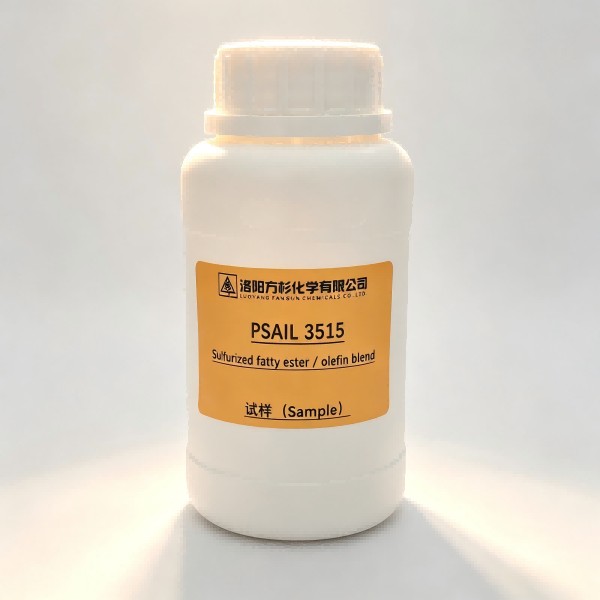
Oil-soluble phosphorus and sulfur chemistry may be considered for certain oil-based or high-lubricity requirements. For example, buyers exploring this area can compare oil-soluble sulfur-based EP/AW additives with other functional components based on the intended fluid type and metalworking operation. The limitation is clear: chemistry appropriate for one neat oil or semi-synthetic system may not be suitable for another.
For water-based formulations, the emulsifier system affects more than appearance. It determines whether active oil-phase lubricity components remain available after dilution and during circulation. If the emulsion is weak, localized oil separation can make one area of the tank appear highly lubricious while another is under-protected. That can lead to inconsistent machining results and inconsistent corrosion protection.
Antifoam treatment must also be restrained and verified. If a fluid foams, first identify the cause: excessive return-line agitation, air leaks, unsuitable water, contamination, incorrect concentration, or an emulsifier balance issue. Adding antifoam without identifying the source may suppress a symptom while leaving the system condition unchanged.
Common formulation mistakes that change surface-protection results
- Using a corrosion inhibitor as a substitute for lubricity chemistry. Corrosion protection acts mainly during wet exposure and storage; it does not necessarily prevent tool-workpiece friction under load.
- Judging a component only in concentrate form. A clear concentrate can still produce poor dilution behavior or unstable performance after water addition.
- Comparing results from different test conditions as if they were equivalent. A friction result, a corrosion coupon result, and a foam observation answer different questions.
- Adding antifoam repeatedly without checking the circulation system. Mechanical aeration or contamination may be the real cause of persistent foam.
- Ignoring the metal mix. A fluid used on steel alone may require different corrosion-control checks when copper, brass, aluminum, or mixed assemblies are introduced.
- Changing several components at once. When friction, corrosion, and emulsion behavior change together, a single-variable trial gives clearer evidence of cause and effect.
Verify protection with a finished-fluid test plan
Conclusion: The decision to adopt an additive or package should be based on a staged evaluation of the finished fluid, diluted as used, on the intended metals and machining process. This is the right approach for formulators selecting new components, replacing an imported component, or diagnosing inconsistent field results. It does not establish an automatic pass result for every application because water quality, machine conditions, and workpiece alloys can change the outcome.
A useful test plan starts with the operating problem and ends with a repeatable acceptance decision. Keep each test tied to one protection mechanism so the results remain interpretable.
- Define the operation. Record whether the fluid is used for grinding, cutting, tapping, forming, or another process. Identify the workpiece alloy, tool material, and whether the fluid is oil-based, semi-synthetic, or water-based.
- Set the leading failure mode. State whether the concern is tool wear, galling, staining, rust, copper discoloration, foam, emulsion split, residue, or inconsistent surface finish.
- Prepare a control and a candidate fluid. Change one component or one package variable at a time where possible. Use the same base fluid and dilution water for a fair comparison.
- Check dilution and stability first. Observe whether the fluid forms a consistent dispersion and whether separation, excessive foam, or visible instability develops during the planned evaluation period.
- Evaluate metal protection. Use relevant metal coupons or representative parts exposed to the finished fluid. Inspect for rust, staining, and discoloration after controlled wet exposure and drying.
- Evaluate machining behavior. Record tool condition, workpiece appearance, evidence of welding or galling, fluid delivery consistency, and any residue on parts or equipment.
- Review interactions before approval. A candidate that improves friction but causes corrosion, foam, residue, or instability is not yet a finished solution.
Requesting component documentation is part of this work. Technical buyers should ask suppliers to identify the intended fluid type, relevant additive function, handling guidance, compatibility considerations, and suggested evaluation route. If the goal is to simplify blending and maintain a coordinated functional balance, high-performance lubricant additive packages can be assessed against the same finished-fluid test plan rather than accepted on category name alone.
Choose a sourcing partner that supports formulation decisions
Conclusion: Early research benefits from suppliers that can provide components, package options, and practical formulation discussion without forcing a high-volume commitment before technical fit is established. This is particularly useful for import-substitution trials, pilot blends, and reformulation work. It does not remove the need for a customer’s own validation in their fluid and machine conditions.
Luoyang Fangshan Chemical Co., Ltd. was established in 2017 and is a professional manufacturer of import-substitute additive products for global markets. Our functional chemical production capacity exceeds 10,000 tons, supported by an R&D team with more than 30 PhD and master’s degree holders. The company operates under ISO 9001:2015, ISO 45001:2018, and ISO 14001:2015 management systems.
For development-stage buyers, Fangshan Chemical offers no MOQ, with samples dispatched within 3 days and bulk orders dispatched within 7 days. These are dispatch timeframes, not a substitute for qualification testing or transport planning. Where product-quality issues occur, return arrangements can be discussed by mutual agreement.
Our technical sales support can help connect a requested protection target—such as friction reduction, corrosion control, foam management, or emulsion stability—to appropriate single components or additive-package directions. The most useful inquiry includes the fluid type, metal mix, process, known failure mode, and current formula constraints.
Send your fluid type, machining process, and protection target to request selection advice or a sample for evaluation.
 WhatsApp
 Email
 +8616638861155