How Does Oleic Acid Imidazoline Inhibit CO2 Corrosion?
Why can one imidazoline inhibitor reduce carbon-steel attack in CO2-containing brine while another performs poorly in the same field system? The answer is not simply that the product “forms a film.” The useful question is how the molecule reaches the steel surface, how strongly it adsorbs, whether its hydrocarbon section can exclude water, and what operating conditions disturb that adsorbed layer.
Oleic acid imidazoline inhibits CO2 corrosion mainly by adsorbing onto carbon steel and creating a water-repelling interfacial film. Its polar imidazoline group has affinity for the steel and corrosion-product surface, while the oleyl hydrocarbon chain extends away from the surface and forms a hydrophobic barrier. This barrier can reduce the access of corrosive brine and dissolved CO2-related acidic species to active metal sites. It is a surface-control mechanism, not a permanent coating and not a substitute for understanding the actual brine, flow, temperature, and compatibility conditions.
Start with the corrosion mechanism rather than the product label
CO2 corrosion of carbon steel occurs when carbon dioxide dissolves in the aqueous phase and changes the corrosive chemistry at the metal surface. In a brine system, dissolved salts can raise conductivity and make electrochemical corrosion processes easier to sustain. Flow can also continually renew the corrosive liquid contacting the pipe wall. The result may be general wall loss, localized attack, or under-deposit corrosion depending on the operating environment.
The practical role of an oilfield corrosion inhibitor is therefore to interrupt surface reactions. An adsorbing imidazoline does this by occupying portions of the steel surface that would otherwise contact conductive brine. The inhibitor does not remove CO2 from the system. It seeks to lower the rate at which corrosive species reach and react at exposed sites.
| System factor | What it changes at the steel surface | What it means for inhibitor selection |
|---|---|---|
| CO2 dissolved in water | Creates an acidic corrosive environment at the metal-liquid interface | Select an inhibitor with reliable adsorption in the expected aqueous phase. |
| Brine salinity and ion content | Changes conductivity, water chemistry, and interactions between the inhibitor and dissolved species | Confirm performance in representative produced-water or synthetic-brine testing rather than relying on neat-product appearance. |
| Oil and condensate presence | Can alter how the inhibitor disperses and reaches water-wetted steel | Check partitioning and delivery method. A suitable active ingredient still needs to arrive at the interface. |
| Flow and shear | May remove weakly retained surface material and expose fresh steel | Assess film persistence under conditions that resemble the intended line or vessel service. |
| Solids or deposits | Can block treatment access or establish localized conditions beneath deposits | Do not interpret a satisfactory bulk-fluid test as proof of deposit-underfilm protection. |
Recommendation: treat a CO2 inhibitor as a system component rather than a standalone chemical answer. This approach fits formulators working with produced water, multiphase production fluids, or batch treatment programs. It does not apply when the main issue is a different corrosion mechanism that requires another control strategy, such as a problem dominated by dissolved oxygen, microbiological activity, or a metallurgy-specific issue.
How the polar imidazoline head and oleyl chain form an adsorbed barrier film on carbon steel in CO2 brine
The molecular structure explains why this chemistry is frequently considered for carbon-steel corrosion control. The imidazoline portion is the polar end of the molecule. In an aqueous CO2 environment, this head group can interact with the charged and chemically active steel interface. The oleyl section is the long nonpolar hydrocarbon portion. Once the polar heads are associated with the surface, the hydrocarbon sections orient outward into the surrounding liquid or toward neighboring hydrocarbon chains.
| Molecular feature | Surface-level action | Practical consequence | Limit or trade-off |
|---|---|---|---|
| Polar imidazoline head | Provides attraction and adsorption sites at the carbon-steel interface | Helps anchor the molecule where corrosion reactions occur | Adsorption can be affected by pH, competing chemicals, corrosion products, and surface cleanliness. |
| Oleyl hydrocarbon chain | Projects away from the adsorbed head group and associates with neighboring chains | Creates a less water-wet path between brine and steel | A hydrocarbon-rich film can be less effective if the active material is not properly dispersed or transported to water-wetted steel. |
| Collective molecular packing | Forms an adsorbed interfacial layer rather than isolated molecules | Can reduce the number of exposed active sites and slow corrosive transport | High shear, incompatible additives, or incomplete coverage may leave defects in the layer. |
| Dynamic adsorption and replenishment | Allows molecules in the fluid to replace material removed from the surface | Supports ongoing protection where surface film loss occurs | Requires an effective treatment program and adequate inhibitor availability at the interface. |
This arrangement is often described as a barrier film, but that phrase needs care. The film is not necessarily uniform across every square millimeter of steel. It is a dynamic adsorbed layer whose effectiveness depends on coverage, cohesion, retention, and replenishment. A formulation that reaches the surface well but adsorbs weakly may fail under flow. Another formulation may adsorb strongly in a static bottle test but distribute poorly in a water-and-hydrocarbon production system.
Conclusion for formulators: the polar head is responsible for surface affinity, while the oleyl chain supports water exclusion and lateral film organization. Both functions are required. A polar material without a sufficiently hydrophobic outward-facing section may not create an effective water barrier, while a hydrophobic material without adequate anchoring may be removed before it protects the steel.
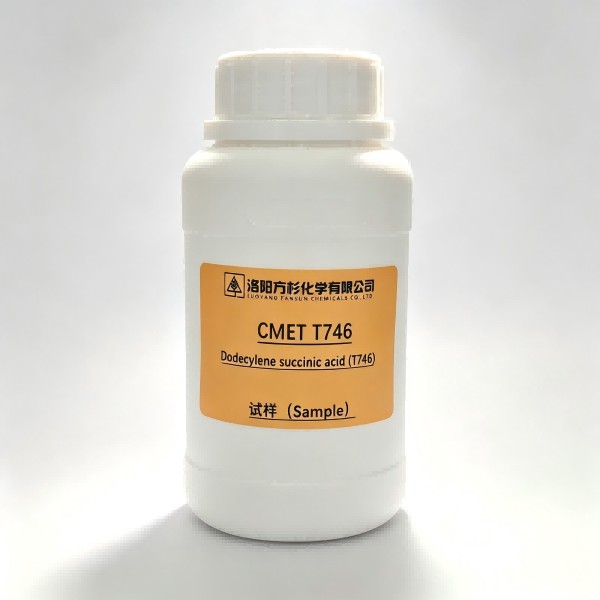
For a product-specific reference, review the available oleic acid imidazoline inhibitor information alongside the intended carrier solvent, co-additives, and treatment method.
Film formation depends on delivery, adsorption, and retention working together
A common misunderstanding is that an imidazoline with good surface activity will automatically work in every CO2 service. In practice, performance is conditional. The active chemistry must first disperse in the treatment fluid, then reach water-wetted metal, then adsorb faster than the surface is renewed or stripped, and finally remain compatible with the rest of the production chemistry.
- Delivery to the interface: The inhibitor must contact the steel through the actual fluid phases present. This matters in multiphase systems where the inhibitor may preferentially reside in oil, water, or an interfacial region. A product can have appropriate adsorption chemistry yet give inconsistent results if it does not reach the water-wet surface.
- Competition at the steel surface: Salts, scale, solids, treatment residues, and corrosion products can affect available adsorption sites. This fits systems with variable produced-water quality. It does not mean the active is unsuitable; it means test conditions should include representative contaminants where feasible.
- Flow-related film loss: Higher local turbulence and changing wetting conditions can disturb a surface layer. The appropriate response is to evaluate retention under relevant hydrodynamic conditions, not to assume that a static immersion result predicts line performance.
- Formulation compatibility: Solvents, surfactants, demulsifiers, scale inhibitors, and other additives may alter dispersion or adsorption. Compatibility screening is especially relevant for package formulators. It does not establish corrosion protection by itself; it only identifies whether the blend remains usable for further performance testing.
Corrosion inhibitors are also not interchangeable with metal deactivators or specialty inhibitors selected for other alloys. For example, thiadiazole-based metal corrosion inhibitors are part of a different chemistry family that may be evaluated where the metal type and service environment justify their use. The correct choice depends on the corrosion mechanism, metallurgy, and formulation target.
Use a staged verification plan instead of relying on a single corrosion claim
For research-stage buyers, the most useful evidence is evidence that matches the intended service. A supplier data sheet can identify the material and its handling profile, but it cannot prove field suitability without relevant testing. The following process helps separate chemistry screening from a final treatment decision.
- Define the actual corrosion environment. Document whether the surface is carbon steel, whether CO2 is present in the aqueous phase, the brine composition, the oil-water relationship, likely contaminants, and the expected flow condition. This step fits every evaluation because it determines what laboratory conditions should represent. It cannot replace direct sampling when field fluid composition is uncertain.
- Confirm the active chemistry and formulation basis. Request identification of the active type, carrier medium, and any co-components that affect solubility or dispersibility. Determine whether you are assessing a single component or a finished package. Do not compare two commercial products solely by product name.
- Screen compatibility before performance testing. Mix the candidate with the expected process chemicals and observe whether separation, haze, sediment, or loss of stable dispersion occurs. This identifies obvious blend risks. It does not demonstrate corrosion inhibition.
- Run corrosion evaluation under representative conditions. Use your established internal or third-party method and make the fluid phases, steel coupon condition, test duration, agitation, and treatment sequence consistent between candidates. Compare results only when the conditions match.
- Inspect the surface, not only the corrosion-rate result. Examine whether attack is general or localized and whether deposits are present. A single average value can hide localized damage mechanisms.
- Validate the treatment approach in the intended system. Check dosing location, injection reliability, contact time, and whether the chemical can reach the relevant water-wetted surfaces. Laboratory performance does not confirm injection performance.
Recommendation: reject a “best inhibitor” conclusion if the compared candidates were tested in different brines, at different fluid ratios, or with different surface preparation. The reasoning is simple: adsorption and film retention are sensitive to the interface. This rule applies to all comparative screening. It does not prevent early exploratory tests; it means exploratory data should not be treated as a procurement specification.
Interpret common performance claims without making costly assumptions
Several statements are frequently heard during corrosion-inhibitor discussions. Each can be partly true, but each needs a technical qualifier before a buyer uses it to choose a product.
| Claim or assumption | What it misses | Better buyer question |
|---|---|---|
| “A stronger film always gives better protection.” | Film strength is only useful if the product reaches the steel and remains compatible with the treatment system. | Was film retention assessed in a fluid system resembling the target service? |
| “An imidazoline is an imidazoline.” | Commercial materials can differ in active content, carrier, co-components, dispersibility, and formulation behavior. | What exactly is the active chemistry and product form being compared? |
| “A static coupon result proves pipeline protection.” | Static testing may not reproduce shear, phase wetting, solids, or injection effects. | Which service conditions are absent from the test, and are they likely to affect film retention? |
| “More inhibitor will correct poor results.” | Failure can result from wrong chemistry, poor delivery, incompatible additives, deposits, or a non-CO2 mechanism. | Has the cause of incomplete protection been identified before changing treatment level? |
| “The inhibitor protects all metals equally.” | Carbon steel, copper-containing alloys, and other metals can require different inhibitor approaches. | What metallurgy is present in the wetted system, including ancillary equipment? |
The most consequential misunderstanding is confusing adsorption with guaranteed protection. Adsorption is the starting mechanism. Protection depends on whether the adsorbed layer is sufficiently continuous, sufficiently persistent, and present at the locations where corrosive aqueous fluid contacts carbon steel.
Where a wider package must also address lubricant or industrial-fluid concerns, consider how the corrosion inhibitor interacts with other additive functions. Our high-quality lubricant additive components portfolio is relevant when formulators need to assess individual functions before building a combined additive system.
What to request from a supplier during research-stage selection
For oilfield chemical buyers and corrosion-inhibitor formulators, a technically useful supplier discussion should produce information that can be put into a test plan. Focus on identity, application compatibility, and supply controls rather than broad statements about protection.
- Request product identification and application guidance. Ask whether the material is intended as a single active component or requires a carrier and supporting additives. This is appropriate for formulation development. It does not replace validation of the finished formulation.
- Request the recommended storage and handling information. This helps prevent avoidable changes in product condition before testing. It does not establish chemical compatibility with every process treatment.
- Provide representative system details. Share the metal type, CO2-containing aqueous phase, brine characteristics, oil presence, and co-chemical list. The supplier can then discuss relevant formulation questions instead of proposing a generic answer.
- Define the evidence required for approval. Specify the corrosion test method, acceptance basis, compatibility checks, and documentation needed by your procurement or technical team. A clear protocol prevents non-comparable supplier submissions.
Luoyang Fangshan Chemical Co., Ltd. can support component-level discussions through its technical sales team. The company was established in 2017 and has a research and development team with more than 30 PhD and master’s degree holders. Its functional chemical production capacity exceeds 10,000 tons. These facts indicate available manufacturing and technical resources, but they should not be interpreted as proof that any particular inhibitor will pass a customer’s service-specific corrosion test.
For procurement planning, the company states that samples can be dispatched within 3 days and bulk goods within 7 days, with no minimum order quantity. This can suit early-stage formulation screening where a buyer needs a small evaluation quantity before moving to larger purchasing decisions. Actual suitability still depends on confirming the requested product, packaging, destination, and order details. The company also operates under ISO 9001:2015, ISO 45001:2018, and ISO 14001:2015 management systems.
Ask Fangshan Chemical for a sample or technical selection discussion for your CO2-brine corrosion inhibitor evaluation.
 WhatsApp
 Email
 +8616638861155