Eric Lee, Sales Engineer
Eric has rich experience selling lubricant single additives and additive packages. He masters additive application for hydraulic oil, gear oil and grease. He delivers product selection and import substitution proposals, supports global clients and resolves formula matching inquiries efficiently.
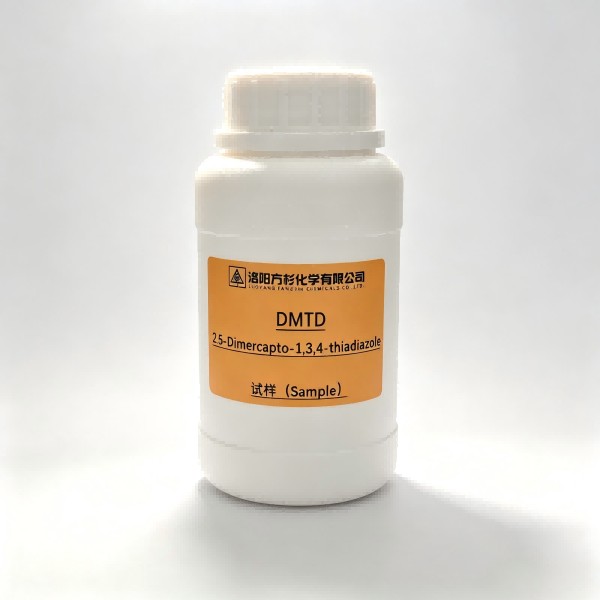
How Thiadiazole Dimer Derivatives Enhance Extreme Pressure Performance in Grease
As a formulator, your primary challenge is balancing performance. You need to achieve a high level of extreme pressure (EP) protection to prevent catastrophic component failure, but not at the expense of thermal stability or corrosion control. This is where selecting the right additive becomes critical. A Thiadiazole dimer is often a superior choice for grease formulations, but understanding its functional mechanism is key to unlocking its full potential and avoiding common formulation pitfalls.
Many formulators see poor EP results—high friction coefficients, low weld points in Four-Ball tests, or large wear scars—and simply increase the treat rate of a conventional sulfurized additive. This can lead to new problems, like yellow metal corrosion or thermal instability. This article explains the precise chemical action that makes thiadiazole derivatives so effective, helping you formulate more intelligently and efficiently.
The Dual-Action Mechanism: How Sulfur and Nitrogen Form Protective Films
The effectiveness of a thiadiazole dimer in extreme-pressure grease conditions stems from the synergistic action of the sulfur and nitrogen atoms within its heterocyclic ring structure. Unlike simple sulfur carriers, this molecule provides a dual-function mechanism for surface protection: adsorption followed by chemical reaction. This process creates a resilient boundary film that prevents metal-to-metal contact under high loads.
This mechanism can be broken down into two distinct but cooperative roles:
- Nitrogen's Role (The Anchor): The nitrogen atoms in the thiadiazole ring are polar. This polarity creates a strong electromagnetic attraction to the metal surface. The nitrogen acts as an "anchor," promoting rapid and tenacious physical adsorption of the additive molecule onto the steel surfaces of bearings or gears. This happens even under moderate operating conditions, ensuring the protective molecule is already in place before severe EP events occur. This initial layer provides a baseline of anti-wear protection and positions the sulfur atoms for the next stage.
- Sulfur's Role (The Reactor): As load and temperature increase to extreme levels, the physically adsorbed layer is no longer sufficient. The heat generated at the asperity tips (microscopic high points on the metal surface) triggers a chemical reaction. The sulfur atoms in the thiadiazole molecule react with the iron on the metal surface to form a sacrificial layer of iron sulfide (FeS). This new layer has a lower shear strength than the parent metal. Instead of the metal asperities welding together and then shearing, causing severe wear and seizure, the low-strength iron sulfide layer shears instead. This controlled, sacrificial action protects the underlying metal substrate from catastrophic damage.
This combined action is more efficient than that of additives containing only sulfur. The nitrogen ensures the active sulfur component is delivered precisely where it is needed most, leading to better performance at potentially lower treat rates and with less corrosivity. Our work focuses on developing these advanced high-quality lubricant additive components to solve these exact formulation challenges.
Evaluating True EP Performance: Key Tests and Failure Points
Relying solely on a technical data sheet (TDS) can be misleading. A product might look good on paper but fail in application-specific testing. To properly evaluate the performance of an EP additive like a thiadiazole dimer, you must understand the key performance tests and what failure looks like. At Luoyang Fangshan Chemical, our R&D team of over 30 PhD and master’s degree holders rigorously tests our products to ensure they solve these common issues.
Here are critical tests and the failure points you should be looking for:
| Performance Test | What It Measures | Common Failure Indicators |
|---|---|---|
| Four-Ball EP Test (ASTM D2783) | Measures a lubricant's ability to prevent seizure under increasing loads. Key metrics are the Last Non-Seizure Load (LNSL) and Weld Point (WP). | A low Weld Point (e.g., below 250 kgf) indicates the additive failed to form a protective film before catastrophic welding occurred. A low Load Wear Index (LWI) suggests poor overall EP and anti-wear performance. |
| Four-Ball Wear Test (ASTM D4172) | Measures the anti-wear properties of a lubricant under a constant load over a set time. The result is the average wear scar diameter on the test balls. | A large wear scar (e.g., >0.60 mm) demonstrates the additive is not effectively minimizing abrasive or adhesive wear under sustained, moderate-to-high load conditions. |
| SRV Test (ASTM D5707) | A reciprocating friction and wear test that simulates oscillating contact, common in many industrial applications. It measures friction coefficient and wear volume. | A high or unstable friction coefficient points to poor film formation or film breakdown. Significant wear on the test specimens indicates the additive lacks persistence or effectiveness in reciprocating motion. The srv test lubricant performance is critical for predicting real-world success. |
| Copper Strip Corrosion (ASTM D130) | Evaluates the corrosivity of the lubricant towards yellow metals like copper and brass. | A rating worse than 1b indicates that the sulfur in the additive is overly aggressive and will corrode sensitive components like brass cages in bearings. Many thiadiazole derivatives excel here, providing EP protection with minimal corrosion. |
When your formulation shows poor EP effect, non-compliant PB/PD (Weld Point / Last Non-Seizure Load), or a large wear scar, it is a clear sign that the additive is not forming a stable, effective boundary film. Selecting a well-designed thiadiazole derivative can directly address these failures. You can explore our range of thiadiazole-based metal corrosion inhibitors that balance EP performance with material protection.
Common Pitfalls When Formulating with Thiadiazole Additives
While powerful, thiadiazole derivatives are not a simple drop-in solution. Successful formulation requires careful consideration of the entire system. Avoiding these common mistakes will save development time and prevent field issues.
Here is a checklist of common formulation errors and how to prevent them:
-
Mistake: Ignoring Base Oil and Thickener Compatibility.
Consequence: The additive may not fully dissolve or may separate over time, especially at temperature extremes. This leads to inconsistent performance, as the active chemistry is not available where needed.
Solution: Always conduct solubility and stability studies in the final intended base oil (e.g., Group I, II, PAO, Ester) and thickener (e.g., Lithium Complex, Calcium Sulfonate) system. Run compatibility tests at both high and low temperatures. -
Mistake: Creating Antagonistic Additive Interactions.
Consequence: Some additives compete for the same metal surface. For example, certain detergents or dispersants can form a film that blocks the EP additive from reaching the surface, rendering it ineffective.
Solution: Review the entire additive package. Understand the mechanism of each component. When introducing a new EP agent, run performance tests on the full formulation, not just the base oil plus the EP additive, to identify any negative interactions. -
Mistake: Over-treating the Formulation to Pass One Test.
Consequence: "More is better" is a dangerous assumption. Excessively high treat rates of a sulfur-containing additive can dramatically increase copper corrosion, reduce thermal stability, and sometimes even have a pro-wear effect.
Solution: Formulate to meet the performance target, not to exceed it by a massive margin. Start with the supplier's recommended treat rate and adjust in small increments, testing for both EP performance and negative side effects like corrosion at each step. -
Mistake: Mismatching Thermal Stability with the Application.
Consequence: The grease is intended for a high-temperature application, but the chosen thiadiazole derivative decomposes at those temperatures. This results in rapid loss of EP protection, sludge formation, and oil degradation.
Solution: Select a thiadiazole derivative with a thermal stability profile appropriate for the grease's maximum expected operating temperature. Review the product's thermal gravimetric analysis (TGA) data if available.
Sourcing Reliable Additives: Quality, Consistency, and Support
The best formulation in the world is useless without a reliable supply of high-quality components. Sourcing lubricant additives for global markets requires a partner who can provide not just the product, but also the assurance of quality and logistical stability. As a professional lubricant additive manufacturer, we have built our operations around these principles.
Our production facilities are certified to ISO 9001:2015 (Quality Management), ISO 45001:2018 (Occupational Health and Safety), and ISO 14001:2015 (Environmental Management) standards. This integrated management system ensures that every batch of product meets strict specifications for performance and purity. With a production capacity for functional chemicals exceeding 10,000 tons, we are equipped to handle orders of any scale.
We understand that R&D and production timelines are tight. That is why we have structured our supply chain for speed and flexibility:
- Fast Sample Delivery: Samples are dispatched within 3 days.
- Quick Bulk Order Turnaround: Large orders are typically dispatched within 7 days.
- No MOQ: We support projects of all sizes with no minimum order quantity.
Furthermore, we stand behind our product quality. In the unlikely event of a quality issue, we work with our clients to arrange a return and find a swift resolution. This commitment provides the supply chain security you need to focus on formulation.
For technical consultation on selecting the right thiadiazole derivative for your grease formulation or to discuss an import substitution project, contact our engineering team. We can provide samples and a starting point formulation to accelerate your development process.
 WhatsApp
 Email
 +8616638861155