How to Choose a Hydraulic Oil Additive Package
Two hydraulic fluids can both carry an "AW" label and still behave very differently in a vane pump that sees wet air, hot reservoirs and frequent cold starts. So how do you pick a hydraulic oil additive package without relying on a data sheet headline? You work backwards from the pump, the water exposure and the temperature window, then test only the candidates that survive those filters. This guide walks through that sequence so you can shortlist packages before pilot blending and request samples with a specification the supplier can actually act on.
Define the Outcome Before You Compare Packages
The task here is narrow: end with a short list of one to three candidate packages, each with a stated reason for being there and a defined set of lab checks. You are not choosing a final product yet. You are deciding what deserves a pilot blend.
You are probably starting from one of three positions:
- A new hydraulic fluid grade that must meet a named specification.
- An existing formulation with a field problem, such as pump wear, rust on reservoir walls, sludge or short oil life.
- An import-substitution project where an existing package must be matched on performance, not just on label claims.
Each starting point changes how strict the screening needs to be. A substitution project needs side-by-side data against the incumbent. A new grade needs a clear pass/fail target from the specification. A field problem needs the failure mode identified first, because a package that fixes rust will not fix a wear problem by itself.
Gather These Inputs Before Requesting Samples
Some inputs block progress. Others can be clarified later. Sort them honestly, because a vague request usually produces a vague recommendation.
| Input | Blocks progress? | Why it matters |
|---|---|---|
| Target specification or OEM requirement (for example DIN 51524 HLP type, or a pump builder's approval list) | Yes | Sets the pass/fail tests and rules out packages that were never built for that approval path. |
| Pump type and duty (vane, piston, gear; pressure class; duty cycle) | Yes | Vane and piston pumps stress the antiwear film differently from gear pumps. |
| Base oil type and viscosity grade | Yes | Solubility, response and oxidation behavior shift with base oil composition. |
| Water exposure (humid breathing, washdown, coolant leaks) | Yes | Decides how much weight hydrolytic stability, demulsibility and rust protection carry. |
| Bulk oil temperature range and reservoir peaks | Yes | Drives oxidation and thermal stability priorities. |
| Metallurgy (yellow metals, silver plating, steel only) | Partly | Determines whether a copper corrosion inhibitor is needed. Can be confirmed during pilot work. |
| Target treat rate and cost ceiling | No | Useful for ranking candidates, not for the first cut. |
| Filter media and seal materials | No | Check during compatibility testing. |
If you are missing the first five items, stop and collect them. Everything downstream depends on them.
Boundary Section: Match the Package to Vane Pump Duty, Water Ingress Risk and Operating Temperature
This is where most selection errors begin. Treating every AW hydraulic fluid as interchangeable hides three variables that change what the package must do. Use the table below to translate your conditions into screening priorities. It is a screening aid, not a formulation recipe; final dosage and component choice come from blending and testing.
| Condition | What it stresses | Package priority | Where this logic stops |
|---|---|---|---|
| Vane pump, high duty | Vane tip and cam ring contact; loss of the antiwear film shows up as wear scar growth | Strong antiwear chemistry confirmed in a vane pump test such as ASTM D2882, plus low friction behavior | A pass in a bench test does not replace an OEM pump approval where one is required. |
| Gear pump, moderate pressure | Less severe contact loading | Balanced antiwear, oxidation and rust protection; cost may carry more weight | Not suitable as a shortcut for vane or piston systems. |
| High water ingress risk | Hydrolysis of some antiwear components, rust, emulsion and sludge | Hydrolytic stability, rust protection and demulsibility (ASTM D1401) weighted heavily | Systems with deliberate water contact, such as fire resistant fluids, need a different design entirely. |
| Dry, closed system | Oxidation and filterability dominate | Oxidation stability testing (ASTM D943 or similar) carries the most weight | Do not assume dry; breather and condensation history often contradicts the plan. |
| High bulk or hot spot temperature | Oxidation, varnish, additive thermal breakdown | Oxidation control and thermal stability; check copper and silver compatibility | Reservoir temperature alone misleads when local hot spots in valves run far hotter. |
| Cold start and wide range | Viscosity and film formation at start | Base oil and viscosity modifier choices matter more than the additive package alone | The package cannot fix a poor viscosity index choice. |
Read your system across all three columns, not one. A vane pump in a humid plant running warm needs strong wear protection, hydrolytic stability and oxidation control at the same time. Those demands can pull against each other, which is why a package tuned for one corner of the matrix may underperform in another.
Executable Sequence for Choosing the Package
- Write a one-page requirement sheet. List the specification, pump type, base oil, viscosity grade, water exposure and temperature peaks. Checkpoint: someone outside your team can read it and understand the duty. Most likely mistake: writing "AW hydraulic oil" with no pump information.
- Rank the three conditions from the boundary table. Mark each as primary, secondary or minor. Checkpoint: only one or two should be primary. If everything is primary, the specification is probably not yet understood.
- Request candidate packages that match the ranked priorities. Ask for full technical data and recommended treat rates. Our hydraulic oil additive packages page lists package options that can be discussed against your requirement sheet. A package is only a candidate if its stated test coverage matches your primary condition.
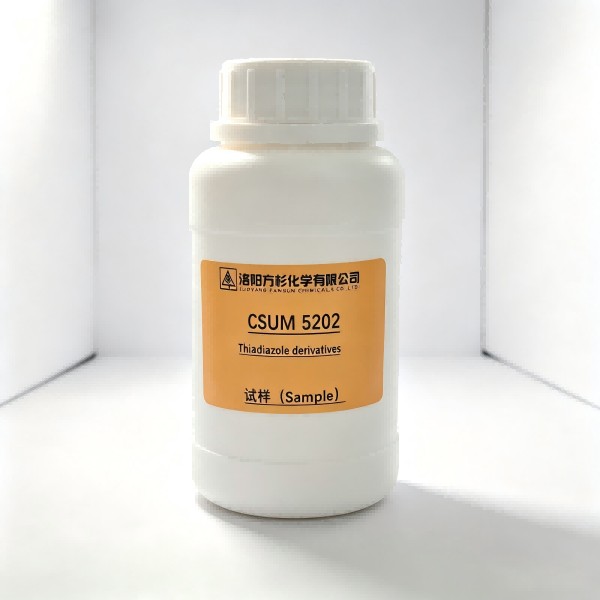
- Check component logic. Look at how the antiwear system is built. For example, phosphate amine salt AW additives are one route to antiwear and extreme pressure protection, and the choice of route affects hydrolytic and thermal behavior. Where copper is present, confirm that a yellow metal inhibitor such as triazole derivatives CSAIL 3000 or a thiadiazole chemistry fits the formulation. Mistake to avoid: adding corrosion inhibitors without checking effect on demulsibility.
- Pilot blend in your own base oil. Use at least two treat rates per candidate and keep the incumbent or reference fluid in the same test run. Checkpoint: clarity, color and no separation after storage at your normal conditions.
- Run the tests that match your primary condition. Wear (vane pump or four ball), oxidation, rust (ASTM D665), copper strip (ASTM D130), demulsibility and filterability form a typical set. Run the ones tied to your boundary ranking first.
- Compare against the target, not against each other. A package that beats a rival but misses the specification limit is still a fail.
Completion Check and Recovery
You are done with selection when each shortlisted package has a documented pass against the tests tied to your primary condition, and no unresolved compatibility issue with base oil, metals or seals. Further optimization, such as trimming cost, is optional and comes after this point.
If a result misses, go back to the step that explains it:
| Observed problem | Likely cause | Step to revisit |
|---|---|---|
| High friction coefficient or large wear scar in SRV or four ball runs | Antiwear or friction control too weak for the contact; treat rate too low | Step 4, then step 5 with a higher treat rate or a friction modifier. Organic molybdenum friction modifiers are one option to test. |
| Weak extreme pressure result (PB or PD values below target) | Insufficient EP chemistry for the load | Step 3; confirm the candidate was built for your load class |
| Short oxidation life | Antioxidant system mismatch, or base oil quality limits | Step 2 and step 5; review temperature priority |
| Rust or emulsion after water contact | Water risk underweighted; inhibitor or demulsibility imbalance | Step 2; consider a rust inhibitor for black metals in the formulation |
| Copper strip staining | Missing or insufficient yellow metal protection | Step 4 |
Common Mistakes That Waste Pilot Blends
- Selecting by label alone. "AW" or "HM" says little about water tolerance or vane pump capability.
- Testing only wear. A package can pass a wear test and still form sludge or fail rust protection after water contact.
- Ignoring base oil differences. Results from one base oil do not transfer cleanly to another.
- Changing two variables at once. Switching package and treat rate together hides which change caused the result.
- Assuming dry service. Condensation in breathing reservoirs is common, so check history before ranking water as minor.
Variations That Change the Procedure
Only a few situations change the sequence itself:
- Import substitution. Add a benchmark run against the incumbent in step 5 and compare results test by test.
- Custom package need. If no standard package covers your ranking, the selection shifts from picking a product to specifying components. Individual lubricant additive components can be evaluated for that route.
- Specification with OEM approval. Allow time for third-party pump testing after your internal screening.
Supply Terms That Support Pilot Work
Practical terms matter when you are iterating on pilot blends. As a professional lubricant additive manufacturer, Luoyang Fangshan Chemical was founded in 2017 and runs a quality management system certified to ISO 9001:2015, alongside ISO 14001:2015 and ISO 45001:2018. Our R&D team includes more than 30 PhD and master's degree holders, and functional chemical production capacity exceeds 10,000 tons. For trial work, there is no MOQ, samples are dispatched in 3 days and bulk orders in 7 days. If a delivered product has a quality problem, we handle it through negotiated return.
If you have your requirement sheet ready, send us the specification, pump type, base oil and water and temperature conditions, and ask for selection advice or samples. We will suggest candidate packages and the tests to run first.
 WhatsApp
 Email
 +8616638861155