Choosing the Right Specialty Lubricant Additives for Your End Use Market
Selecting the correct specialty lubricant additives is a critical decision that directly impacts equipment performance, longevity, and operational costs. Choosing an additive package optimized for automotive engines when your target is industrial gearboxes will lead to premature failure and warranty claims. The core challenge for formulators and purchasing managers lies in matching an additive's chemical properties to the distinct mechanical and environmental stresses of its final application. An incorrect choice can result in poor extreme pressure (EP) performance, increased friction, or insufficient oxidation stability, compromising the final product.
As a professional manufacturer of import-substitute additive products, we understand these challenges. This guide provides a clear framework for evaluating specialty lubricant additives based on their primary end-use sectors. We will compare the dominant performance requirements across major industries and outline a practical checklist for qualifying a new supply partner to ensure both technical compatibility and supply chain reliability.
Matching Additive Performance to End Use: A Sector Comparison
The operational demands on lubricants vary dramatically between a passenger car, a factory stamping press, a container ship engine, and a long-haul truck. Consequently, the additive packages required must be tailored to address these specific needs. A universal solution does not exist. The following table breaks down the key performance requirements and purchasing drivers for four major sectors, helping you align your formulation strategy with market expectations.
| Sector | Dominant Performance Requirement | Key Purchasing Drivers | Common Technical Challenges |
|---|---|---|---|
| Automotive | Thermal and oxidative stability, detergency, and dispersancy to handle high temperatures and combustion byproducts. | OEM approvals (API, ACEA), fuel economy standards, extended drain intervals, emissions system compatibility (low SAPS). | Sludge and deposit formation, shear stability loss in multi-grade oils, catalyst poisoning. |
| Industrial | Extreme pressure (EP) and anti-wear (AW) properties, corrosion and rust inhibition, demulsibility (water separation). | Equipment protection under heavy loads, operational uptime, cost-effectiveness, compatibility with various metals and seals. | High friction coefficients, large wear scars in testing (e.g., SRV, Four-Ball), failing load tests (PB/PD), water contamination. |
| Marine | High base number (BN) for acid neutralization (from high-sulfur fuels), superior corrosion control in saltwater environments, detergency. | Engine cleanliness, fuel type compatibility (HFO, VLSFO, LNG), IMO environmental regulations (e.g., sulfur caps), supplier port availability. | Cylinder liner scuffing, cold corrosion, managing high levels of acidic combustion products. |
| Transportation (Heavy-Duty) | Soot handling (dispersancy), shear stability for long-haul operations, robust wear protection for highly loaded components. | Extended drain intervals, meeting stringent emissions standards (e.g., Euro VI, EPA 2010), backward compatibility for mixed fleets. | Viscosity increase due to soot loading, abrasive wear from soot particles, oil aeration. |
Key Technical Challenges in Formulation and How to Address Them
Formulators often face specific performance shortfalls during product development. Identifying the root cause is the first step toward selecting the right additive component to correct it. Below are common issues encountered in lubricant testing and the additive solutions designed to resolve them. Addressing these problems early prevents costly reformulations and market delays.
Common Lubricant Performance Failures and Solutions
-
Problem: Poor Extreme Pressure (EP) Performance.
This is evident when a lubricant fails to prevent seizure or welding of metal surfaces under high-load conditions, often seen in failing Four-Ball EP (PB/PD) tests. It's a critical issue for industrial gear oils and metalworking fluids. The lubricant film breaks down, allowing direct metal-to-metal contact.
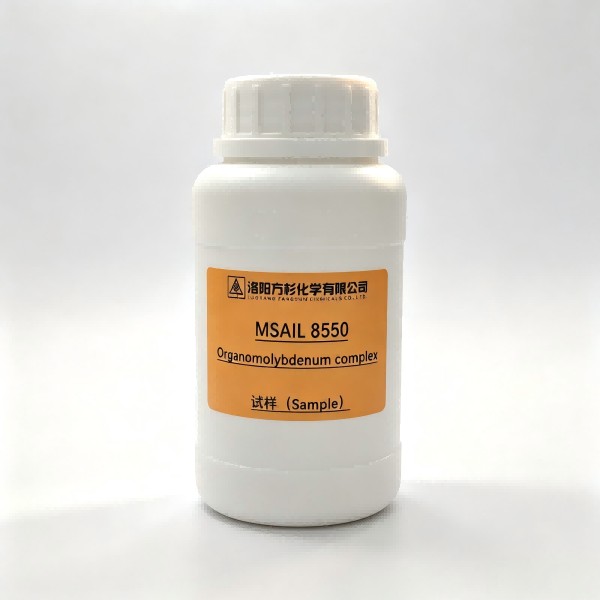
Solution: Incorporate sulfur- or phosphorus-based EP additives. For instance, explore fanschems oil-soluble sulfur-based ep/aw additives like sulfurized olefins, which form a sacrificial chemical layer on metal surfaces that shears under pressure, protecting the underlying component. Phosphate esters are another effective option, particularly in hydraulic fluids and compressor oils.
-
Problem: High Wear and Friction.
Indicated by a large wear scar diameter (WSD) in Four-Ball Wear or SRV testing, this means the lubricant is not adequately separating moving parts. High friction wastes energy and generates excess heat, accelerating oil degradation and component wear.
Solution: Utilize anti-wear (AW) agents and friction modifiers. Zinc dialkyldithiophosphates (ZDDP) are a classic choice, but for modern formulations, ashless options are often preferred. Organic molybdenum friction modifiers are highly effective at reducing the friction coefficient, which can also contribute to improved fuel economy in engine oils.
-
Problem: Insufficient Oxidation Stability.
The lubricant thickens, forms sludge, and creates varnish deposits over time, especially at high temperatures. This shortens the oil's lifespan and can clog filters and oil passages, leading to equipment starvation and failure.
Solution: Add antioxidants. Aminic (e.g., aminic-phenolic) and phenolic antioxidants work by interrupting the radical chain reactions of oxidation. Combining different types of antioxidants can produce a synergistic effect, providing protection across a wider temperature range.
-
Problem: Rust and Corrosion.
The presence of water and other contaminants leads to the degradation of metal surfaces, particularly yellow metals (copper, brass) and ferrous metals. This is a major concern in industrial circulating systems, turbines, and marine applications.
Solution: Introduce corrosion and rust inhibitors. These additives are surface-active, forming a protective film that repels water and neutralizes corrosive acids. Thiadiazole-based metal corrosion inhibitors are particularly effective for protecting yellow metals from attack by active sulfur in the formulation.
Sourcing Import Substitute Additives: A Buyer's Decision Checklist
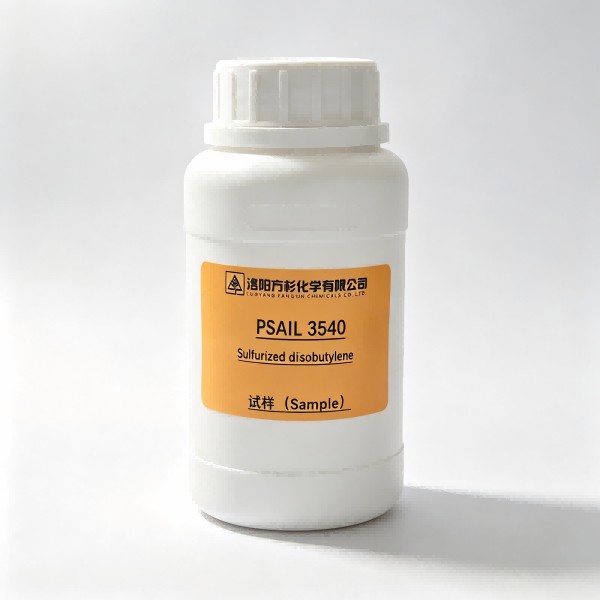
When sourcing specialty lubricant additives, especially for import substitution, technical specifications are only part of the equation. A supplier's operational capabilities are just as important for ensuring consistent quality and a reliable supply chain. Before committing to a new partner, use this checklist to verify their suitability.
-
Confirm Quality and Safety Management Systems.
A supplier's commitment to quality is non-negotiable. Ask for documentation of their management systems. Our facilities are certified to ISO 9001:2015 (Quality Management), ISO 14001:2015 (Environmental Management), and ISO 45001:2018 (Occupational Health and Safety), ensuring that our processes meet stringent international standards for product consistency and responsible manufacturing.
-
Evaluate R&D and Technical Support.
Can the supplier help you solve formulation problems or develop a custom package? A strong R&D team is a sign of a capable partner, not just a reseller. Our team includes more than 30 PhD and master’s degree holders dedicated to developing innovative additive solutions and providing one-on-one support to customer R&D teams.
-
Assess Production Capacity and Lead Times.
Your supply chain depends on your supplier's ability to deliver on time, every time. Clarify their production capacity and standard lead times. With an annual production capacity for functional chemicals exceeding 10,000 tons, we can manage large-volume orders reliably. Our standard lead times are 3 days for sample dispatch and 7 days for bulk cargo dispatch, supporting agile product development and production schedules.
-
Inquire About Supply Chain Flexibility (MOQ).
High minimum order quantities (MOQs) can be a barrier, especially for smaller projects or initial trial runs. Look for a supplier who can accommodate your scale. We operate with no MOQ, providing maximum flexibility for our customers to order exactly what they need, when they need it.
-
Understand the Process for Quality Issues.
Even with the best systems, issues can arise. How does the supplier handle them? A transparent and fair process is essential. We stand behind our product quality and have a clear policy for addressing any concerns, which includes negotiation for returns if a product does not meet agreed-upon specifications.
Navigating Formulation Compatibility for Custom Packages
As a professional lubricant additive manufacturer, I frequently work with customer R&D teams to develop custom composite packages. The most successful projects begin with a clear and detailed definition of the performance targets and operational constraints. Simply requesting an "industrial gear oil package" is not enough. A high-performance formulation depends on the synergy—or antagonism—between different additive components.
For example, certain EP additives can become aggressive toward yellow metals at high temperatures, requiring the inclusion of a compatible metal deactivator. Similarly, the choice of a pour point depressant must be compatible with the viscosity modifier to avoid unintended changes in the final product's rheology.
My role involves helping customers navigate these complexities. The process typically involves:
- Identifying Core Requirements: We start by defining the target application, required OEM or industry specifications (e.g., DIN, AGMA), and the base oil group you intend to use.
- Pinpointing Performance Gaps: We analyze your current formulation's weaknesses, whether it's poor oxidation stability, a high wear scar, or insufficient rust protection.
- Component Selection and Treat Rate Optimization: We recommend a combination of additive components and suggest starting treat rates. This is an iterative process, often requiring several rounds of blending and testing.
- Supporting Import Substitution: For customers looking to replace an existing imported package, we conduct a thorough analysis to create a functionally equivalent or superior solution, ensuring a smooth transition without compromising performance.
Achieving a reliable, cost-effective formulation requires a collaborative partnership between your team and your additive supplier. The right partner provides not just chemicals, but also the formulation expertise to help you succeed.
If your team is facing formulation challenges or exploring import substitution for your lubricant additives, contact us to discuss your specific requirements and request a product sample for evaluation.
 WhatsApp
 Email
 +8616638861155