How to Compare Oil Additive Companies for OEM Approvals
A blender shortlisting suppliers faces a real tension. The largest names usually hold the deepest approval history, but they may not match your volumes, your response-time needs or your cost target. Smaller specialists move faster and often price more flexibly, yet the paper trail behind their claims has to be checked line by line. Most oil additive companies look similar in a brochure. The differences show up when you ask for documents.
Here is the selection rule we use with blenders. If your finished oil must carry a named OEM approval, shortlist only suppliers who can show test evidence for that exact specification. If your target is a performance-matched or import-substitute formulation, weight bench-test data on your own base oil and technical response speed more heavily. The rest of this article shows how to apply that rule.
What an OEM Approval Claim Actually Covers
"Which additive company has OEM approvals?" is the most common question buyers type, and it is slightly the wrong one. An OEM approval or listing is normally tied to a finished, fully formulated oil that passed the required tests. It is not a badge a supplier carries on every component. A supplier can contribute an additive package used in an approved oil, but the approval remains specific to that formulation, base oil and treat rate.
So when a supplier says "OEM-approved additive packages," ask which of these they mean:
- Packages used in approved finished oils: the supplier can name the specification and show the supporting test report.
- Packages designed to meet a performance level: the supplier shows bench or rig data but has not necessarily taken the oil through the full OEM process.
- Components sold individually: approval depends entirely on how you blend them, so the supplier's job is data and technical guidance, not approval coverage.
Each answer is legitimate. The mistake is treating them as equivalent. For a blender who must submit a finished oil to an OEM, the first category reduces your qualification risk. For a blender running its own testing program, the second and third are often enough.
Side-by-Side Evaluation Matrix: OEM Approval Coverage, Product Scope, Technical Service and Regional Supply
The matrix below compares two typical supplier profiles on the criteria that change a blender's decision. These are general profiles to structure your own review, not statements about any specific named company. Fill the right-hand column with what each shortlisted supplier actually provides.
| Criterion | Large global additive house (typical profile) | Specialist or import-substitute manufacturer (typical profile) | What to request |
|---|---|---|---|
| OEM approval coverage | Often broad history across engine and driveline specifications | Varies; may be strongest in industrial oils and performance-matched formulations | Specification list with report references, not a logo page |
| Product scope | Full packages for many applications, frequently fixed formulations | Single components plus packages, usually easier to adjust | Component list, package list, and whether the formula can be tuned |
| Technical service | Structured support, sometimes tiered by account size | Direct contact with application engineers, often faster iteration | Named contact, typical response time, test data on your base oil |
| Regional supply capability | Established logistics networks | Depends on the plant; check sample and bulk dispatch times | Stated dispatch times, MOQ terms, return policy for quality issues |
| Commercial flexibility | Volume-driven terms are common | Terms can be more flexible for small or trial orders | Minimum order, sample policy, price basis |
Choose the global profile when your oil needs a specific approval history, your volumes justify account-level terms, and you can accept a standard formulation. Choose the specialist profile when you need an adjustable formula, quick technical feedback, or an import-substitute route. Neither fits when you cannot yet define your target specification. In that case, fix the spec before you compare suppliers.
Where Luoyang Fangshan Chemical Fits in This Comparison
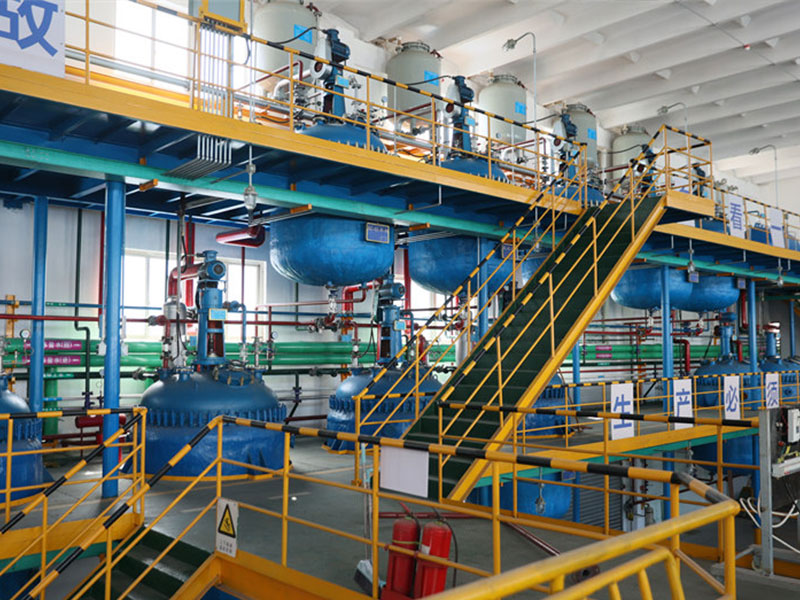
We place ourselves in the specialist category, and we state this plainly so you can weigh it. Luoyang Fangshan Chemical was founded in 2017 and positions itself as a professional lubricant additive manufacturer offering import-substitute additive products for global markets. Facts you can verify during qualification:
- Management systems: ISO 9001:2015 (quality), ISO 14001:2015 (environmental) and ISO 45001:2018 (occupational health and safety).
- Capacity: functional chemicals production capacity above 10,000 tons.
- R&D: a team of more than 30 PhD and master's degree holders.
- Dispatch: samples ship in 3 days and bulk orders in 7 days, with no MOQ.
- Quality remedy: where a product quality problem is confirmed, return is handled through negotiation.
We do not present these as OEM approvals. They are management-system certifications and supply terms. If your project requires a named OEM listing, confirm that requirement with us early, and judge our data against it.
Trade-Offs by Situation
Hydraulic or industrial gear oil blended to a performance target
Here, bench data and formulation flexibility matter more than a headline approval list. A supplier offering ready hydraulic oil additive packages or gear oil packages lets you test quickly and adjust treat rate. The limit: performance on a bench does not substitute for an OEM test if a customer demands the approval itself.
Replacing an imported package to cut cost
Import substitution favors suppliers who can run side-by-side tests against your current package using your base oil. Ask for matched comparisons, not generic datasheets. The limit: a substitute that matches bench results may still need re-qualification wherever your own customer's approval is tied to the original formula.
Tuning a package with individual components
If you want to adjust EP/AW balance yourself, scope of components matters. For example, oil-soluble sulfur-based EP/AW additives can be paired with phosphorus chemistry, and friction modifiers such as organic molybdenum friction modifiers can address friction behavior. This route gives the most control. It also puts compatibility testing on your team, so budget laboratory time.
Strict approval-driven finished oil
Favor the supplier with documented approval history for the exact specification. A smaller manufacturer may lose this comparison, and that is a fair outcome. Do not select on price alone here.
The Overlooked Factor: Test Evidence on Your Own Formulation
Buyers compare company size and brand recognition and skip the question that predicts field trouble: can this supplier show data that resembles your problem? The failures we hear about from blenders are practical ones:
- coefficient of friction too high
- poor extreme-pressure performance
- large wear scar diameter
- PB/PD values below the target
- weak oxidation resistance
- unconvincing SRV results
Ask each supplier to show how their package or component performed on exactly these measures, at what treat rate, and in what base oil. If the answer is a generic chart, treat it as marketing. If the answer is a report with test conditions, treat it as evidence. The same applies to antioxidant or corrosion protection: components such as thiadiazole-based metal corrosion inhibitors should come with usage guidance, not just a CAS number.
Commercial terms belong here too. A supplier with no MOQ and a 3-day sample dispatch lets you run a real trial before committing budget, which lowers the cost of being wrong. That only helps if the data then supports your decision.
Common Mistakes When Comparing Suppliers
- Equating company size with approval fit. A big name does not mean the right specification is covered.
- Accepting "approved" without a document. Ask which specification, which formulation, which report.
- Comparing unlike test results. Different base oils, treat rates and methods make numbers incomparable.
- Ignoring technical response time. Slow feedback during reformulation costs weeks.
- Skipping the supply terms. MOQ, dispatch time and quality-return terms should be written down before the first order.
Selection Rule and Verification Steps
Choose an established approval-holder when a named OEM listing is non-negotiable and your volumes support standard terms. Choose a specialist manufacturer when your target is performance-matched, you need adjustable components or packages, or import substitution is the goal. Hold the decision when you cannot name the target specification or test method.
- Write down the exact specification and bench-test targets (friction, wear scar, PB/PD, SRV, oxidation).
- Send the same request to every shortlisted supplier, including your base oil and application.
- Ask for approval documents and test reports, and mark each claim as "documented" or "stated only."
- Order samples and run the same protocol on each in your laboratory.
- Confirm MOQ, dispatch times, quality-return terms and the technical contact before ordering bulk.
If you want to start with a package rather than individual components, our lubricant additive packages page lists the application options. Tell us your application, base oil and target test results, and we will suggest a package or component set and arrange a sample for your own testing.
To request a quote or sample, send your specification and target data to our sales engineering team.
 WhatsApp
 Email
 +8616638861155