Selecting the Right Tolyltriazole Derivatives for Water Based Systems
Formulators often face a challenge with yellow metal protection in aqueous systems. While Tolyltriazole (TTA) is a well-established copper and brass corrosion inhibitor, its standard form has limited water solubility. This creates instability, precipitates, and ultimately, component failure in coolants, metalworking fluids, and industrial water treatments. The solution lies in selecting the correct Tolyltriazole derivatives, which are chemically modified to ensure complete solubility and lasting performance within a specific aqueous environment. Choosing the wrong derivative can lead to additive fallout and unprotected metal surfaces.
The key is to match the derivative’s chemical nature to the fluid's composition—whether it's a simple water-glycol mixture or a complex, high-solids emulsion. As a manufacturer with a production capacity exceeding 10,000 tons for functional chemicals, we understand these formulation nuances. Our goal is to help you select an additive that integrates perfectly, providing reliable performance as a direct import-substitute product.
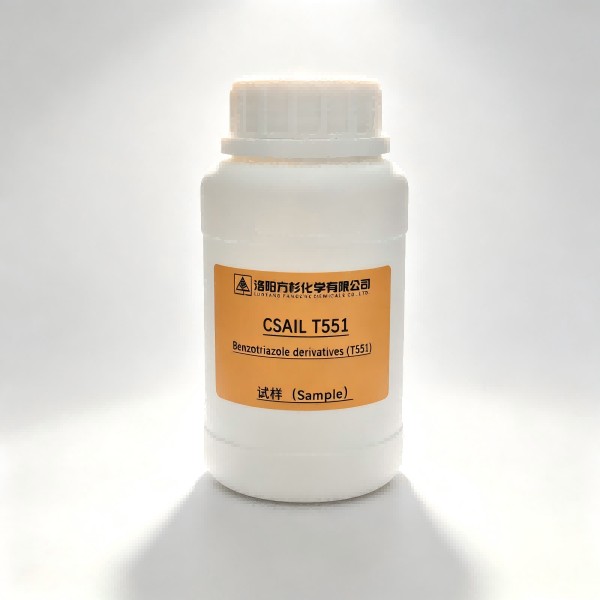
Matching TTA Derivative Solubility to Your Fluid System
The effectiveness of a copper corrosion inhibitor in a water-based system is contingent on its ability to remain dissolved and available. A derivative that works perfectly in a pure glycol antifreeze might precipitate out of a semi-synthetic metalworking fluid. The base fluid dictates the required chemical form of the TTA. Below is a breakdown of how different aqueous systems change the selection criteria.
| Fluid System Type | Solubility Requirement | Recommended TTA Derivative Form | Common Formulation Challenges |
|---|---|---|---|
| Pure Water / Low-Solids Systems (e.g., closed-loop cooling, water treatment) | High water solubility is paramount. Oil solubility is irrelevant. | Sodium Tolyltriazole (TTA-Na): Typically supplied as a 40-50% aqueous solution. It is highly alkaline and readily soluble in water. | High pH contribution can affect other additives or system parameters. Potential for salt precipitation if water hardness is extremely high. |
| Glycol/Water Blends (e.g., engine coolants, antifreeze, heat transfer fluids) | Excellent solubility in both water and glycols (ethylene/propylene) is necessary. | Amine-neutralized derivatives or liquid TTA solutions: These offer balanced solubility and are less alkaline than sodium salts, providing better compatibility with organic acid technology (OAT) packages. | Amine choice can impact compatibility with certain elastomers. Incorrect concentration can lead to phase separation at low temperatures. |
| High-Solids Emulsions (e.g., soluble oils, semi-synthetic metalworking fluids) | Must be soluble or highly dispersible in the water phase without disrupting the emulsion's stability. | Liquid amine salts or specialized tolyltriazole derivative solutions: These are designed to partition into the water phase of the emulsion and stay there, protecting both the fluid and the workpiece. | Interference with emulsifiers can cause oil to separate. Interaction with biocides can reduce the effectiveness of both additives. High electrolyte content can destabilize the TTA derivative. |
Key Performance Indicators Beyond Corrosion Inhibition
While preventing copper tarnishing is the primary goal, the choice of a TTA derivative impacts the entire fluid formulation. A seemingly minor change can affect fluid behavior, tooling performance, and maintenance schedules. Formulators must evaluate candidates based on a wider set of performance metrics.
Key secondary characteristics to assess include:
- Foaming Tendency: Some amine-neutralized derivatives can act as surfactants, increasing the fluid's tendency to foam, especially in high-agitation systems like grinding operations. Low-foam derivatives are essential for maintaining visibility, ensuring proper cooling, and preventing pump cavitation. Testing should always be conducted using methods like ASTM D892.
- Filterability: A poorly chosen derivative can react with hard water ions (calcium, magnesium) or other additives to form insoluble soaps. These precipitates clog filters, reduce fluid flow, and increase maintenance downtime. A good derivative should exhibit excellent hard water stability.
- Compatibility with Other Additives: The complete coolant additive package must work in harmony. The TTA derivative should not degrade the performance of biocides, pH buffers, extreme pressure (EP) agents, or emulsifiers. Incompatibility can manifest as sludge formation, reduced biostability, or poor extreme pressure performance (e.g., failing a four-ball or SRV test).
- pH Impact: Sodium salts of TTA are highly alkaline and will significantly raise the pH of a formulation. While this can contribute to the fluid's reserve alkalinity, it may be undesirable in systems that need to operate within a tight pH range. Amine-neutralized versions offer a more moderate pH impact.
Our R&D team, which includes more than 30 specialists with PhD and master’s degrees, frequently assists customers in assessing these complex interactions. By understanding the full formulation, we can recommend a TTA derivative that protects yellow metals without compromising other critical performance attributes.
Common Formulation Mistakes with Tolyltriazole Derivatives
Integrating Tolyltriazole derivatives into water-based systems can be straightforward, but several common mistakes can lead to instability and performance failure. Avoiding these pitfalls during the formulation and testing phase is essential for developing a reliable product.
Here are four frequent errors our technical team helps formulators troubleshoot:
-
Ignoring pH Shifts and Their Effect on Solubility.
The Mistake: Assuming a derivative that is soluble at a pH of 9.5 will remain so if the system's pH drops to 8.0 due to biological activity or acidic contamination. Many TTA salts and derivatives are only soluble within a specific alkaline range.
The Solution: Select a derivative with a broad pH stability range or ensure your formulation includes a robust pH buffering system. Test the finished fluid's stability by artificially adjusting the pH down to the lowest acceptable operating limit. -
Mismatching the Additive's Physical Form to the Blending Process.
The Mistake: Using a granular or powdered TTA derivative in a cold-blending process without sufficient agitation or time to dissolve. This leads to undispersed solids that settle out or clog filters.
The Solution: For cold-blending operations, always opt for pre-dissolved liquid derivatives. This ensures immediate and homogenous integration into the concentrate. Powdered forms are suitable for hot-blending processes where temperature and mixing can guarantee full dissolution. -
Overlooking Interactions with Biocides and Other Polar Additives.
The Mistake: Certain cationic biocides can react with anionic TTA derivatives, forming an insoluble complex that deactivates both components. This results in both corrosion and microbial growth.
The Solution: Always conduct compatibility testing with the full additive package, especially the biocide package. It may be necessary to select a non-ionic or different class of biocide, or a TTA derivative known for its broad compatibility. -
Failing to Account for Hard Water Ion Sequestration.
The Mistake: In areas with hard water, calcium and magnesium ions can react with TTA derivatives to form precipitates. This removes the active corrosion inhibitor from the solution and creates solid deposits.
The Solution: Include a chelating or sequestering agent in the formulation to tie up hard water ions. Alternatively, select one of the more advanced metalworking fluid additives that are specifically engineered for superior hard water stability.
A Practical Checklist for Qualifying a TTA Supplier
Your choice of supplier is as important as your choice of additive. A reliable partner provides not just a quality product, but also the technical support and logistical stability needed for uninterrupted production. When evaluating a potential supplier for Tolyltriazole derivatives, consider the following points to ensure they meet your operational and quality standards.
Use this checklist during your qualification process:
-
Do they hold internationally recognized certifications?
A supplier's commitment to quality, safety, and environmental standards is non-negotiable. Look for manufacturers who are certified under ISO 9001:2015 (Quality Management), ISO 45001:2018 (Occupational Health and Safety), and ISO 14001:2015 (Environmental Management). Luoyang Fangshan Chemical proudly holds all three, ensuring our processes meet global benchmarks.
-
What are their standard lead times for samples and bulk orders?
Development and production timelines depend on prompt material delivery. A good supplier should provide clear and dependable dispatch schedules. We commit to a 3-day dispatch for samples to support your R&D cycle and a 7-day dispatch for large-volume orders to keep your production line moving.
-
Do they offer flexible Minimum Order Quantities (MOQ)?
High MOQs can be a barrier for new product development, pilot batches, or smaller production runs. A flexible supplier supports your business at every scale. At Fangshan Chemical, we have a no-MOQ policy, allowing you to order exactly the quantity you need, when you need it.
-
What is their process for handling quality discrepancies?
Even with the best quality control, issues can arise. It is important to know how a supplier will respond. We stand behind our product quality and have a clear policy: if a quality issue is confirmed, we will negotiate a return or replacement to ensure your complete satisfaction.
-
Can they provide formulation and compatibility support?
A true partner acts as an extension of your technical team. Inquire about their R&D capabilities and willingness to help solve formulation challenges. Our technical experts are available to discuss compatibility and help you select the optimal additive for your specific application.
By verifying these points, you can build a resilient supply chain and partner with a manufacturer dedicated to your success.
Selecting the right TTA derivative is a critical step in creating a stable, high-performance water-based fluid. By carefully matching the additive's properties to your system's demands and partnering with a supportive supplier, you can ensure reliable yellow metal protection. For assistance with your specific formulation or to request a sample for evaluation, please contact our technical team.
 WhatsApp
 Email
 +8616638861155