How to Choose an Industrial Gear Oil Additive Package
Choosing between gear oil packages is not mainly a question of selecting the strongest extreme pressure chemistry. The decision depends on gearbox duty, water exposure, circulating oil volume, aeration risk, seal compatibility requirements, and whether an equipment manufacturer requires documented approval status. An Industrial gear oil additive package should be shortlisted only after these operating conditions are translated into testable requirements.
For procurement teams, the first selection rule is simple: choose the package category that addresses the gearbox’s dominant failure risk, then verify that it does not create a secondary problem in water separation, foam, air release, or approval compliance. A heavily loaded enclosed gearbox may require stronger EP performance, while a wet industrial environment may place more weight on demulsibility. Neither requirement should be assumed from a generic product label.
Luoyang Fangshan Chemical Co., Ltd. develops lubricant additives, single additive components, and additive packages for industrial lubrication. The company operates management systems certified to ISO 9001:2015, ISO 45001:2018, and ISO 14001:2015. Its functional chemical production capacity exceeds 10,000 tons, and its technical team includes more than 30 PhD and master’s degree holders. These factors matter when a buyer needs formulation support, repeatable supply planning, and performance validation rather than a catalogue comparison alone.
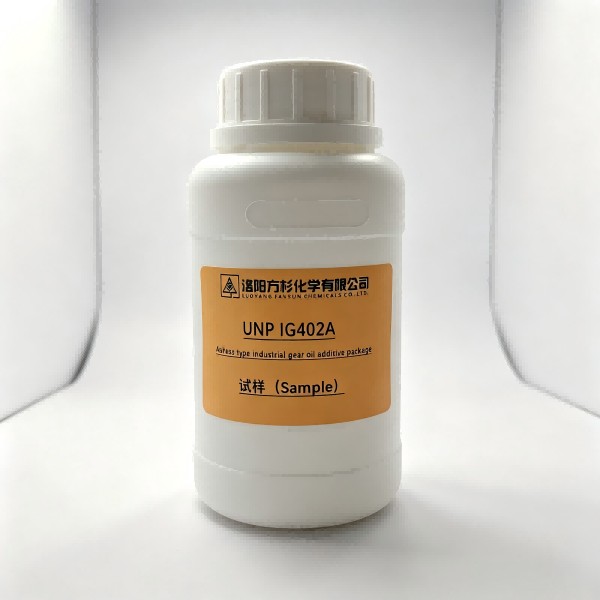
Start with gearbox duty instead of additive chemistry
The correct package begins with the gearbox, not with a preferred additive family. Procurement specifications often state only viscosity grade and a broad gear oil designation. That is not enough for a supplier to recommend a defensible formulation. The buyer should define how the gearbox is loaded, lubricated, exposed to contamination, and maintained.
Choose a high EP direction when the gearbox has sustained high tooth load, shock loading, or significant sliding contact. The reason is that loaded gear contacts can develop surface distress when the lubricant film is challenged. This direction fits heavily loaded industrial drives, but it does not automatically fit every gearbox. It may be unsuitable if an OEM restricts particular chemistries, if yellow metal compatibility is a concern, or if the package has not been checked against the required foam and water separation criteria.
Choose a water management direction when the gearbox operates near moisture, washdown, condensation, or water ingress. In that situation, demulsibility can be as important as load carrying performance because retained water can affect lubricant condition and component protection. This is not a substitute for fixing a leaking seal, breather, or damaged cooler. Additive selection cannot correct continuous contamination.
Collect these inputs before requesting a package quotation
- Gearbox type: Identify whether the unit uses spur, helical, bevel, worm, planetary, or another gear arrangement. Contact conditions differ, so the same package should not be assumed suitable for all designs.
- Load pattern: State continuous load, intermittent loading, starts under load, shock events, and reversing duty. This helps define the needed level of extreme pressure performance.
- Lubrication method: Specify splash, bath, forced circulation, spray, or combined lubrication. Circulating systems place more emphasis on foam control and air release.
- Water exposure: Record condensation, cooling water leak risk, outdoor installation, washdown, or humid operation. This determines how much weight to give demulsibility testing.
- Metallurgy and seals: Share information on gear material, bearings, copper containing components, and seal materials when available. Do not assume that a high load package fits every material combination.
- Current oil failure mode: Describe pitting, scuffing, corrosion, sludge, oxidation concerns, excessive foam, slow air release, water retention, or failed PB and PD results.
- Specification requirement: Provide the OEM document, internal standard, test method, and required approval or performance status. A brand name alone is not enough evidence.
A buyer that supplies these details can compare options on a like for like basis. A buyer that provides only “industrial gear oil additive” will receive a broad answer that may not match actual duty. Where single ingredients are needed for formulation work, review the available lubricant additive components alongside package level options.
Compare gearbox duty with EP, water, foam, air release, and approval requirements
The table below is a decision matrix, not a product specification sheet. It shows which performance requirement should carry the most weight for each gearbox duty. “High” means the buyer should request supporting test evidence and acceptance criteria; it does not claim a fixed performance value for every formulation.
| Gearbox duty | EP performance priority | Demulsibility priority | Foam control priority | Air release priority | OEM approval status | Selection rule and limit |
|---|---|---|---|---|---|---|
| Heavily loaded enclosed gear drive | High | Medium | Medium | Medium | Confirm if specified | Prioritize load carrying evidence and wear control. Do not select on EP claims alone if the system also has water contamination or mandatory approval requirements. |
| Shock loaded industrial drive | High | Medium | Medium | Medium | Confirm if specified | Request evidence relevant to shock and boundary contact conditions. Confirm the test conditions before comparing PB and PD values from different data sheets. |
| Circulating gearbox system | High or medium | High | High | High | Required when mandated | Select for balanced system performance. A package that controls wear but creates persistent foam or delayed air release is a poor fit for circulation duty. |
| Outdoor or humid gearbox | Medium or high | High | Medium | Medium | Confirm if specified | Give water separation and corrosion control serious weight. This does not apply if water entry is severe and mechanical repair is overdue. |
| OEM specified gearbox | As required | As required | As required | As required | Mandatory | Choose only an option supported by the relevant approval document or stated approval status. A technically similar package is not automatically compliant. |
| Light to moderate duty gearbox | Medium | Based on environment | Medium | Medium | Confirm if specified | Use a balanced package when there is no evidence of severe loading. Over specifying EP chemistry without a duty basis may add cost and compatibility risk. |
The key comparison rule: a circulating system normally needs a more balanced decision than a splash lubricated enclosed reducer. Foam control and air release performance matter more when oil is pumped, filtered, and returned repeatedly. A static or low circulation application may still need these properties, but the risk profile differs.
For gearbox lubricant formulation, request the test method, the base oil context, treatment rate, and pass criteria behind every claimed property. Results from different methods, temperatures, or blending conditions should not be treated as directly comparable. This is especially relevant when evaluating SRV testing, PB and PD data, oxidation performance, or water separation results.
Choose between a finished package and a component based formulation
There are two practical sourcing routes. A finished package combines several performance functions into one blend. A component based formulation uses individual additives so the formulator can tune the finished oil. Neither route is universally better.
| Option | Best fit | Commercial advantage | Technical trade off | Do not choose when |
|---|---|---|---|---|
| Finished additive package | Blenders seeking a simpler formulation route and a defined starting point | Fewer incoming materials, fewer dosing steps, and simpler purchasing administration | Less freedom to change one performance function without affecting the package balance | The buyer needs to adjust individual EP, corrosion protection, or foam control functions independently |
| Component based formulation | Technical teams developing differentiated oils or solving a defined performance gap | More control over formulation design and component selection | More blending work, compatibility checks, and quality control responsibility | The buyer lacks laboratory validation capacity or needs a faster standard formulation route |
| Hybrid approach | Blenders using a package as a base while assessing limited formulation adjustment | Can reduce development time while retaining some tuning flexibility | Any modification can change package balance and must be validated | The package supplier or the required approval status does not permit modification |
A finished package is usually the sensible choice when launch speed, blending simplicity, and purchasing efficiency are the main goals. However, it should not be selected solely because it appears multifunctional. The buyer still needs to confirm that its EP performance, water handling, foam tendency, and air release behavior fit the intended gearbox duty.
A component route fits a formulator that must address a known gap in an existing oil. For example, if a trial oil meets load carrying targets but has a corrosion protection concern, the technical team may evaluate relevant inhibitor chemistry rather than changing the full package. Options can include thiadiazole based corrosion inhibitors, subject to full formulation compatibility and application testing. This route is not appropriate when the buyer expects a component to solve every system issue without validating the complete blend.
For EP focused development, buyers may also review sulfur based EP additives as individual formulation inputs. The decision should be based on finished oil testing, not on the presence of one ingredient class. Additive interactions with base oil, other additives, and metal surfaces can affect the final result.
Verify performance claims before supplier shortlisting
Shortlisting should move from supplier claims to a documented verification sequence. The purpose is not to request every possible test. It is to request the evidence that directly addresses the gearbox failure mode and compliance requirement.
- Define the target oil: State viscosity grade, base oil type, gearbox duty, ambient conditions, and expected oil management practice.
- Rank the performance risks: Place load carrying, water separation, foam, air release, oxidation, corrosion protection, and OEM status in order of importance for the application.
- Request formulation boundaries: Ask for the recommended treatment range, compatible base oil context, blending guidance, and storage information. Do not assume a treatment rate from another oil grade or supplier.
- Request relevant data: For load concerns, ask for applicable EP and wear evidence, including SRV information when sliding contact is relevant. For water exposed systems, ask for demulsibility data. For circulating systems, request foam control and air release evidence.
- Check approval wording: Distinguish among “approved,” “meets,” “suitable for,” and “tested against.” These statements can carry different commercial and technical meanings. Obtain the relevant supporting document where approval is mandatory.
- Blend a controlled trial: Use the intended base oil and manufacturing process. A result from a different base oil or blend order may not transfer directly.
- Set acceptance criteria before testing: Agree on which tests, methods, conditions, and pass criteria determine selection. This prevents a later dispute over what “good performance” means.
The most common sourcing error is comparing isolated performance claims without checking the test context. Another is treating a positive PB or PD result as proof that all gear oil needs have been met. Load carrying performance is only one part of the package decision. A gearbox lubricant can still create operational problems if it has poor water separation, unacceptable foam behavior, slow air release, or inadequate approval documentation.
Common mistakes that delay a correct selection
- Selecting by additive name: A chemistry label does not confirm finished oil performance. Compare the full blend under relevant conditions.
- Ignoring water exposure: A gearbox in a humid or wet setting needs a clear water management requirement, not a generic gear oil request.
- Comparing unmatched test data: Results are not directly comparable when test methods, conditions, treatment rates, or base oils differ.
- Assuming OEM compliance: If an approval is required, ask for the stated approval status and documentation before issuing a purchase order.
- Changing a package without validation: Adding a separate component may affect foam, demulsibility, air release, corrosion protection, or EP balance.
- Using additive selection to mask equipment faults: Water ingress, damaged breathers, overheating, or mechanical distress require maintenance action as well as lubricant review.
Assess supply readiness and RFQ requirements
Technical fit comes first, but supply terms affect the commercial decision. A package may be technically suitable yet poorly aligned with trial scale, launch timing, or purchasing flexibility. Fangshan states that samples can be dispatched within 3 days and bulk orders within 7 days, with no minimum order quantity. These stated terms can be useful for a staged evaluation process, beginning with a controlled blend trial before larger purchasing commitments. Freight time, destination handling, and final order confirmation should still be checked separately.
For buyers comparing full package suppliers, request confirmation of batch consistency practices, documentation scope, sample identification, and the process for addressing product quality issues. Fangshan states that product quality issues can be handled through consultation on returns. This is not a substitute for incoming inspection, but it is a relevant point to clarify during supplier qualification.
When an RFQ is prepared, include the operating facts rather than requesting only a price per kilogram. A useful request should contain the target application, required test evidence, expected annual demand if known, packaging preference, delivery destination, and whether the buyer needs a finished package or individual components. Buyers can also compare available lubricant additive packages with their own blending and validation capacity before deciding which sourcing route has lower implementation risk.
Choose a package route when the buyer needs a practical starting formulation and can confirm that its documented performance profile matches the intended gearbox duty. Choose a component route when the buyer has a defined formulation target, laboratory capability, and a reason to tune individual functions. In both cases, do not proceed until EP performance, demulsibility, foam control, air release, and OEM approval status have been reviewed against the actual application.
Request a sample and selection advice with your gearbox duty, target specification, and required test evidence.
 WhatsApp
 Email
 +8616638861155