How to Compare an Industrial Oil Additive Manufacturer's Production Capabilities
The costliest sourcing mistake is not a high price. It is discovering after the first purchase order that a supplier's capacity, blending flexibility or test support does not match your formulation. A reformulation, a failed pilot batch or a restarted qualification can cost months. This guide gives technical buyers a practical way to compare each industrial oil additive manufacturer on the shortlist, using facts you can verify rather than brand reputation. We use Luoyang Fangshan Chemical Co., Ltd. as the worked example, and we mark where a fact is documented and where you still need to ask.
What the supplier record actually supports
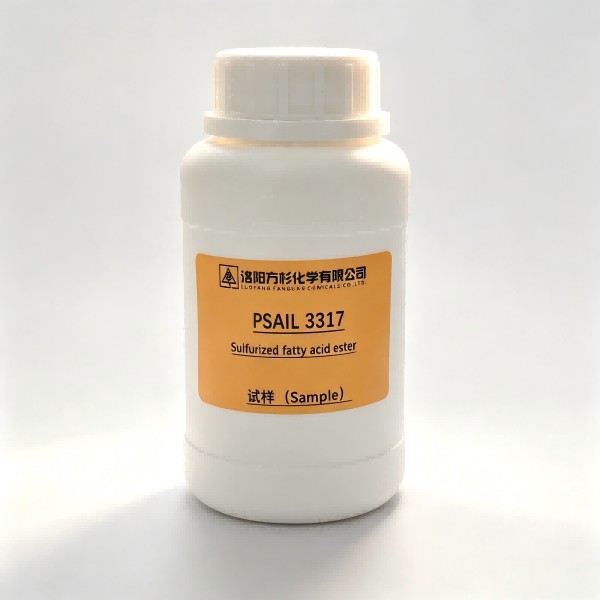
Start by confirming the business role. Fangshan Chemical was founded in 2017 and positions itself as a professional manufacturer of import substitute additive products for global markets. The offering covers lubricant additives, industrial lubricant additives, oil additives, additive components and finished additive packages. You can read the company profile on the page for a professional lubricant additive manufacturer.
Three facts bear directly on production fit:
- Production capacity: functional chemicals capacity exceeds 10,000 tons.
- R&D depth: a team of more than 30 PhD and master's degree holders.
- Management systems: ISO 9001:2015, ISO 45001:2018 and ISO 14001:2015.
These facts do not tell you everything. A total tonnage figure says nothing about how much of it is available to your product family. Treat it as a screening number and move to the operational comparison below.
Operational comparison of reactor capacity, blending flexibility, testing, packaging and batch size
This is the table we suggest buyers fill in for every candidate. The third column shows what is documented for Fangshan. The fourth column lists what to request in writing, because several details are not part of the supplied record and we do not want you to assume them.
| Factor | Why it matters | Documented for Fangshan | Ask for in writing |
|---|---|---|---|
| Reactor capacity | Decides whether a repeat order of your volume can be made without splitting across campaigns | Functional chemicals capacity above 10,000 tons | Reactor volumes used for your molecule, batch size per run, and monthly volume you can reserve |
| Blending flexibility | Determines whether you can adjust ratios between single components and a package | Both additive components and additive packages are offered; R&D team of 30+ holders of advanced degrees | Which ratios can be tuned, how many iterations are included, and who approves a modified package |
| In-house testing | Shows whether performance claims are backed by data on your target tests | Technical lead role covers performance testing and validation; SRV testing is a named focus area | Which tests run on site and which go to third parties, plus method standards and report format |
| Packaging formats | Affects handling, storage and freight cost | Not specified in the supplied record | Available pack sizes, labeling language, and pallet or container loading plan |
| Minimum batch size | Affects trial cost and inventory risk | No MOQ | Whether any practical lot size applies to a custom package, and its pricing effect |
Reading the table. "No MOQ" is useful for pilot lots and small formulation trials. It does not mean unit price stays flat at any quantity, so ask for a price ladder. The packaging row is deliberately open: if a supplier cannot answer it clearly in one reply, that tells you something about order readiness.
Matching production strength to your failure symptoms
Capability only matters if it addresses your actual problem. Buyers who contact us usually describe a symptom rather than a molecule. The list below maps common symptoms to additive families worth screening. It is a starting point for lab work, not a performance guarantee.
| Symptom | Families to screen | Limit |
|---|---|---|
| High friction coefficient | organic molybdenum friction modifiers | Effect depends on base oil and the other additives present |
| Weak extreme pressure, PB/PD below target | Sulfur based and phosphorothioate EP/AW chemistry | Higher sulfur loading can raise copper corrosion risk, so check metal compatibility |
| Large wear scar | phosphate amine salt anti wear agents and phosphate esters | Confirm elastomer and filter compatibility in hydraulic service |
| Weak oxidation resistance | Tuned through the full package rather than one component | Needs an oxidation test on the finished blend, not on the single additive |
If your application is already defined, go straight to the matching package page. Examples are hydraulic oil additive packages, industrial gear oil additive packages and turbine oil additive packages. Component buyers who blend their own can review the additive components range.
A worked example
Say a gear oil blender sees a PB value under its target and a wear scar above its limit on a four-ball run, with SRV friction also higher than a benchmark product. A sensible plan is to request one package aimed at the gear oil range, plus two component samples for ratio adjustment. Run the same SRV protocol on all three. Compare against your incumbent, not against a datasheet. If the package passes PB but fails friction, the discussion with the supplier's technical team becomes specific: adjust a friction modifier, not the whole package.
Evidence and qualification: what to verify first
The three ISO certificates (9001:2015 quality, 45001:2018 occupational health and safety, 14001:2015 environmental) show a documented management system. They do not certify that a given additive will pass your test. Ask for the certificate copies and scope statements, and keep performance questions separate.
A practical qualification sequence:
- Send the target performance values (PB, PD, wear scar, SRV friction, oxidation limit) and the base oil type.
- Ask which package or components fit, and why. A good reply gives reasoning, not a product list.
- Request samples and agree the test method before they ship, so results can be compared fairly.
- Run your own validation and send back the raw numbers.
- Agree acceptance criteria and a specification sheet before moving to a production order.
No customer case studies are supplied in the record we are working from, so we will not cite any. Ask any candidate, including us, for a reference test report on a comparable application and judge it on how complete the data is.
Cooperation terms and the boundaries to agree
The supplied terms are short and concrete:
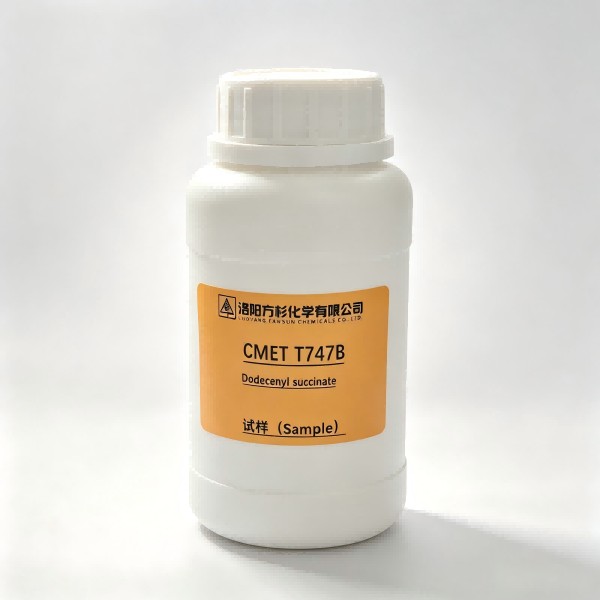
- Samples: dispatched within 3 days.
- Bulk orders: dispatched within 7 days.
- MOQ: none.
- Quality problems: returns are handled by negotiation.
Read these as stated dispatch terms. Confirm them per order, because a custom package with a new ratio may carry different timing than a catalog item. Likewise, "negotiated return" is a starting position, not a defined warranty. Before the first order, agree:
- the specification and test method that define "nonconforming";
- how long after receipt a claim can be raised;
- who covers freight on a returned lot;
- whether retained samples are kept by both sides.
Common mistakes when comparing producers
- Comparing tonnage alone. Capacity for one chemistry does not transfer to another.
- Testing samples with different methods. Results then cannot be compared.
- Skipping the compatibility check. EP gains can cost copper corrosion or seal swell.
- Ignoring packaging until the PO. Pack size changes freight and storage cost.
- Treating a certificate as a performance claim. ISO covers systems, not your test results.
Where an import substitute producer fits, and where it does not
Fangshan's stated focus is import substitute additives. That suits buyers who currently depend on imported packages and want a technically supported alternative with short dispatch and no minimum. It suits less well when a customer or OEM approval names one specific branded product and will not accept equivalents, or when the application needs an approval we have not been asked to document. If you are unsure which side you are on, ask early. It saves a sampling round.
When shortlisting any industrial oil additive manufacturer, score each row of the comparison table from 0 to 2: no answer, partial answer, written answer. The candidate with the most written answers is usually the one whose capacity will hold up after the trial lot.
What to send when you request a quote
To qualify the fit quickly, send the application (hydraulic, gear, turbine, compressor or grease), base oil type, target test values, expected monthly volume and preferred packaging. With those, our technical team can recommend a package or component set and confirm dispatch timing for your case. You can send the information through the applications and solutions pages to request a quote or a sample.
 WhatsApp
 Email
 +8616638861155