How to Vet an Industrial Oil Additive Manufacturer Before You Source
Before sending an RFQ to an overseas supplier, procurement teams should verify more than a product list and a competitive offer. Missing documents, unclear batch control, incompatible additive chemistry, or uncertain delivery terms can turn a trial order into an expensive reformulation project.
When evaluating an Industrial oil additive manufacturer, the first objective is not to find the lowest quoted price. It is to establish whether the supplier can provide the technical documents, product scope, commercial terms, and export evidence needed for your lubricant program. This matters especially for private label blenders that must protect their own finished oil consistency and customer approvals.
Luoyang Fangshan Chemical Co., Ltd. was established in 2017 and supplies lubricant additives, industrial lubricant additives, additive components, and additive packages. Its stated production capacity for functional chemicals exceeds 10,000 tons, while its research and development team includes more than 30 PhD and master’s degree holders. Those facts can support an initial supplier conversation, but a buyer should still confirm the exact product, specification, documentation, and acceptance standard for the intended formulation.
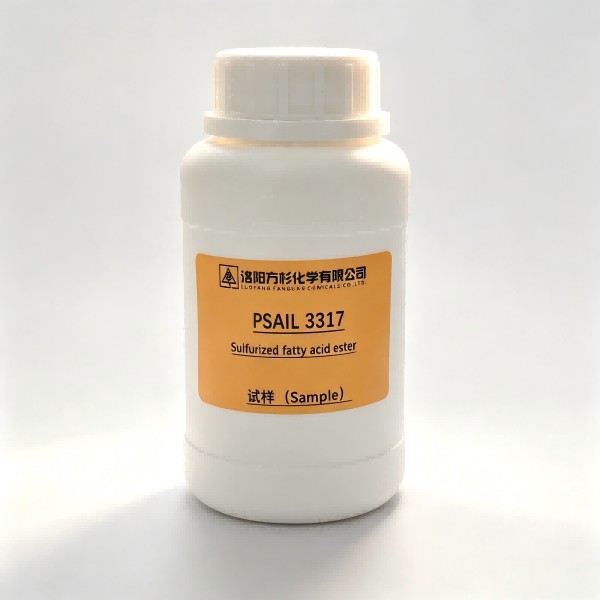
Start by confirming the supplier role and your formulation need
Conclusion: Shortlist suppliers only after separating a component purchase from a package purchase. The chemistry, documentation needs, and technical responsibility are different. A component supplier may be suitable when your formulator controls the final blend. A package supplier may be more suitable when you need a defined additive system for a specific lubricant category.
The reason is straightforward. A single antiwear agent, corrosion inhibitor, friction modifier, or extreme pressure component can interact with other ingredients already in your formulation. An additive package is intended to combine several functions, but it still requires confirmation against your base oil, viscosity grade, target application, and internal performance requirements.
This distinction fits procurement teams handling lubricant blender sourcing for hydraulic fluids, industrial gear oils, compressor oils, turbine oils, grease, or metalworking products. It does not apply in the same way if you are only buying a non formulated chemical for research use, because lubricant performance and finished oil compatibility may not be the relevant purchase criteria.
| Buying route | Best fit | Evidence to request | Main limit |
|---|---|---|---|
| Single additive component | Blenders with their own formula control and laboratory process | COA, SDS, batch information, recommended application scope, compatibility questions | The buyer retains responsibility for package balance and finished oil validation |
| Additive package | Blenders developing a defined hydraulic, gear, compressor, or turbine oil line | Product description, COA, SDS, dosage guidance if available, export documents, acceptance criteria | A package is not automatically approved for every base oil or finished oil standard |
| Specialty performance additive | Projects addressing wear, friction, corrosion, or extreme pressure concerns | Relevant test method, target issue, treat rate discussion, formulation restrictions | One performance benefit can affect other properties, so a controlled trial remains necessary |
For example, a buyer developing an industrial gear lubricant may investigate sulfur and phosphorus chemistry for load carrying performance, while also controlling corrosion risk and oxidation behavior. A buyer can review industrial gear oil packages when the project calls for a package route rather than individual components. The suitable choice depends on the buyer’s existing formula ownership and validation resources.
For customers seeking individual chemistry, the available range includes lubricant additive components. Request the exact identity and documents for the shortlisted item rather than assuming two chemicals with similar names have the same composition or performance profile.
Use a qualification checklist for permits, COAs, SDS files, traceability, and export documents
Conclusion: Do not release a trial purchase order until the supplier has answered document questions in writing. This is the fastest way to remove suppliers that cannot support controlled procurement. It is most useful for export purchases, private label blending, and products that will be handled by multiple warehouses or production sites. It is less relevant only where a buyer already has an approved internal supplier file for the same product and manufacturing source.
A product brochure is not sufficient evidence of purchase readiness. Use the checklist below as a document gate before comparing quotations. Where a supplier cannot provide an item, ask why, what alternative evidence is available, and whether the gap affects your compliance or quality system.
| Qualification item | What to ask | Why it matters | Buyer decision point |
|---|---|---|---|
| Production permits | Ask which permits or registrations apply to the manufacturing and export scope of the quoted product. | Permits help a buyer understand whether the producer is operating within the required legal scope. | Do not assume a general company profile proves product specific authorization. |
| Certificate of analysis | Request a recent COA format and confirm which characteristics are reported for each batch. | The COA becomes a receiving and release reference for incoming material. | Define acceptable values and test methods in the purchase agreement if they are material to your formula. |
| Safety data sheet | Request the current SDS for the intended transport and destination requirements. | The SDS supports warehouse handling, transport planning, hazard communication, and internal review. | Do not treat an SDS as proof of local product registration or market approval. |
| Batch traceability records | Ask how batch numbers appear on labels, COAs, shipping paperwork, and retained transaction records. | Traceability is needed if a blend issue requires investigation or material segregation. | Confirm the record period and traceability format because these details were not stated in the supplier profile. |
| Export documentation review | List the commercial invoice, packing list, transport documents, origin documents, and product documents required for your lane. | Early alignment reduces customs and receiving delays. | Requirements differ by country, product classification, and shipment mode. |
Luoyang Fangshan Chemical states ISO 9001:2015, ISO 45001:2018, and ISO 14001:2015 management system certifications. For a buyer, these are useful supplier qualification signals because they indicate declared quality, occupational health and safety, and environmental management frameworks. They are not substitutes for reviewing the COA, SDS, product specific specification, or destination market obligations.
Ask to see the scope and validity details that apply to your supplier file. This is especially relevant when the buying organization has a formal approved vendor process. A certification statement should support, not replace, your own audit questions.
Match the additive family to the performance problem before sampling
Conclusion: Define the performance failure first, then select additive families for screening. This reduces wasted sample rounds and prevents purchasing teams from asking suppliers for a generic “best additive.” It suits formulation projects with a known issue such as high friction, weak extreme pressure response, large wear scars, poor PB or PD results, corrosion risk, or oxidation concerns. It does not replace finished lubricant testing under your own formulation and application conditions.
Fangshan Chemical identifies friction coefficient, extreme pressure effect, wear scar size, PB and PD outcomes, SRV testing, and oxidation performance among the technical concerns relevant to lubricant additives. Buyers should convert those concerns into a short technical brief before requesting material.
- High friction concern: State the contact type, base oil, temperature range, and whether SRV testing is part of your evaluation. Consider friction modifier candidates, but do not assume lower friction alone delivers sufficient wear protection.
- Weak load carrying result: Identify the test method and the current PB or PD gap. Review sulfur based ep additives or other suitable chemistry only after checking corrosion, odor, and formulation compatibility requirements.
- Large wear scar: Provide the existing additive system and the wear test method. Antiwear and extreme pressure chemistry may help, but the correct response depends on contact conditions and other additive interactions.
- Metal corrosion concern: Specify the metals involved and the fluid type. Buyers may examine thiadiazole metal corrosion inhibitors where the formulation calls for that chemistry, while confirming compatibility with the rest of the blend.
- Oxidation performance concern: State the oxidation test requirement, base oil type, and target service environment. Do not select an antioxidant solely from a general product category without evaluating the entire additive system.
For hydraulic oil formulation, package selection should begin with the buyer’s required viscosity grade, base oil group, target standards, and test plan. A useful reference point is the range of hydraulic oil additive packages, but the product page does not remove the need to verify dosage, compatibility, and finished fluid performance.
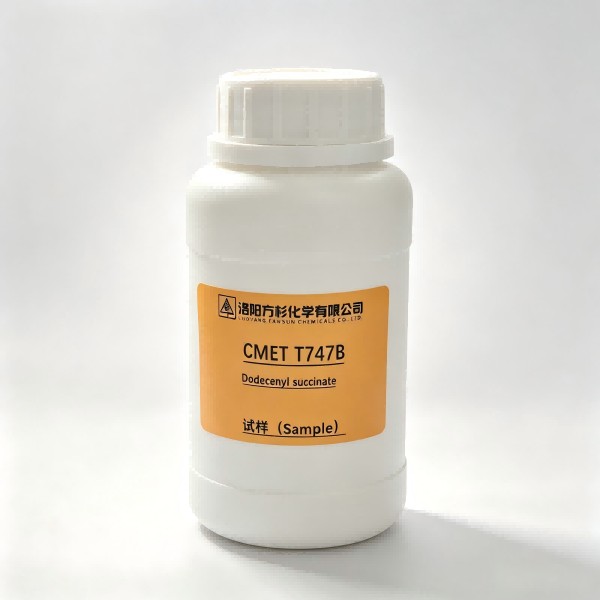
Check capability claims against evidence that affects supply continuity
Conclusion: Use stated capacity, technical staffing, certification, and lead time as screening evidence, then confirm whether they apply to the item you plan to buy. This approach fits a new overseas source assessment. It does not justify assuming reserved inventory, dedicated production capacity, or a fixed delivery date without order specific confirmation.
The company states that functional chemical production capacity exceeds 10,000 tons and that its research and development team includes more than 30 personnel with PhD or master’s degrees. For a buyer, capacity can matter when a formulation moves from laboratory quantities to recurring industrial demand. Technical staffing can matter when the buyer needs discussion of additive molecular design, single additive development, package research, formulation adjustment, performance validation, or import substitute product development.
Roy Clark, Technical Lead, works in additive molecular design, single and package research, formulation optimization, performance testing, and import substitution development. His stated focus includes hydraulic, gear, and turbine oil packages. This can be relevant when a purchaser needs technical clarification beyond a standard catalogue request. It does not establish that every project will receive a custom development program, so define the technical scope in the inquiry.
The stated shipment terms are samples dispatched within 3 days and bulk goods dispatched within 7 days. Treat these as supplier stated lead time references, not as guaranteed arrival dates. Before placing an order, confirm material availability, packaging, payment conditions, shipping method, destination port, dangerous goods classification where applicable, and the time needed for export documents.
Set cooperation terms before a trial order becomes a supply dispute
Conclusion: Put acceptance, quality, and responsibility terms into the inquiry and purchase order before material leaves the supplier. This is most important when a buyer is qualifying an unfamiliar source or when the additive will enter a critical finished lubricant. It may be lighter for a low risk research quantity, but basic document and identification controls should still remain.
Fangshan Chemical states that there is no minimum order quantity. This can suit early stage screening because a buyer may request a quantity aligned with laboratory or pilot needs rather than committing to a large first purchase. No minimum order quantity does not mean every pack size, production schedule, freight arrangement, or payment term is automatically available. Confirm these points for the requested product.
The company also states that product quality issues can be handled through negotiated returns. Buyers should clarify the definition of a quality issue before ordering. Agree on the applicable COA, sampling method, test method, notification period, evidence required for a claim, disposition of disputed material, and allocation of return freight. A negotiated return arrangement is not the same as an unconditional return policy.
- Prepare a one page requirement sheet. Include product function, intended lubricant, base oil, annual estimate, required documents, target shipment destination, and performance concern.
- Request qualification evidence. Ask for certification details, product specific COA format, SDS, batch identification approach, and export document list.
- Compare component and package routes. Decide whether your team needs formulation control through individual additives or a defined package option.
- Define sample acceptance criteria. State what the sample must pass, including appearance, relevant laboratory testing, and formulation performance checks.
- Confirm commercial boundaries. Verify sample dispatch timing, bulk dispatch timing, packaging, order quantity, payment, freight responsibility, and the quality claim process.
- Issue an RFQ with controlled wording. Attach the requirement sheet and ask the supplier to identify any item it cannot confirm.
This sequence gives procurement, technical, quality, and logistics teams a shared record before price becomes the main discussion. It also makes supplier comparisons fairer because each candidate responds to the same defined requirement.
Decide whether the supplier fits your shortlist
Luoyang Fangshan Chemical may be a relevant shortlist candidate for blenders seeking additive components or packages, particularly where no minimum order quantity, stated sample dispatch within 3 days, stated bulk dispatch within 7 days, and documented ISO management system certifications align with the buyer’s sourcing plan. Its declared functional chemical capacity and technical research team may also support a conversation about scale and formulation requirements.
The unresolved questions should be treated as part of qualification, not ignored. Confirm the exact product specification, applicable production permits, COA fields, SDS suitability, batch traceability records, packaging, export documentation, chemical compatibility, test plan, and commercial acceptance terms. Those answers determine whether a promising supplier profile becomes an approved source.
Request a product specific quote and document pack for your intended lubricant application.
 WhatsApp
 Email
 +8616638861155