How Does Long-chain molybdenum dithiocarbamate (MoDTC) Improve Oil Solubility?
Why can one molybdenum friction modifier remain clear and stable in a lubricant blend while another forms haze, sediment, or an oil rich upper layer? The answer often begins with molecular structure, especially the hydrocarbon groups attached to the active molybdenum chemistry.
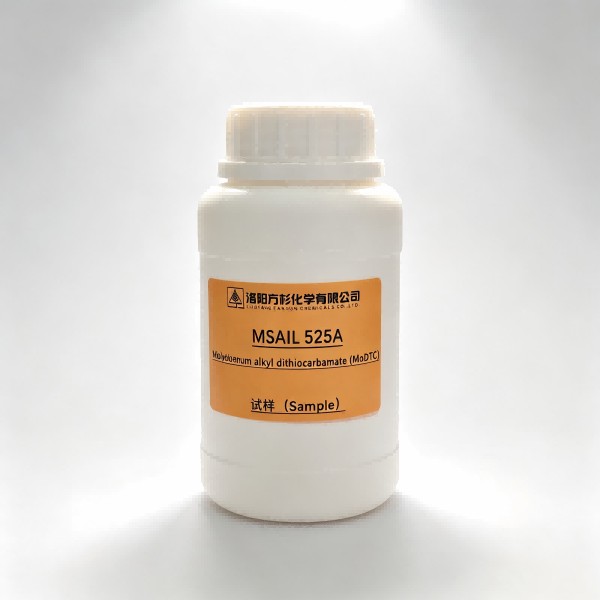
Long-chain molybdenum dithiocarbamate (MoDTC) is designed to address a common formulation issue: a polar active structure must remain compatible with a largely non polar base oil. For lubricant formulators, this is not merely an appearance issue. Poor dissolution or separation can cause uneven additive distribution, unstable friction performance, difficult blending, filter loading, and inconsistent finished oil quality.
Longer alkyl groups can improve affinity with hydrocarbon base oils, but chain length alone does not guarantee a suitable formulation. Base oil type, temperature exposure, additive package composition, blending order, and the required friction behavior all affect the final result. The right selection is therefore a compatibility decision, not simply a choice for the longest available alkyl chain.
Identify whether the problem is solubility, separation, or additive incompatibility
Before changing friction modifier chemistry, determine what the formulation is actually doing. A clear blend immediately after mixing may still separate after storage or show instability after exposure to changing temperature. Conversely, a dark color or slight visual change does not always prove that the active material has fallen out of solution.
The practical conclusion is simple: assess the finished formulation rather than judging an additive only in a neat sample. The reason is that a friction modifier can appear compatible with a single base oil but become unstable after detergents, dispersants, antiwear agents, corrosion inhibitors, or viscosity modifiers are introduced. This approach fits early lubricant formulation work and troubleshooting of unstable blends. It does not replace application testing where friction, oxidation resistance, and wear protection must also be evaluated.
| Observed condition | Likely formulation meaning | Actionable next check | Limit of the observation |
|---|---|---|---|
| Haze after additive addition | The active component may have limited compatibility with the base oil or another additive component. | Prepare separate blends with the base oil and with the full package. | Haze alone does not identify the incompatible ingredient. |
| Bottom sediment after standing | Possible insoluble matter, additive association, or insufficient blending energy. | Check whether the material redissolves under the intended blending condition. | Redissolution does not prove long term storage stability. |
| Upper oil rich layer | Possible phase separation caused by polarity mismatch. | Compare a longer chain grade in the same base oil and package. | Base oil viscosity and co additives can also affect separation. |
| Clear blend but variable friction results | The modifier may be dissolved but may not be providing a stable surface response. | Review dosage, friction test method, and interactions with antiwear chemistry. | Visual clarity cannot predict friction behavior. |
For formulators comparing organic molybdenum options, our organic molybdenum friction modifiers page can serve as a starting point for reviewing related additive chemistry. Selection should still be based on the actual base oil system and the finished lubricant target.
How extended alkyl chains change base oil compatibility and help prevent additive separation in non polar lubricant formulations
The active molybdenum sulfur structure has more polarity than a typical hydrocarbon base oil. Non polar oils are dominated by hydrocarbon interactions, so they preferentially associate with molecules that present compatible hydrocarbon character. Extended alkyl chains add that character to the friction modifier molecule.
In practical terms, the long hydrocarbon tails act as an oil compatible outer region around a more polar functional center. They improve interaction with the surrounding base oil and reduce the tendency of active molecules to associate mainly with one another. When the polar cores cluster together, they can form larger domains that appear as haze, sediment, or separate phases. Longer oil compatible groups can reduce that tendency by helping keep molecules distributed throughout the oil.
The conclusion is that extended alkyl chains generally improve base oil compatibility where a non polar formulation needs an oil soluble friction modifier. The reasoning is molecular affinity: similar hydrocarbon structures interact more favorably with hydrocarbon oils than exposed polar groups do. This is especially relevant for mineral oil and other non polar lubricant systems. It does not mean that a long chain product is automatically best for every formulation, particularly where low temperature flow, viscosity contribution, or interaction with polar synthetic fluids is a concern.
| Molecular feature | What it affects in practice | What can happen if it is mismatched | Where it is most relevant |
|---|---|---|---|
| Extended alkyl chains | Affinity between the friction modifier and hydrocarbon base oil. | Shorter or less compatible groups can allow aggregation and visible separation. | Non polar lubricants and hydrocarbon rich base oils. |
| Polar molybdenum core | Friction modifier activity and interaction with other polar additive chemistry. | Excessive association between polar regions can reduce physical stability. | Packages containing several polar additive components. |
| Base oil polarity | The strength of attraction between the oil and additive hydrocarbon groups. | An additive selected for a non polar oil may behave differently in a more polar fluid. | Any change in base oil source or base oil family. |
| Package polarity balance | Whether all additives remain mutually compatible after blending. | A clear base oil blend may become unstable after full package addition. | Finished oils containing antiwear, antioxidant, and corrosion protection chemistry. |
Think of solubility as a balance, not a single property. The hydrocarbon chains support distribution in oil, while the active core must remain available to contribute to friction control. A buyer who selects only for maximum oil compatibility may overlook friction response, wear performance, or package interactions. A buyer who selects only for friction reduction may create a blend that is hard to manufacture consistently.
Match friction modifier structure to the base oil before building the full package
Base oil compatibility should be screened before the additive package is finalized. This reduces the risk of spending development time correcting a separation issue that was present from the first blend. The best practice is to compare candidate chemistry under the same blending conditions and in the same intended base oil combination.
The recommended approach is to begin with the actual base oil or base oil blend planned for production. Add the candidate friction modifier, inspect the initial appearance, then repeat the observation after the blend has rested and after relevant temperature exposure. Next, introduce the rest of the package and repeat the assessment. This fits formulators in early development and blenders qualifying import substitute additives. It does not replace full field validation or application specific tribology testing.
- Define the base oil system. Record the intended base oil family, blend ratio, viscosity grade, and any process oil that may enter the final formulation.
- Prepare a base oil compatibility blend. Add the candidate friction modifier using the same mixing approach intended for production.
- Inspect physical uniformity. Check for haze, sediment, gel like material, surface oiling, or phase boundaries.
- Repeat after storage and temperature exposure. Look for changes rather than relying only on the initial blend appearance.
- Add the remaining additive components. Introduce antiwear, antioxidant, corrosion protection, and other package materials in the planned sequence.
- Run performance screening. Use the relevant friction, wear, extreme pressure, and oxidation tests for the finished formulation.
- Document the selection basis. Retain blend observations, test conditions, and the reason the chosen chemistry was preferred.
When the lubricant requires several functional materials, it may be more effective to assess the system as a coordinated package rather than as separate purchase items. Our lubricant additive packages information is relevant for buyers assessing how multiple additive functions fit together in a blending program.
Use compatibility screening to avoid common formulation mistakes
Most instability problems are not solved by increasing treatment level. In fact, raising the amount of a poorly compatible additive can make haze, separation, or sediment more apparent. The correct response is to identify whether the active chemistry, base oil, blending process, or another package component is responsible.
- Choosing only by molybdenum content: This can miss the effect of hydrocarbon chain structure on oil compatibility. Use molybdenum content as one purchasing criterion, but compare physical stability in the intended base oil.
- Testing in a substitute base oil: A convenient laboratory oil may not reveal problems that occur in the production base oil. Test the planned commercial base oil system whenever possible.
- Judging the additive in isolation: A neat friction modifier can look satisfactory while becoming unstable after antiwear or corrosion protection additives are added. Always complete a full package compatibility check.
- Ignoring blending order: Some components disperse more readily when added in a controlled sequence. Keep the sequence consistent during screening and scale up.
- Assuming clear appearance equals performance: A clear oil may still show poor friction reduction, wear results, or oxidation behavior. Pair visual screening with the required performance tests.
- Using longer chains without checking limits: Extended hydrocarbon groups can improve oil affinity, but they may not suit every fluid type or low temperature requirement. Confirm the full balance of properties.
For formulations that also require wear and load carrying support, friction modifier selection should be reviewed alongside other additive families rather than treated as a stand alone choice. Buyers evaluating phosphorus chemistry can compare suitable options through our phosphate amine salt additives resources. The correct combination depends on the application, test method, base oil, and target balance between friction behavior and antiwear response.
Build a purchasing specification around formulation fit rather than appearance alone
A useful procurement specification for a molybdenum friction modifier should ask for more than a product name. It should tell the supplier what base oil is used, whether the formulation is non polar or contains more polar fluids, which additive families are already present, and which failure mode must be avoided. That information lets technical teams assess compatibility before a production decision is made.
For a buyer, the strongest conclusion is to request a sample evaluation plan tied to the finished oil. The reason is that the same additive chemistry can behave differently when the base oil or package changes. This suits new product development, reformulation, and import substitution projects. It is less relevant when a formulation has already been validated and no raw material or base oil changes are planned.
- Provide the intended lubricant application and base oil family.
- Describe any observed haze, sediment, phase separation, high friction, poor extreme pressure behavior, or large wear scar concern.
- List the main additive families already present in the blend.
- State whether the priority is oil solubility, friction reduction, oxidation performance, or a balanced result.
- Ask for compatibility assessment before committing to a larger purchase.
- Confirm whether the supplier can support sample and production timing that fits the project schedule.
Luoyang Fangshan Chemical Co., Ltd. is an ISO 9001:2015, ISO 45001:2018, and ISO 14001:2015 certified lubricant additive manufacturer. Our functional chemical production capacity exceeds 10,000 tons, and our research and development team includes more than 30 PhD and master’s degree holders. For development work, samples can be dispatched within 3 days, while larger orders can be dispatched within 7 days. There is no MOQ, which can help formulators screen compatibility without committing to an oversized trial purchase.
Daniel Zhang supports global customers with custom additive package discussions, formula compatibility assessment, and communication with customer research and development teams. Where a product quality issue occurs, return arrangements can be discussed through mutual consultation.
Request a sample and share your base oil and additive package details for a compatibility focused selection review.
 WhatsApp
 Email
 +8616638861155