How to Calculate a Lubricant Additive Package Manufacturer Quote by Treat Rate and Freight
The most common sourcing regret is simple. A buyer awards volume to the lowest price per kilogram, then finds that the package needs a higher dosage, ships at a higher freight rate, and costs more per tonne of finished oil than the dearer quote. This guide shows procurement and formulation teams how to compare offers from any lubricant additive package manufacturer on finished-oil economics instead of drum price alone.
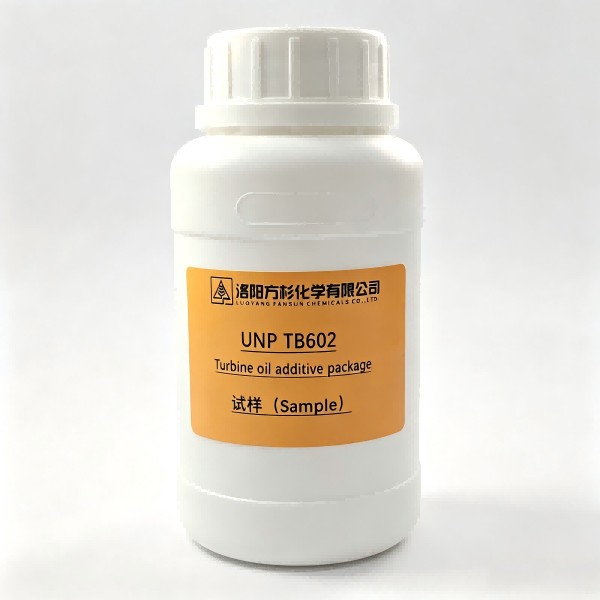
What a Package Quotation Actually Prices
Start by fixing the boundary. A supplier quote usually states a price per tonne or per kilogram of additive package, in one currency, under one trade term, for one quantity. That is an acquisition price. It is not your cost of making oil.
The question this article answers is narrower: what does the additive cost you per tonne of finished lubricant, delivered to your blending plant? Everything below stays within that scope. We do not mix in tooling, downtime or equipment lifecycle cost, because those need a different calculation.
Two further boundaries keep comparisons honest:
- One performance target. Packages are only comparable if they meet the same specification, such as the same viscosity grade and the same wear, extreme pressure and oxidation requirements in your own tests.
- One transaction basis. Compare EXW with EXW, or CIF with CIF. Never add an FOB price to a CIF price.
Cost Drivers That Move the Price per Tonne of Finished Oil
Each driver below changes the result for a different reason, and each fits different situations.
| Driver | Why it changes cost | Where it matters most | Limit |
|---|---|---|---|
| Treat rate (% of package in finished oil) | Multiplies the package price directly. A lower price with a higher dosage can cost more per tonne of oil. | Any comparison between packages from different suppliers | Only valid if both doses pass the same tests |
| Package price per tonne | Sets the base cost before logistics. | Volume tenders | Says nothing about dosage or performance |
| Freight and packaging format | Drum, IBC and container loading change the freight cost per tonne. | Overseas shipments and small lots | Quotes differ in whether freight is included |
| Duty and import taxes | Applied to a customs value that depends on trade terms and product classification. | Cross-border purchases | Rates depend on your country and classification, so confirm them with your broker |
| Blend yield | Handling residue and off-spec batches mean you sell less oil than you theoretically blended. | Small batches and frequent grade changes | Specific to your plant, not the supplier |
| Single components vs. a finished package | Buying components separately adds purchasing, inventory and blending-control work. | Teams without a formulation lab | Component blending may give more flexibility for specialised grades |
Landed-Cost Formula per Tonne of Finished Lubricant
This is the calculation we recommend before you award volume to any lubricant additive package manufacturer. Work in one currency and one trade basis.
- Landed cost per tonne of package = package price + freight + insurance (if separate) + other delivery charges, then add duty and taxes on the customs value.
- Additive cost per tonne of blended oil = landed cost per tonne of package × treat rate (as a decimal).
- Additive cost per tonne of sellable oil = step 2 ÷ blend yield (as a decimal).
Worked example with hypothetical inputs
The figures below are invented to show the method. They are not Fangshan prices and not market benchmarks. All amounts are in USD, with the same trade basis and the same assumptions for both packages.
| Input / step | Package A | Package B |
|---|---|---|
| Package price per tonne (assumed) | 4,000.00 | 3,200.00 |
| Freight per tonne of package (assumed) | 150.00 | 150.00 |
| Customs value (price + freight) | 4,150.00 | 3,350.00 |
| Duty at an assumed 5% | 207.50 | 167.50 |
| Landed cost per tonne of package | 4,357.50 | 3,517.50 |
| Treat rate required to pass the same tests (assumed) | 1.0% | 1.5% |
| Additive cost per tonne of blended oil | 43.58 | 52.76 |
| Blend yield (assumed) | 99% | 99% |
| Additive cost per tonne of sellable oil | 44.02 | 53.30 |
Package B is about 20% cheaper per tonne of package, yet it costs about 21% more per tonne of finished oil. Dosage reversed the ranking. If Package B passed at 1.0%, the order would flip again. That is why the treat rate must come from test data, not from a datasheet claim alone.
Known, Estimated and Unresolved Amounts
A quotation can look precise while hiding open items. Sort every line into one of three groups before building a budget.
| Item | Status | What to do |
|---|---|---|
| Minimum order quantity | Confirmed: Fangshan states no MOQ | Still ask how price changes by order size |
| Sample dispatch | Confirmed: samples ship within 3 days | Use samples to measure real treat rate before volume |
| Bulk dispatch | Confirmed: bulk orders ship within 7 days | This is dispatch time, not delivery time, so add transit separately |
| Package price per tonne | Quote dependent: no price is published here | Request in writing with currency, date and trade term |
| Treat rate | Estimate until your lab confirms it | Validate against your own specification |
| Freight | Estimate until a forwarder quotes | Quote the same container or IBC format for every supplier |
| Duty | Unresolved until classification is confirmed | Check with your customs broker |
| Blend yield | Your plant data | Use your last six months of batch records |
A confirmed driver is not a confirmed price. Do not add the estimated rows to the confirmed ones and present the total as a firm figure.
What Changes the Ranking: Sensitivity and Common Mistakes
Three changes in assumptions most often alter which quote wins.
- Dosage after testing. A package that needs a 0.5 point higher treat rate than assumed can erase a large price gap, as the example shows.
- Freight format. Drums for a small first order may be right. For repeat volume, bulk formats usually lower freight per tonne, though they require storage and handling on your side.
- Duty treatment. A different classification or origin treatment shifts landed cost for every supplier at once, so confirm it early.
Common mistakes we see when buyers compare quotes:
- Comparing price per kilogram without checking the treat rate.
- Mixing currencies or trade terms in one comparison table.
- Assuming the cheapest package is poor quality, or that the dearest one is safe. Neither follows without test data.
- Treating a datasheet dose as final, then skipping bench tests such as SRV test results, four-ball wear scar and PB/PD values.
- Ignoring oxidation stability, which affects oil life and is not visible in the first batch.
Lower-cost options are legitimate when they pass the same tests. Where they fall short on friction coefficient, extreme pressure performance or wear scar size, the saving is false, because the oil fails its specification.
Matching the Package Type to the Application
Dosage and cost per tonne differ by application, so request quotes for the grade you actually blend. Fangshan offers formulated systems such as hydraulic oil additive packages, industrial gear oil additive packages and compressor oil additive packages. Teams that prefer to formulate in house can review the lubricant additive components range, then compare component cost against a finished package using the same formula above.
For buyers replacing an imported product, Fangshan describes its additives as import substitute products for global markets. Confirm equivalence in your own tests before changing the treat rate in your cost model.
Inputs Needed for a Comparable Quotation
Send every supplier the same request. Fangshan was founded in 2017, works under ISO 9001:2015, ISO 14001:2015 and ISO 45001:2018 management systems, and has a team of more than 30 PhD and master's degree holders. Its functional chemicals production capacity exceeds 10,000 tons. That supports technical discussion and supply planning, but it does not set a price or delivery time. Those come from a written quote. You can read more about the professional lubricant additive manufacturer behind these packages.
Buyer's checklist before requesting a quote:
- Finished oil type, viscosity grade and target specification.
- Test requirements: SRV, four-ball wear scar, PB/PD, oxidation stability.
- Annual and per-order volume, with the delivery port or plant.
- Preferred trade term, currency and packaging format.
- Your current treat rate and landed cost, if you are replacing an existing package.
- Your batch yield and the duty rate your broker confirms.
If a delivered product has a quality problem, Fangshan's stated approach is to discuss a return with the buyer. Ask for that process in writing as part of the quote, because it limits the risk of a first bulk order.
To build a budget on your own numbers, send your target specification and volume to a lubricant additive package manufacturer that can quote on the same terms. Request a sample first, so your lab can set the treat rate before you finalise the cost model.
 WhatsApp
 Email
 +8616638861155