Lubricant Additives Treat Rate and Compatibility FAQ
How can a purchasing team tell whether a formulation problem comes from treat rate, base oil compatibility, water ingress, or an incompatible additive combination? This FAQ gives blend operators a practical method for checking lubricant additives before pilot blending or scale up.
A concentrate can look acceptable in storage and still cause haze, sediment, corrosion risk, poor demulsibility, foam, or unstable friction behavior after it enters the finished oil. The right response is not automatically to increase dosage. First identify the function that is missing, the condition that triggers the problem, and the components already competing for the same surface or phase.
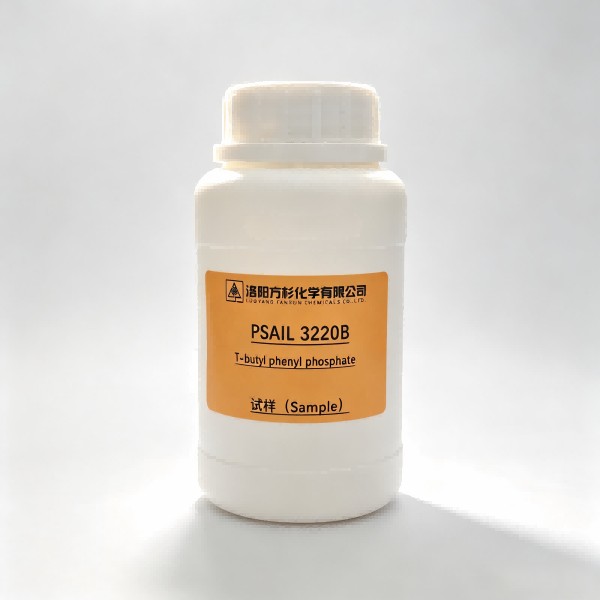
Luoyang Fangshan Chemical Co., Ltd. supplies single components and additive packages for industrial oils. Our facility operates under ISO 9001:2015, ISO 45001:2018, and ISO 14001:2015 management systems. For teams that need to verify compatibility before a larger purchase, samples can be sent within 3 days, with bulk goods sent within 7 days. There is no minimum order quantity requirement.
How should a blend team set the initial treat rate?
Direct answer: Start with the supplier’s recommended formulation window, then confirm the lowest level that achieves the required function in the actual base oil and finished formulation. A higher dose is not automatically safer. Over treatment can reduce solubility, upset additive balance, increase deposits, or worsen water separation.
Treat rate control should begin with the oil’s intended duty. A hydraulic fluid, industrial gear lubricant, turbine oil, compressor oil, and metalworking fluid do not place the same demands on antiwear chemistry, corrosion protection, oxidation resistance, or friction behavior.
| Formulation situation | Recommended decision | Why this fits | Limit or caution |
|---|---|---|---|
| New base oil supplier | Run a compatibility screen before pilot blending | Base oil composition can change solubility, seal response, water handling, and additive response | A screen cannot replace finished oil performance testing |
| Wear protection is below target | Check the complete additive balance before increasing antiwear chemistry | Surface active components may compete or interfere with each other | More extreme pressure additives may affect corrosion, odor, or demulsibility |
| Haze appears after blending | Check order of addition and component solubility | Poor incorporation can resemble a chemistry incompatibility | Clear appearance alone does not prove long term stability |
| Existing package is being modified | Change one functional component at a time | This makes the source of improvement or failure traceable | Several simultaneous changes make root cause analysis weak |
For a packaged route, review the intended fluid category first. Our hydraulic oil additive packages are relevant when a blend team needs a coordinated starting point rather than assembling every functional component separately. This approach fits routine industrial formulations where the package is matched to the application. It does not remove the need to check the selected base oil, local performance requirements, and process conditions.
What should be checked before changing dosage?
- Confirm the target function. Decide whether the issue is wear, extreme pressure performance, corrosion protection, oxidation resistance, foam, water handling, or friction. Do not use one additive to solve an unrelated problem.
- Review the full formulation. Include base oil, viscosity modifier, pour point depressant, defoamer, rust inhibitor, metal deactivator, and all functional additives already present.
- Check the addition sequence. Some components disperse more reliably when added after the main concentrate is fully incorporated.
- Compare retained material. If a previous blend worked, compare raw material identity, batch records, appearance, and water exposure before changing chemistry.
- Set acceptance criteria first. Agree on the laboratory checks that matter before the blend is made. For loaded contacts, this may include SRV testing or PB and PD evaluation where relevant.
Practical limit: A dosage adjustment is useful only when the active chemistry is the cause of the gap. If the base oil has poor compatibility or the blend has water contamination, dosage changes can hide the issue temporarily rather than correct it.
When do additive combinations become unstable?
Direct answer: Additive package stability can fail when the base oil does not keep a component dissolved, when processing or service temperature changes phase behavior, when water reacts with or carries components out of the oil phase, or when a component is used beyond its compatible concentration range.
These are boundary conditions. They should be discussed before an RFQ is converted into a pilot blend. Roy Clark, Technical Lead for additive molecular design, formulation optimization, and performance testing, recommends treating each boundary as a separate question rather than calling every haze or deposit issue an additive quality problem.
| Boundary condition | What can happen | What to check | When the check is insufficient |
|---|---|---|---|
| Base oil type changes | Cloudiness, settling, weak additive response, or changed demulsibility | Screen the full formula in the exact proposed base oil or base oil blend | One base oil sample cannot represent every future source or grade |
| High or low temperature exposure | Loss of clarity, deposits, altered viscosity, or additive separation | Observe the completed blend after controlled temperature exposure and return to ambient conditions | Short laboratory exposure does not duplicate every field duty cycle |
| Water contamination | Haze, emulsion formation, corrosion risk, hydrolytic change, or filter loading | Identify water source, assess separation behavior, and inspect for sediment or color change | Removing visible water does not confirm that reactive damage has not occurred |
| Over treatment | Solubility loss, competition between surface active agents, foam change, or unwanted deposits | Return to the verified formulation level and reintroduce changes individually | A lower concentration may also reduce the intended performance benefit |
Can a different base oil cause instability even when the additive is unchanged?
Yes. Base oil compatibility is formulation specific. A component that remains clear and effective in one base oil may behave differently in another because solvency, polarity, aromatic content, refining route, and co additives differ. The practical conclusion is to approve the full formula, not merely the additive component.
This is especially relevant when a buyer changes from a single base oil to a blended base stock system, introduces reclaimed material, or changes a supply source. The appropriate action is a pilot blend testing plan using the actual incoming materials. It does not apply as a claim that every base oil change will cause failure; it means the change must be assessed rather than assumed safe.
Does water contamination always mean the additive package has failed?
No. Water can enter through storage, handling, equipment breathing, coolers, process leaks, or contaminated raw materials. Some formulations are intended to separate water, while others are designed for water containing service. The right response depends on the product category and the source of water.
For an industrial oil expected to shed water, investigate the source of ingress first and inspect the finished oil for haze, interface layers, sediment, and corrosion signs. For a water based process fluid, compatibility must instead be reviewed around dilution water, corrosion inhibitors, pH control, and microbial management. Fangshan also provides water-based metalworking additives for aqueous processing requirements. These materials should not be selected as substitutes for an oil soluble additive simply because water is present.
What does over treatment look like in practice?
Over treatment often appears after a team tries to correct a failed wear, friction, or corrosion test by adding more active chemistry without checking the rest of the formula. The blend may become cloudy, show a new foam issue, lose water separation, develop deposits, or create a different test failure.
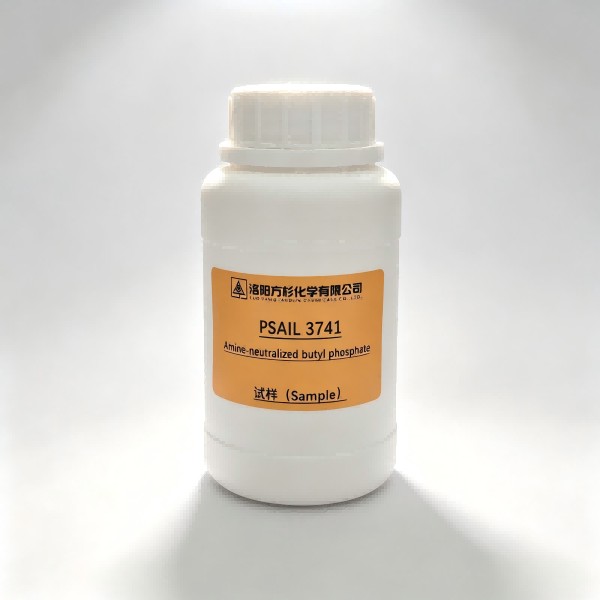
A realistic troubleshooting scenario is an industrial gear oil blend that misses a load carrying target. The operator adds more sulfur or phosphorus chemistry, then sees a new copper corrosion concern or reduced clarity. The correct next step is not another uncontrolled addition. Return to the last stable blend, check the selected extreme pressure chemistry against the corrosion control system, and perform the required performance checks on each deliberate revision. Product options such as tertiary dodecyl polysulfide should be assessed as part of the full formula, not as an isolated cure for every load carrying problem.
Which compatibility checks should happen before pilot blending?
Direct answer: Check raw material identity, blend appearance, storage behavior, water response, and application relevant performance before releasing a formula for scale up. The goal is to find incompatibility early, while changes are controlled and traceable.
- Define the finished oil duty. State the equipment type, contact conditions, expected water exposure, metallurgy, target test methods, and base oil family.
- Freeze the proposed raw material list. Record supplier, product identification, base oil source, and additive package version. Do not mix unrecorded substitutions into the first evaluation.
- Prepare a controlled pilot blend. Follow a documented order of addition and mixing method. Record appearance before and after each addition.
- Inspect stability conditions. Observe clarity, sediment, phase separation, color changes, and any response after relevant temperature exposure or water contact.
- Run function based tests. Choose tests that address the duty, such as oxidation resistance, corrosion behavior, SRV friction and wear evaluation, or PB and PD load carrying checks.
- Review the result against the formula. If a result fails, change one variable, document the reason, and repeat the required checks.
This process fits purchasing teams that need a defensible approval record before ordering a production lot. It is less useful if the formula itself is still undefined; in that case, start with the application requirements and component selection.
What are the most common formulation mistakes?
- Adding more chemistry after a single failed test. This can create a second problem and does not identify the root cause.
- Approving components instead of the complete blend. Individual materials may be acceptable but incompatible together in a specific base oil.
- Ignoring order of addition. A poor blend sequence can produce temporary haze or incomplete incorporation that resembles incompatibility.
- Using appearance as the only release criterion. A clear oil can still fail oxidation resistance, corrosion, friction, wear, or water handling requirements.
- Changing base oil and additive source at the same time. When performance changes, the team cannot identify which change caused it.
- Skipping retained samples. Without a retained reference, troubleshooting later production differences becomes much harder.
For corrosion sensitive systems, the selection of metal deactivators and inhibitors must be checked against the entire additive package. Our dmtd additives for lubricant can be reviewed for formulations requiring metal protection, but their suitability still depends on metallurgy, base oil, treatment level, and other functional components.
How should buyers compare single additives and additive packages?
Direct answer: Choose single components when your technical team needs direct control of each function. Choose a package when the formulation is established and the priority is consistent blending. Neither option is automatically better.
| Purchase route | Best fit | Buyer benefit | Decision limit |
|---|---|---|---|
| Single additive components | Custom development, import substitution work, or targeted troubleshooting | More control over treat rate control and functional balance | Requires stronger formulation discipline and more compatibility work |
| Finished additive packages | Repeat production of a defined industrial oil | Simplifies handling and reduces the number of materials to manage | Still requires approval in the intended base oil and application |
| Hybrid approach | Established package with a carefully selected booster component | Allows limited adjustment without rebuilding the entire formula | Can destabilize the original package if the booster is not screened |
Fangshan was established in 2017 and has functional chemical production capacity exceeding 10,000 tons. Our R&D team includes more than 30 PhD and master’s degree holders and supports single additives, package development, formulation tuning, and import substitution work. If a confirmed product quality issue occurs, return arrangements can be discussed through consultation.
Request selection advice or a sample for your proposed base oil and pilot blend plan.
 WhatsApp
 Email
 +8616638861155