Oil Additive Companies and How to Select a Partner
Which oil additive company is best? Buyers ask this first, and it is the wrong first question. The better question is which supplier fits your base oil, your performance targets and your approval path. Oil Additive Companies fall into several distinct types, and a ranking of brand names hides those differences. This article sets out how the supplier market is usually structured and where the claims you read online stop being evidence. It ends with a method for comparing suppliers before you spend lab time on any of them.
The scope is evergreen. We cite no dated market-share figures. What follows is a structural reading of how suppliers differ, plus a qualification framework you can apply to any shortlist.
How the supplier market is structured
Search results for this topic mostly show list-style pages that name large suppliers and cite broad leadership claims. A list tells you who is visible. It does not tell you who suits a 10,000-ton hydraulic oil blender or a regional engine oil packer. Treat SERP visibility as an observation about marketing, not about technical fit.
In practice, buyers meet four supplier types:
- Global multi-line groups. They offer broad portfolios and long OEM relationships. They are well suited to engine oil formulators who need pre-approved chemistry. Their limits are minimum order terms, lead times and less flexibility on custom tuning.
- Regional lubricant additive manufacturers. They focus on specific product families, often industrial oils or metalworking fluids. They can be faster on adjustments but may lack formal engine-oil approvals.
- Component specialists. They make single chemistries such as phosphate esters, sulfur carriers or corrosion inhibitors. You blend the package yourself, which needs in-house formulation skill.
- Import-substitute developers. They reverse-engineer or redesign performance-equivalent additives to replace imported brands. The value is cost and supply flexibility. The limit is that equivalence must be proven in your own tests.
None of these types is automatically better. Engine oil additive suppliers with OEM-approved additive packages matter if your product must carry an approval. They matter far less if you blend industrial gear or compressor oils against internal or customer-specific specifications.
What drives the differences, and what is only interpretation
Three drivers are well documented in everyday formulation work. First, additive performance is application-specific: an anti-wear package that works in hydraulic oil can underperform in gear oil. Second, approvals are tied to a complete formulation, not to a single additive. Third, qualification costs time, so buyers favor suppliers who shorten the test cycle.
Several things are often claimed but are interpretations rather than evidence:
- "Bigger suppliers deliver better performance." Scale shows breadth of portfolio. It does not show that a particular package passes your four-ball or SRV targets.
- "Import substitution always lowers cost." It can, but only after re-validation. Retesting, trial blends and possible re-approval are real costs.
- "A long customer list proves quality." Customer lists rarely say which product, which test or which year.
An alternative explanation for supplier switching is supply security rather than performance. A buyer may move to a second source because of lead time or order-size limits, with technical equivalence a secondary concern. That changes what you should ask a candidate. Ask about shipping speed and minimum quantities as well as test data.
Comparison: a spec-table method for evaluating OEM approvals, product scope, R&D support and export capability
This is the table we suggest a procurement team fill in for every candidate before technical evaluation. Score each row as "documented", "claimed" or "not provided". Only "documented" earns weight.
| Criterion | What to request | Evidence that counts | Red flag |
|---|---|---|---|
| OEM approvals | Approval letters or listings naming the exact package and treat rate | Document tied to a product code and specification level | "OEM-tested" or "meets" language with no approval number |
| Product scope | Catalog split into single components and finished packages | Packages for your oil type (hydraulic, gear, turbine, compressor) | One package pitched for every application |
| R&D support | Team size, qualifications, test capability, tuning turnaround | Named technical contact, sample test data on your base oil | Generic datasheets only, no formulation dialogue |
| Export capability | Sample and bulk lead times, minimum order terms, shipping documents | Written lead times and quality-issue handling terms | Vague "fast delivery" without numbers |
| Quality system | Current certificates and scope statements | ISO certificates matching the producing site | Certificates for a trading entity, not the plant |
Use this table to compare additive suppliers on equal terms. Where it does not apply: if your product is purely internal-spec industrial oil, the OEM row can carry zero weight, and you should shift that weight to R&D responsiveness.
Consequences for how you shortlist
The structural view changes three decisions.
1. Define the failure you are trying to fix
Lubricant failures usually show up as one of a few symptoms: high friction coefficient, weak extreme-pressure behavior, large wear scars, PB/PD values below target, poor SRV results or short oxidation life. Each points to a different additive family. Friction and SRV problems often lead you to organic molybdenum friction modifiers. Weak load-carrying ability points toward oil-soluble sulfur-based EP/AW additives or phosphorus chemistry. A supplier who cannot discuss your symptom in these terms is not yet a technical partner.
2. Decide between components and finished packages
Components give control and need blending skill. Finished packages shorten development. If you run hydraulic oil, a hydraulic oil additive package reduces trial count. If you tune across many viscosity grades, components may be cheaper over time. Packages do not fit when your base oil is unusual, such as a high-aromatic or heavily synthetic blend, because treat rates may need adjustment.
3. Weigh approvals against flexibility
An approval is worth paying for only if your end product needs it. Otherwise it can lock you into a fixed formulation and a fixed price.
Common mistakes when comparing suppliers
- Ranking by brand recognition. Recognition reflects marketing spend and history, not fit for your oil.
- Testing before screening. Running full test programs on five candidates wastes weeks. Screen with the table first, then test two or three.
- Ignoring minimum order terms. A great package is useless for a pilot batch if the supplier will not ship small quantities.
- Accepting one data point. A single four-ball result on one base oil does not predict your SRV or oxidation result.
- Skipping quality-dispute terms. Agree in advance how off-spec shipments are returned or settled.
A worked example: a gear oil blender shortlisting three suppliers
This is an illustrative scenario, not a customer case. A blender producing industrial gear oil sees PB values below its internal target and wants a second source. The team does the following:
- Writes the target: PB value, wear scar limit and SRV friction behavior on its own base oil.
- Sends the criteria table to five candidates and discards two who return only brochures.
- Requests samples from the remaining three, with a trial treat rate for the gear package category.
- Runs the same test sequence on all samples, including an oxidation check, against the current incumbent as control.
- Compares total cost: treat rate, freight, retest costs and lead time, not just price per kilogram.
The decisive variable is often sample speed. A supplier that ships samples in days lets the team finish this loop in weeks instead of months. This approach fails if the team changes the base oil mid-test, since the comparison then loses its control.
Where Fanschem fits in this framework
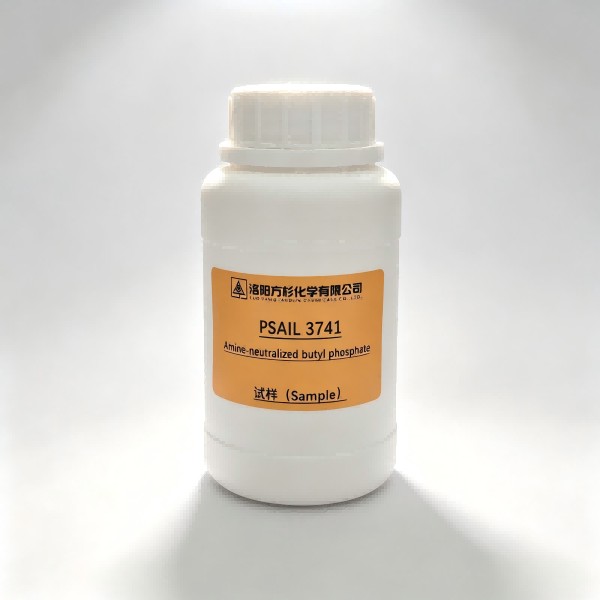
We can only describe ourselves against the criteria above using confirmed facts. Luoyang Fangshan Chemical was founded in 2017 and operates as a professional lubricant additive manufacturer offering import-substitute additive products for global markets. Our facilities hold ISO 9001:2015, ISO 45001:2018 and ISO 14001:2015 certification. Production capacity for functional chemicals exceeds 10,000 tons. The R&D team has more than 30 PhD and master's degree holders.
On the export row of the table, our stated terms are: samples ship within 3 days, bulk orders within 7 days, and there is no minimum order quantity. If a delivered product has a quality problem, we handle it through negotiated return. On the OEM row, be careful. Our positioning is import substitution, so approval requirements for your specific specification should be confirmed with us and verified in your own tests rather than assumed. Our catalog also includes single components and lubricant additive packages, so you can test either route.
Uncertainties and signals that would change this assessment
Several things remain unresolved by any supplier list. Public sources rarely disclose which packages hold which approvals. Equivalence claims for substitute products are hard to verify without your own testing. Lead times quoted in writing can differ from lead times during a supply disruption.
Signals worth watching as you evaluate:
- A supplier refuses to name a technical contact. Treat that as a weak R&D commitment.
- Sample results vary noticeably between two batches. Raise it before bulk orders.
- Your end customer changes the approval requirement. Rerun the OEM row of the table.
If any of these appear, your best supplier may change even though nothing about the supplier changed. That is why the framework above ranks fit, not fame.
To start, send us your base oil type, target tests and monthly volume, and we will suggest a sample set and treat-rate range. You can review application areas first, or request a quote and sample directly through our team.
 WhatsApp
 Email
 +8616638861155