Oil Additive Companies Should Be Compared on Five-Year Supply Cost, Not Price per Kilogram
The quote that looks cheapest on day one often costs the most by year three. Buyers regret it when a higher treat rate, a forced bulk order, a requalification trial or a late shipment shows up on the budget after the purchase order is signed. When you compare oil additive companies, the price per kilogram is only one line in a longer cost model. This article sets out that model and shows where Luoyang Fangshan Chemical Co., Ltd. (Fanschem) fits into it, using only facts we can document.
What a Per-Kilogram Quote Leaves Out
The short answer: oil additive supplier pricing describes the cost of moving a drum, not the cost of running a blend plant for five years. Six items sit outside the quote:
- How much additive you must dose to pass your own specification (treat rate).
- How much you must buy at once (minimum order quantity).
- What it costs to land the material at your plant (freight, duties, packaging).
- What the stock costs you while it sits in the warehouse.
- What it costs to qualify a new additive or package in your formulations.
- What a stoppage costs if the supplier cannot ship on time.
This model suits purchasing leaders who blend hydraulic, gear, compressor or turbine oils. It is less useful for one-off spot buys, where the quote really is most of the cost.
A Five-Year Total-Cost Model for Lubricant Additive TCO
To calculate additive supply cost, add the six drivers below for each shortlisted supplier over a 60-month horizon. The table explains what each driver affects and the trade-off that catches buyers out.
| Cost driver | How to calculate it | What it changes in practice | Trade-off or limit |
|---|---|---|---|
| Treat rate | Annual finished-oil volume × dosage % × price per kg | Often the largest line. A small dosage gap multiplies across every batch. | Only valid if both dosages pass the same tests under the same conditions. |
| Minimum order quantity | Order size × price, plus the cash tied up until it is consumed | Drives inventory and the number of shipments per year. | A low per-kg price with a large MOQ can cost more than a slightly higher price with flexible volumes. |
| Freight and landed cost | Freight + insurance + duties + packaging + inland haulage, divided by kg received | Sets the true lubricant additive landed cost. Small, frequent shipments raise it per kg. | Consolidating shipments cuts freight but raises inventory. |
| Inventory carrying cost | Average stock value × annual carrying rate (capital, storage, shelf-life risk) | Penalizes large MOQs and long lead times that force safety stock. | Cutting safety stock only works if delivery is reliable. |
| Requalification | Lab time + bench and field tests + staff hours + delayed product launches | A one-time hit per switch, repeated if you change suppliers again. | Qualify a second source early. Doing it during a shortage costs more. |
| Supply disruption exposure | Probability of delay × cost per day of stopped blending | Turns a single-source supplier from a saving into a risk. | Dual sourcing adds admin cost, so apply it to critical components first. |
A worked example with illustrative numbers
These figures are hypothetical and show the method only. They are not Fanschem pricing. A blender produces 2,000 tonnes of finished hydraulic oil a year.
- Supplier A: USD 5.00/kg, 1.0% dosage → 20 t additive → USD 100,000 per year.
- Supplier B: USD 5.60/kg, 0.8% dosage → 16 t additive → USD 89,600 per year.
Supplier B is 12% dearer per kilogram and about USD 10,400 cheaper per year, or roughly USD 52,000 over five years, before freight, inventory and requalification. If Supplier B's lower dosage cannot be reproduced in your test rig, the saving disappears. That is why the evidence section below matters.
How the Cost Drivers Interact
The six drivers are not independent. Reading them one at a time leads to wrong decisions.
- MOQ and inventory. A large MOQ raises average stock and the carrying cost. It also raises the chance of stock ageing before use.
- Lead time and safety stock. Long or variable lead times force you to hold buffer stock. Short, dependable lead times let you cut that buffer. Delivery speed is therefore a cash-flow item, not just a convenience.
- Treat rate and freight. A lower dosage means fewer kilograms shipped per tonne of oil, which also reduces freight, packaging and handling.
- Requalification and disruption. Having a qualified second source lowers disruption exposure, but only if the qualification was done before you needed it.
The right sequence is to set the dosage by testing, then size orders to match, then price the freight, and only then compare quotes.
Where Fanschem's Documented Strengths Enter the Model
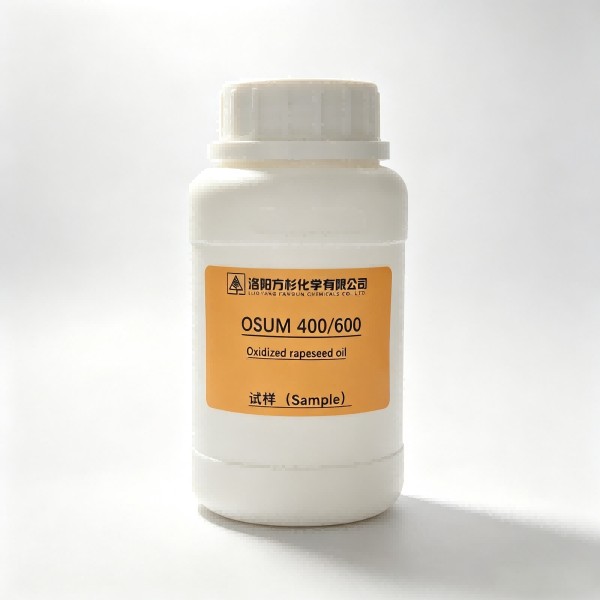
Among oil additive companies serving global blenders, we are a professional lubricant additive manufacturer founded in 2017. The facts below map to specific rows of the cost model. We state only what our company records support.
| Documented fact | Cost driver it touches | What to confirm in your RFQ |
|---|---|---|
| No minimum order quantity | MOQ, inventory carrying cost | Confirm the no-MOQ term applies to your specific product and packaging in writing. This is how you test an additive package minimum order quantity claim from any supplier. |
| Samples ship in 3 days; bulk orders ship in 7 days | Safety stock, disruption exposure, requalification speed | Ask for the dispatch date in the quotation for your exact grade and quantity. |
| Production capacity for functional chemicals above 10,000 tons | Disruption exposure | Ask which plant lines make your product and how capacity is allocated. |
| R&D team of more than 30 PhD and master's degree holders; import-substitute additive products | Requalification, treat rate | Request a side-by-side test plan against the product you want to replace. |
| ISO 9001:2015, ISO 45001:2018 and ISO 14001:2015 management systems | Batch consistency, audit burden | Request the certificates and ask how batch records are kept. |
| Product quality problems are handled by negotiated return | Supply disruption, quality risk | Agree the return and claim process before the first order. |
These are the terms we work to. They do not replace your own qualification. Our import-substitute work still has to prove itself in your rig, in your base oil, against your specification.
The Misunderstanding That Distorts Price Comparisons
The most expensive error is treating two additives as equal because they share a name or a function. A cheaper component can cost more if it needs a higher dosage, or if it fails a performance test late in the programme. The performance problems that drive rework are well known:
- High friction coefficient, which raises energy use and heat. Organic molybdenum chemistry, such as our organic molybdenum friction modifiers, is one route to address it.
- Weak extreme-pressure performance and PB/PD values that fall short of the specification. Candidates include oil-soluble sulfur-based EP/AW additives and phosphorus-based chemistry.
- Large wear scar diameter in four-ball testing and unstable results in SRV tests.
- Poor oxidation stability, which shortens drain intervals and raises the cost of oil changes.
How to verify: ask every supplier for results on the same test method, base oil and dosage. Never compare a wear scar from one standard with a figure from another, and do not read a higher number as automatically better. Higher EP loading can help one application and hurt copper corrosion or oxidation in another. The right conclusion depends on your formulation and the specification you must meet.
Common Mistakes When Comparing Quotes
- Comparing ex-works prices with delivered prices. Convert both to landed cost per kilogram.
- Ignoring dosage. Compare cost per tonne of finished oil, not cost per kilogram of additive.
- Accepting an MOQ without costing the stock. A bulk discount can be cancelled by carrying cost.
- Single-sourcing a critical component. A supplier that wins on price also becomes your disruption risk.
- Leaving the return process undefined. Agree it before the first shipment, not after a quality complaint.
A Practical Procedure and Buyer Checklist
- Define the specification. Fix the base oil, standards and pass criteria for the product you are costing, for example a hydraulic oil additive package.
- Request samples from two or three suppliers. Run the same test plan on each. A 3-day sample dispatch shortens this step.
- Measure the minimum passing dosage. This gives the real treat rate for the cost model.
- Collect landed-cost inputs. Freight, duties, packaging and payment terms for each supplier.
- Set order size. Pick a quantity that matches your consumption, then check each supplier's MOQ against it.
- Add requalification and disruption lines. Use your own lab hours and your cost per day of stopped blending.
- Run the 60-month total and review the ranking. Keep a qualified second source for critical components.
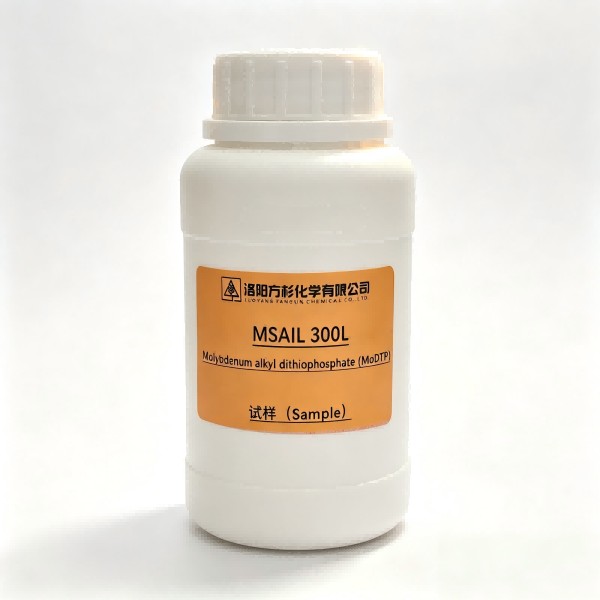
If you want a package rather than single components, see our lubricant additive packages. For single components, our lubricant additive components range lets you tune dosage line by line.
Next Step
Send us your product type, target specification and annual volume. We will recommend candidate components or a package, ship samples, and give you a quotation with dispatch dates and terms, so you can drop real numbers into the model above. To start, request a quote or sample through the Fanschem technical sales team.
 WhatsApp
 Email
 +8616638861155