Choosing the Right Organic Molybdenum Friction Modifiers for Your Formulation
For lubricant formulators, selecting the correct additive chemistry is the first step toward achieving demanding performance targets. When the goal is significant friction reduction and improved efficiency, organic molybdenum friction modifiers are a primary consideration. However, the two most common types—Molybdenum Dithiocarbamate (MoDTC) and Molybdenum Dithiophosphate (MoDDP)—offer distinct performance profiles. Choosing between them requires a clear understanding of their chemistry, function, and interaction within a finished lubricant package.
A misstep here can lead to formulation dead-ends: high friction coefficients, poor extreme pressure (EP) performance, or failure to meet wear scar targets in SRV testing. This guide provides a direct comparison to help you determine which chemistry is the better fit for your application, whether you are developing engine oils, industrial gear lubricants, or specialized greases.
What Are Molybdenum-Based Additives and How Do They Work?
Molybdenum-based additives are oil-soluble compounds designed to reduce friction and protect metal surfaces under boundary lubrication conditions. Their primary mechanism involves thermal decomposition at points of asperity contact (high heat and pressure). This decomposition forms a layered, low-shear tribofilm of Molybdenum Disulfide (MoS2) on the metal surfaces.
This MoS2 film has a lamellar structure, where layers can easily slide over one another, dramatically lowering the coefficient of friction. This action provides several key benefits:
- Improved Fuel Economy: By reducing parasitic frictional losses in engines and drivetrains.
- Enhanced Wear Protection: The sacrificial film prevents direct metal-to-metal contact, reducing wear and extending component life.
- Increased Energy Efficiency: In industrial applications, lower friction translates to reduced energy consumption and lower operating temperatures.
As a professional manufacturer with a production capacity for functional chemicals exceeding 10,000 tons, we specialize in producing these critical components. Our goal is to provide reliable, high-performance import-substitute additives, including a range of organic molybdenum friction modifiers & lubricant additives, to help formulators solve complex friction and wear challenges.
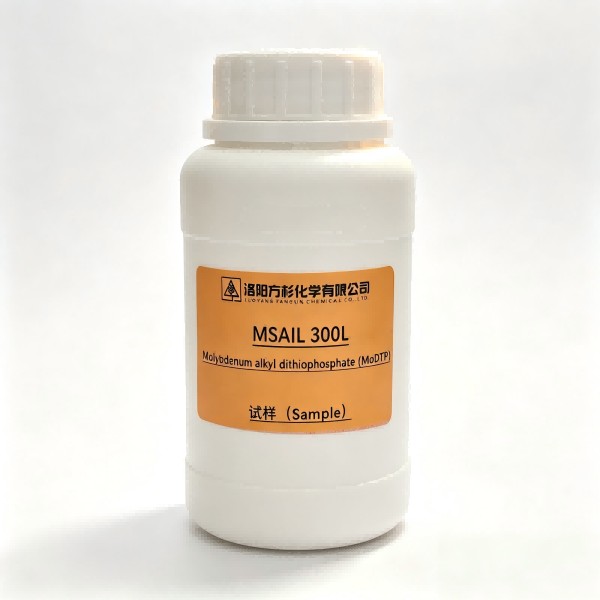
MoDTC vs. MoDDP: A Head-to-Head Technical Comparison
The choice between MoDTC and MoDDP is not about which is "better" overall, but which is more suitable for a specific set of performance goals and formulation constraints. MoDTC is primarily a friction reducer, while MoDDP is a multifunctional additive with anti-wear and antioxidant properties. Understanding their differences is key to effective formulation.
This table breaks down their core attributes to guide your selection process.
| Attribute | Molybdenum Dithiocarbamate (MoDTC) | Molybdenum Dithiophosphate (MoDDP) |
|---|---|---|
| Primary Function | Friction Reduction | Anti-Wear (AW), Extreme Pressure (EP), Antioxidant, some Friction Reduction |
| Chemical Structure | Contains a dithiocarbamate ligand. Typically exists as a dinuclear (dimeric) or trinuclear (trimeric) molybdenum core. | Contains a dithiophosphate ligand, structurally similar to Zinc Dithiophosphate (ZDDP). |
| Friction Reduction Efficiency | Excellent. Rapidly forms a highly effective MoS2 tribofilm, leading to very low friction coefficients (often below 0.05). | Moderate. Provides friction reduction, but generally not as potent as MoDTC. Its friction-reducing capability is often secondary to its AW/EP function. |
| Anti-Wear Performance | Good, especially in synergy with ZDDP. The MoS2 film provides a protective layer. | Excellent. Functions as a primary anti-wear additive, forming a robust protective film. It can be used to supplement or partially replace ZDDP. |
| Oxidative Stability | Good. Many MoDTC variants possess inherent antioxidant properties, contributing to the overall stability of the lubricant. | Good. The dithiophosphate structure inherently provides antioxidant capabilities by decomposing peroxides. |
| Synergy with ZDDP | Strong positive synergy. The combination of MoDTC and ZDDP is well-documented to provide superior friction reduction and wear protection compared to either additive alone. | Complex interaction. As both are dithiophosphates, they compete for surface access. Formulation requires careful balancing to avoid antagonistic effects. |
| Formulation Fit | Ideal for modern, low-viscosity engine oils targeting fuel economy (ILSAC GF-6, API SP). Also used in driveline and industrial oils where friction reduction is the top priority. | Suitable for industrial gear oils, hydraulic fluids, and engine oils where robust anti-wear performance is critical and a moderate level of friction reduction is acceptable. |
Common Formulation Challenges and How to Avoid Them
Integrating molybdenum additives requires more than simply adding them to a base oil. Formulators often encounter issues that can be traced back to a few common mistakes. Awareness of these challenges is the first step in avoiding them during the development process in your ISO 9001:2015 certified laboratory environment.
-
Mistake 1: Ignoring Additive Interactions.
Problem: Additives in a finished lubricant do not act in isolation. Certain dispersants or high-basicity detergents can compete with MoDTC for the metal surface, hindering the formation of the MoS2 tribofilm. Similarly, using MoDDP alongside high levels of ZDDP can lead to competition without providing a significant performance uplift.
Solution: Conduct a thorough design of experiments (DOE) to screen for compatibility. Test your molybdenum additive with the specific detergents, dispersants, and anti-wear agents in your target formulation. Our R&D team, which includes over 30 PhD and master’s degree holders, can assist in assessing formula compatibility as part of our technical support for our high-performance lubricant additive packages & blending solutions.
-
Mistake 2: Using an Incorrect Treat Rate.
Problem: Too little MoDTC may not provide enough molybdenum to form a complete, effective tribofilm, resulting in negligible friction reduction. Conversely, an excessively high treat rate doesn't necessarily improve performance and can negatively impact deposit control, seal compatibility, and overall formulation cost.
Solution: Start with the supplier's recommended treat rate and run a ladder study. Use a tribometer (like an SRV or HFRR rig) to map friction coefficient against molybdenum concentration. This will identify the "knee" of the curve, where performance benefits start to plateau, allowing you to find the most cost-effective dosage.
-
Mistake 3: Overlooking Base Oil Effects.
Problem: The solubility and performance of molybdenum additives can vary significantly depending on the base oil. A formulation that works well in a Group III or PAO base stock may exhibit solubility issues or different performance characteristics in a Group I or II mineral oil.
Solution: Always validate your formulation in the specific base oil group and viscosity grade intended for the final product. Check for solubility at both ambient and low temperatures, and confirm performance through bench testing.
A Buyer's Checklist for Selecting the Right Molybdenum Additive
Before sending out an RFQ or requesting samples, use this checklist to clarify your technical and operational requirements. This will help you communicate your needs clearly and ensure you receive the most appropriate product for your application.
-
Define Your Primary Performance Goal.
- Is your main objective maximum friction reduction for fuel economy (points toward MoDTC)?
- Or is it balanced wear protection with moderate friction reduction (points toward MoDDP)?
-
Consider the Application's Demands.
- Engine Oil: Are you formulating to meet low-SAPS (Sulfated Ash, Phosphorus, and Sulfur) requirements? This may limit the use of phosphorus-containing MoDDP. MoDTC is often the preferred choice for modern passenger car motor oils.
- Industrial Gear Oil: Do you need exceptional EP/AW performance under high load? MoDDP or a combination of MoDTC with other high-quality lubricant additive components & chemical additives might be necessary.
-
Review Your Existing Additive Package.
- What is the current level of ZDDP? If it's high, adding MoDTC may provide a strong synergistic benefit. If it's low, MoDDP could help boost wear protection.
- What type of detergent system are you using (e.g., calcium sulfonate, salicylate)? Confirm compatibility.
-
Evaluate Logistical and Supply Chain Needs.
- Do you require small quantities for R&D testing? We support this with our no MOQ policy.
- How quickly do you need material for pilot blends and production runs? Our standard lead time is 3 days for samples and 7 days for large orders, ensuring your project stays on schedule.
By working through these questions, you can build a precise technical profile for the additive you need, streamlining the selection and testing process. This focused approach saves valuable laboratory time and resources.
If you are evaluating molybdenum chemistries for your next formulation, our technical team is available to help. Contact us to discuss your specific application requirements and request a sample for testing.
 WhatsApp
 Email
 +8616638861155