Phosphorothioate acrylate derivatives for PSAIL 3530 vs 6300 cost comparison
A low drum quotation can become an expensive purchasing decision when the material needs a higher treatment level, creates blending changes, or forces a reformulation after qualification. Before issuing a purchase order for PSAIL 3530, PSAIL 6300, or an equivalent ashless EP/AW additive, sourcing teams should compare cost per treated ton rather than price per drum.
Phosphorothioate acrylate derivatives may be evaluated for industrial lubricant formulations where ashless extreme-pressure and anti-wear performance are required. However, a grade name alone does not prove equal active content, equal treatment rate, equal base-oil compatibility, or equal finished-fluid performance. PSAIL 3530 and PSAIL 6300 should therefore be treated as quoted materials requiring document-based comparison, not as automatically interchangeable products.
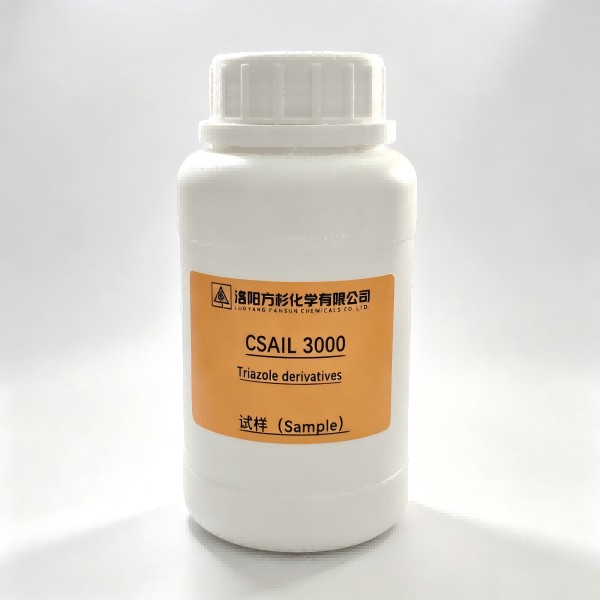
Luoyang Fangshan Chemical Co., Ltd. supplies lubricant additives, additive components, and additive packages for global markets. We can support buyer discussions around individual additive selection, package compatibility, and import-substitute formulation requirements. The company has operated since 2017, has production capacity exceeding 10,000 tons for functional chemicals, and has an R&D team with more than 30 PhD and master’s degree holders. Those facts matter when a buyer needs more than a drum-price comparison: they need technical information that allows a formulation manager to judge whether a quoted material belongs in the same trial plan.
Start with equivalence evidence before comparing PSAIL 3530 and 6300 prices
Conclusion: Do not select either grade based on a unit price until the supplier confirms what is being compared. The reasoning is simple: delivered price can only be compared directly when active content, physical form, recommended treatment range, and application limits are aligned. This approach fits sourcing teams reviewing offers from different suppliers or considering a substitute for an existing ashless EP/AW additive. It does not apply when the formulation has already been fully validated with one exact approved grade and the procurement objective is only repeat purchasing of that same documented material.
The description “PSAIL 3530” or “PSAIL 6300” should be regarded as a commercial grade reference, not a universal chemical standard. A buyer should ask whether each quote refers to the same chemistry, concentration, carrier fluid, and intended lubricant application. If that evidence is missing, the two offers belong in separate qualification paths.
Information to request on every quote
- Product identification: Ask for the supplier’s product name, product code, safety documentation, and technical data sheet. Confirm whether the grade is an exact match, a functional equivalent, or a different formulation approach.
- Active content: Request the reported active content or assay basis, along with the test method or specification basis used by the supplier. A lower active-content product may require more material per ton of finished lubricant.
- Recommended treatment rate: Request the rate for the exact finished oil type and performance target. A rate recommended for one gear oil or metalworking formula cannot be transferred automatically to another.
- Base-oil and additive compatibility: Confirm the intended base oil, co-additives, and whether the supplier has identified known incompatibilities. Compatibility must still be verified in the buyer’s own formula.
- Performance test basis: Ask which test requirements the recommendation is intended to support. If your release process includes SRV testing, wear-scar evaluation, PB/PD evaluation, or oxidation assessment, state that in the inquiry.
- Delivery basis: Compare quotations on the same Incoterm, package size, destination, currency, payment conditions, and validity period. Otherwise, “lower price” has no clear commercial meaning.
Buyers evaluating ashless EP/AW chemistry may also compare the item against other additive families. Our oil-soluble phosphorothioate EP/AW additives page provides a relevant product-family reference, while oil-soluble phosphate ester additives may be relevant where the formulation direction differs. These families should not be assumed interchangeable without formulation review and test data.
Cost model for treated tons instead of drum price alone
Conclusion: The preferred purchasing model is total additive cost per treated ton of finished lubricant, adjusted for active content and foreseeable reformulation cost. It fits quote comparison at the supplier-selection stage. It does not replace laboratory validation, because the lowest calculated treatment cost may still fail performance, compatibility, odor, corrosion, or oxidation requirements.
Use the following structure for both PSAIL 3530 and PSAIL 6300 quotations. The same calculation can also compare an existing approved product with an import-substitute candidate.
| Cost input | How to calculate it | Why it changes the decision | Evidence required |
|---|---|---|---|
| Delivered price per kg | Material price plus freight, insurance, duties, local handling, and other destination costs divided by net kilograms received | Ex-works or FOB price alone may exclude a meaningful part of purchase cost | Comparable commercial quotations using the same delivery basis |
| Active-content adjustment | Delivered price per kg divided by active-content fraction | Shows the cost of the functional material rather than the cost of carrier or dilution | Technical data sheet and agreed assay basis |
| Treatment cost per ton | Delivered price per kg multiplied by kilograms dosed into one metric ton of finished lubricant | Converts an additive quote into a finished-product cost | Target treatment rate for the exact formula |
| Reformulation cost | Laboratory blending, testing, production adjustment, rework risk, and any displaced additives | A cheaper component can cost more if it changes the full formula | Internal qualification plan and formulation review |
| Total treated-ton cost | Treatment cost plus allocated reformulation and qualification cost | Supports the actual buy-or-switch decision | Confirmed cost inputs and acceptance criteria |
The core equation is:
Total cost per treated ton = (delivered price per kg × dosage in kg per finished ton) + allocated reformulation cost per finished ton.
Where active content differs, first normalize the price:
Normalized active-material cost = delivered price per kg ÷ active-content fraction.
That normalized figure is useful, but it is not the final answer. A higher-active product may still need a different treatment rate because the active chemistry, interaction with other additives, or performance target is different. Conversely, a lower-active product could remain economical if it performs at a lower effective dosage in the finished formulation. The buyer should calculate both the active-material cost and the actual proposed formulation dosage.
A quote-comparison worksheet for PSAIL 3530 and PSAIL 6300
| Comparison item | PSAIL 3530 quote | PSAIL 6300 quote | Buyer decision rule |
|---|---|---|---|
| Delivered price per kg | Insert quoted delivered price | Insert quoted delivered price | Use the same destination and delivery basis |
| Declared active content | Insert supplier declaration | Insert supplier declaration | Do not compare when basis or method differs |
| Normalized active-material cost | Delivered price ÷ active fraction | Delivered price ÷ active fraction | Use as a screening figure only |
| Proposed dosage per finished ton | Insert formulation recommendation | Insert formulation recommendation | Must match the same product target and test plan |
| Additive cost per treated ton | Delivered price × dosage | Delivered price × dosage | Compare after dosage is technically justified |
| Other formula changes | List displaced or added components | List displaced or added components | Include each material’s cost and qualification impact |
| Reformulation exposure | Insert internal estimate | Insert internal estimate | Do not ignore rework and approval requirements |
| Final total cost per treated ton | Additive cost plus allocated change cost | Additive cost plus allocated change cost | Select only after performance acceptance |
This method prevents a common error: comparing a lower-priced drum with a higher-priced drum without accounting for how much material each formula consumes. It also shows why a product that looks expensive at purchase can be the lower-cost choice in the finished lubricant.
Use a controlled qualification sequence when grade identity is uncertain
Conclusion: If PSAIL 3530 and PSAIL 6300 do not have matching documentation, run a controlled comparison rather than substituting one directly for the other in production. The reasoning is that EP/AW response depends on the entire formulation, not on one additive in isolation. This sequence fits new-source approval, replacement of an imported component, and cost-reduction projects. It does not apply as a shortcut for products subject to customer-specific approvals or regulated specifications where a formal change-control process is mandatory.
- Define the reference formula. Record base oil, every additive component, current treatment rates, finished-product target, and the specific performance gap the new material must address.
- Set acceptance criteria before blending. Identify the tests required for release. Where relevant, include friction behavior, extreme-pressure performance, wear-scar results, PB/PD requirements, SRV testing, and oxidation performance.
- Obtain supplier documentation. Request the technical and safety documentation, suggested dosage window, intended use, and storage or handling information. Do not rely on a trade name alone.
- Prepare comparable laboratory blends. Keep all other formula components unchanged during the first comparison. If a co-additive must change, document it as a separate variable.
- Test the baseline and candidate blends. Compare each result against the predefined acceptance criteria, not against an informal expectation that the additive “should be similar.”
- Calculate treated-ton economics only after acceptable results. Enter actual selected dosage and all formula changes into the cost worksheet.
- Agree release boundaries. Before bulk purchase, define material identification, acceptance documents, packaging, delivery basis, complaint handling, and what constitutes an approved substitution.
For formulations where friction reduction is also part of the target, a phosphorothioate candidate may need review alongside organic molybdenum friction modifiers. That is a formulation decision, not a purchasing assumption. A friction modifier can alter the response of the full system, so its cost and test effect should be included in the treated-ton model.
Common quote-comparison mistakes that raise total formulation cost
Conclusion: The most avoidable cost errors happen before the first order is placed. They arise when commercial teams compare incomplete quotations or when technical teams accept equivalence without a defined test basis. This list is useful for procurement reviews and formula-change meetings. It does not mean every item will affect every lubricant; relevance depends on the finished product and customer specification.
- Choosing the cheapest price per kilogram. This fails when treatment rates differ. Replace the drum-price comparison with additive cost per treated ton.
- Ignoring active content. This fails when one product includes more carrier or diluent. Normalize on declared active content, then verify dosage in the actual formula.
- Assuming grade codes indicate identical chemistry. This fails when product naming is supplier-specific. Require technical documentation and an explicit equivalence statement.
- Using one dosage across all applications. This fails when base oil, viscosity grade, additive package, or performance target changes. Establish treatment rate by the target formula.
- Leaving reformulation costs outside procurement review. This fails when an additive replacement changes other components, blending sequence, test workload, or production scheduling. Include those costs in the project calculation.
- Testing only extreme-pressure performance. This fails when wear, friction, oxidation, corrosion, or compatibility requirements are also relevant. Build the test plan around the finished lubricant specification.
- Comparing inconsistent delivery terms. This fails when freight, duties, handling, or destination charges are missing from one quote. Use delivered price to the same receiving point.
Where the candidate additive is part of a larger gear-oil formula, buyers may also review industrial gear oil additive packages rather than treating every component as an isolated purchasing decision. This is relevant when multiple components are being changed at once. It is less relevant when the buyer has a fixed, validated formula and seeks only one documented component.
Supplier fit, documented capabilities, and cooperation boundaries
Conclusion: Fangshan Chemical is a suitable discussion partner when the buyer needs additive-component supply or a review of a custom additive package against a defined formula target. The company’s role is relevant to formulation managers comparing PSAIL grades or equivalent ashless EP/AW materials because the decision requires both commercial and compatibility information. Final suitability still depends on the buyer’s product specification, test methods, base oil, and required documentation.
Our documented management-system certifications include ISO 9001:2015, ISO 45001:2018, and ISO 14001:2015. For buyers, these credentials provide defined quality, occupational health and safety, and environmental management-system references. They do not by themselves prove that a proposed substitute will pass a customer’s individual lubricant approval. That proof must come from agreed documentation and finished-formula testing.
Commercially, there is no minimum order quantity. Samples can be dispatched within 3 days, while bulk goods can be dispatched within 7 days. These are stated dispatch conditions, not a guarantee of arrival date, because transport arrangements and destination requirements still affect delivery. If a product-quality issue occurs, return handling can be discussed through mutual consultation. Buyers should agree acceptance criteria, documentation, and responsibility boundaries before placing a production order.
For a serious PSAIL 3530 versus 6300 inquiry, provide the current product data sheet, destination and delivery term, intended lubricant application, target dosage, required test methods, and any known formula restrictions. Request a quote and compatibility review for the exact treated-ton comparison you need.
 WhatsApp
 Email
 +8616638861155