Prevent Copper Stain with Phosphorothioate Acrylates
A failed copper-strip result does not automatically prove that the EP/AW additive is unsuitable. The practical question is whether the stain comes from excessive treatment, sulfur activity, poor additive solubility, an interaction with another formulation component, or a test-condition issue. For formulators evaluating Phosphorothioate acrylates in industrial oils or metalworking fluids, separating those causes before changing chemistry can avoid unnecessary reformulation work.
Yellow-metal staining may show as darkening, discoloration, spotting, or a non-uniform surface film on the copper strip. These observations need to be compared with a retained conforming batch, the current approved copper-strip method, and the same blend preparation procedure. A single visual result is a signal to investigate, not a confirmed root cause.
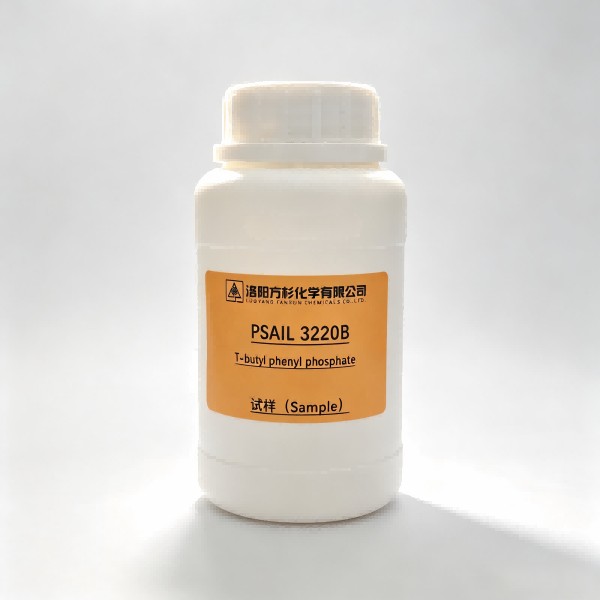
Define the stain symptom before changing the additive package
Start with the actual failure observation. Do not begin by replacing the phosphorus- or sulfur-containing component. The same copper-strip failure can arise from different sources, and each source needs a different response.
| Observed condition | What it may indicate | First check | What not to assume |
|---|---|---|---|
| Uniform darkening across the strip | A broadly reactive formulation condition, such as excessive sulfur activity or an incompatible additive balance | Compare the current blend with the last retained conforming batch and review all recent formula changes | Do not assume one EP/AW component is solely responsible |
| Localized spots or streaks | Blend non-uniformity, contamination, incomplete dissolution, or handling variation | Inspect the sample for haze, sediment, separated material, or inconsistent appearance before testing | Do not treat a spotty strip as proof of chemical incompatibility without checking blend condition |
| Failure only after a treat-rate increase | The total concentration of reactive chemistry may have moved beyond the acceptable balance for the system | Review the actual addition record and compare it with the approved formula | Do not assume that a higher EP/AW dose will always improve field protection |
| Failure after a base-oil change | Changed solvency or altered interaction among additive components | Confirm base-oil source, grade, blend ratio, and appearance of the finished oil | Do not assume nominally similar base oils behave identically in an additive blend |
| Only one laboratory result fails | Sampling, strip preparation, apparatus condition, or method execution may need review | Repeat using retained sample and controlled preparation under the approved method | Do not release or reject a batch from one unexplained result alone |
The first distinction is between a repeatable formula effect and a one-off laboratory or blending event. If a retained sample from the same batch gives a different result when tested under controlled conditions, pause formulation changes and investigate sample handling, copper-strip preparation, test apparatus condition, and operator records. If the failure repeats on fresh, representative samples, proceed to formulation diagnosis.
For metalworking products, also confirm whether the sample is a neat oil, a concentrate, or an in-use fluid. Water contamination, dilution error, and carryover from process equipment can change the apparent behavior of an otherwise acceptable additive system. For water-containing products, review water-based metalworking additives separately rather than applying a neat-oil troubleshooting path without adjustment.
Use an ordered diagnosis path for repeatable copper-strip failures
A controlled diagnosis should move from accessible records to selective blend comparisons. This order reduces the risk of changing several variables at once and losing the evidence needed to identify the cause.
- Confirm the test reference. Use the same approved method, strip source and preparation practice used for the product’s acceptance criteria. Record the appearance of the strip before and after testing. If the specification, method version, or laboratory conditions differ from the reference test, resolve that difference before assigning fault to the formulation.
- Check the finished blend condition. Observe clarity, haze, sediment, phase separation, unusual odor, and visible contamination. A clear blend does not prove compatibility, but a hazy or separated blend is evidence that solvency or mixing should be examined before chemistry is changed.
- Review the batch record against the approved formula. Verify the identity and addition order of base oils, EP/AW additives, antioxidants, corrosion inhibitors, dispersants, and other components. Focus on recent supplier, raw-material, or process changes. A formula can be correct on paper while a substitution or addition error changes its reaction profile.
- Compare against a retained conforming batch. Test the retained material and the current sample using the same preparation and conditions. If the retained batch remains acceptable while the new blend fails, the difference is more likely connected to raw materials, treat rate, contamination, or blending practice.
- Run controlled omission or reduction trials. Prepare small controlled blends that reduce or remove one suspected component at a time while keeping other variables unchanged. Test each blend using the same reference method. This identifies whether the suspected component is a primary driver, a contributor, or unrelated.
- Escalate when multiple changes overlap. If the base oil, additive supplier, treat rate, and blending procedure all changed at once, a simple result cannot identify the cause. Stop making broad production adjustments. Gather samples, batch records, and test records for a focused technical review.
This process fits both industrial lubricants and oil-based metalworking fluids. It does not replace application testing. A copper-strip result addresses yellow-metal compatibility under the selected method; it does not by itself demonstrate load-carrying performance, oxidation resistance, demulsibility, foam behavior, or field life.
When the issue is linked to a sulfur-containing EP/AW component, compare the chemistry with other available routes instead of treating all sulfur additives as interchangeable. Our range includes oil-soluble phosphorothioate EP/AW additives and oil-soluble sulfur-based EP/AW additives, which should be assessed against the complete formula and its yellow-metal requirement.
Control treat rate, sulfur activity, solvency, and copper-strip testing
The four checks below are linked. Treat rate affects the amount of reactive chemistry in the oil. Sulfur activity affects the likelihood of reaction with copper or copper alloys. Base-oil solvency affects whether the additive remains evenly distributed. Copper-strip testing provides the controlled evidence used to judge the finished blend. Check them in this order rather than adjusting them independently.
| Control point | What to examine | Observation and likely meaning | Action to take | Limit of the action |
|---|---|---|---|---|
| Treat rate | Actual addition quantity, scale records, pump settings, and total package level | A failure appearing after an increase suggests that total reactive chemistry or an additive interaction may be too high for the formula | Return to the last confirmed formula in a controlled blend, then test intermediate adjustments one variable at a time | A lower rate may improve copper appearance but may reduce EP/AW protection; verify the full performance requirement |
| Sulfur activity | Whether sulfur-containing inputs were changed, added, or combined with other reactive components | A repeatable stain linked to one component or combination indicates that yellow-metal compatibility needs further assessment | Use controlled omission trials and consider a different EP/AW balance with lower observed copper reactivity | The chemical family name alone does not establish sulfur activity or compatibility in the final oil |
| Base-oil solvency | Base-oil source, grade, blend ratio, clarity, low-temperature appearance, and additive dissolution behavior | Haze, settling, or an unstable appearance may indicate incomplete solubility or compatibility issues | Restore the approved base-oil system where possible, then recheck blend uniformity before copper testing | A visually clear blend still requires copper-strip validation because reactive chemistry can remain fully dissolved |
| Copper-strip test | Method consistency, representative sampling, strip preparation, and comparison with retained material | Repeatable staining under controlled conditions supports a formula-related investigation | Use the result to compare controlled blend variants and document the selected corrective formula | The test does not replace application-specific corrosion, wear, or load testing |
Conclusion: treat rate should be checked first when a batch differs from its approved formula; solvency should be checked early when haze or separation is visible; sulfur activity should be investigated through controlled component comparisons; and the copper-strip test should be used as the confirmation tool after each adjustment. This sequence fits a formulation with a repeatable stain result. It does not apply when the result cannot be reproduced, because the immediate priority is then laboratory and sample-control review.
Phosphorothioate acrylates should therefore be evaluated as part of the whole additive balance. A successful adjustment is not merely a lighter strip appearance. It is a finished blend that meets its own yellow-metal requirement while retaining the required anti-wear and extreme-pressure behavior in the intended application.
Choose corrective actions based on evidence, not on a single suspected cause
Once the failure is repeatable and the likely branch has been identified, select a correction that matches the evidence. Avoid changing the base oil, EP/AW additive, corrosion inhibitor, and processing conditions in the same trial. That may produce a passing strip, but it will not show why the problem was resolved.
When the addition record differs from the approved formula
Recommended action: correct the blend to the approved composition and repeat the copper-strip test using a representative sample. The reasoning is direct: an out-of-range addition or incorrect component identity can alter the chemical balance. This action fits a batch with a documented weighing, metering, or raw-material discrepancy. It does not apply when records match the formula and the failure is repeated in a controlled remake.
When the blend is hazy, settled, or visually unstable
Recommended action: investigate base-oil compatibility, addition order, mixing adequacy, and contamination before selecting a replacement EP/AW chemistry. The reason is that uneven distribution can produce misleading test variation and may create separate product-quality concerns. This fits blends with visible instability. It does not apply as the only response to a clear, stable blend with a repeatable stain result.
When a component omission trial improves the strip result
Recommended action: confirm the finding with a repeat trial, then evaluate a lower treatment or an alternative chemistry while rechecking the full performance set. The omission result indicates contribution, not necessarily sole causation. It fits a controlled test where all other blend variables remained unchanged. It does not prove that the removed component is unsuitable in every base oil or every application.
When copper protection must be balanced with EP/AW demand
Recommended action: assess the entire additive package rather than increasing one sulfur-containing component to solve a wear or load result. Phosphate-based alternatives or supportive components may be relevant depending on the finished oil and its target performance. Review oil-soluble phosphate ester EP/AW additives where a formulation review indicates that a different EP/AW balance is needed. This is suitable for a controlled reformulation program. It is not a substitute for validating yellow-metal compatibility, oxidation behavior, and application performance in the intended blend.
Prevent repeat failures with batch controls and clear escalation records
Prevention begins with keeping a reference point. Retain a conforming sample, formula version, raw-material identities, blend record, and copper-strip result for each approved product. When a failure occurs, those records allow the laboratory to identify what changed rather than relying on assumptions.
- Lock the approved formula: record base-oil source, additive identities, addition order, and target treatment. Review any substitution before use. This is most useful for products with strict yellow-metal requirements; it cannot prevent contamination introduced after blending.
- Use retained conforming material: compare it alongside the current sample under the same copper-strip procedure. This helps distinguish formula change from test variation. It cannot identify the cause if both samples were prepared or stored incorrectly.
- Check visual blend quality before release testing: flag haze, sediment, unusual color, or separation. This is a fast solvency screen, not a replacement for the required corrosion test.
- Keep controlled trial samples: label every trial with base oil, component identity, treatment change, blend date, and test observation. This turns a troubleshooting exercise into usable formulation data.
- Escalate with evidence: provide the copper-strip observation, approved and actual formula records, base-oil details, raw-material batch identification, blend appearance, and retained-sample comparison. This is necessary when no single change explains the result.
Luoyang Fangshan Chemical Co., Ltd. is a professional lubricant additive manufacturer with ISO 9001:2015, ISO 45001:2018, and ISO 14001:2015 management system certifications. Our technical support can help formulators review single components and additive-package matching for hydraulic oil, gear oil, grease, and related industrial products. The company’s functional chemical production capacity exceeds 10,000 tons, supported by an R&D team with more than 30 PhD and master’s degree holders.
For early formulation screening, there is no MOQ, and samples can be dispatched within 3 days. Bulk goods can be dispatched within 7 days. These lead times support evaluation planning, but the correct selection still depends on the finished formulation, base-oil system, intended application, and validated test method. Where a product-quality issue is confirmed, return arrangements can be discussed.
Request a sample or formulation-selection discussion for your copper-strip failure and include your current base oil, treat rate, and test observations.
 WhatsApp
 Email
 +8616638861155