Prevent Copper Staining with Thiadiazole Dimer
Why does a blend that performs well in wear and extreme-pressure testing still darken copper or brass? The answer is often not a single “bad” raw material. Copper staining can result from the combined effect of reactive sulfur chemistry, additive treat rate, oxidation byproducts, water exposure, and incomplete yellow-metal protection. Thiadiazole dimer is commonly evaluated as part of the protection strategy, but it must be assessed within the full formulation rather than added as an isolated correction.
For grease and industrial-oil formulators, copper discoloration is a development warning. It may indicate a risk to bronze bushings, brass valves, copper coolers, electrical contacts, or mixed-metal circulating systems. A stained coupon does not automatically mean that a finished lubricant will fail in service. However, ignoring the result can lead to costly reformulation after pilot blending or customer validation.
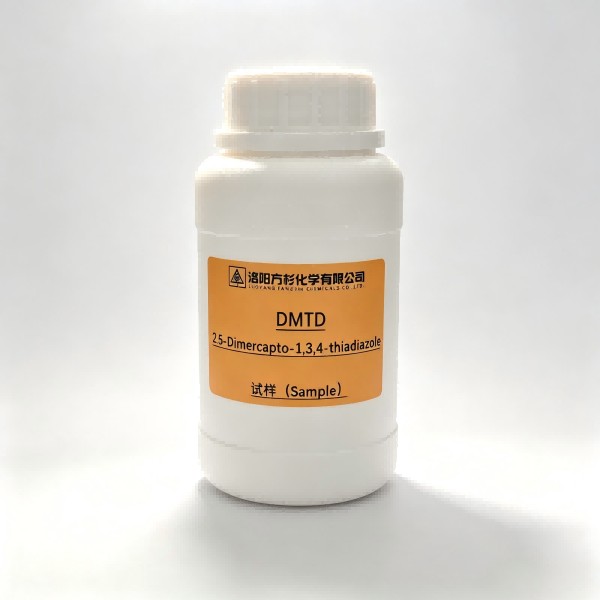
This guide provides a practical diagnosis order, a selection framework, and a blend-development process for improving copper corrosion control. It is intended for formulators working with industrial gear oils, grease systems, hydraulic lubricants, and metalworking-related lubricant components.
Start by Identifying the Actual Copper Staining Pattern
Conclusion: Diagnose the appearance and timing of staining before changing the additive package. A dark coupon after heating, a rainbow film after storage, and localized spots after water contact can point to different causes. Replacing a metal deactivator without identifying the pattern may reduce one symptom while leaving the underlying incompatibility unchanged.
The first question is whether the staining occurs in a fresh blend, after thermal exposure, after oxidation, or only after contamination. This distinction matters because a fresh-blend issue often points to direct chemical attack, while staining that appears after aging can indicate oxidation products, additive depletion, or changing interactions among components.
| Observed symptom | Most likely direction for investigation | What to check first | Limit of the diagnosis |
|---|---|---|---|
| Rapid darkening in a fresh heated blend | Direct interaction with active sulfur or an incompatible additive component | Compare the complete blend with and without sulfur-containing components | Heat can accelerate several reactions at once, so this does not identify one raw material by itself |
| Light yellow, brown, or rainbow film after storage | Slow surface reaction, oxidation, or insufficient passivation reserve | Review antioxidant selection, storage conditions, and metal deactivator balance | Appearance alone cannot establish whether equipment corrosion will occur |
| Staining only after water exposure | Water-driven corrosion, acidic contamination, or loss of film protection | Check water source, emulsification behavior, rust inhibitor compatibility, and handling practices | A dry coupon test may not reproduce this condition |
| Staining after adding one performance booster | Overtreatment, additive interaction, or solubility disturbance | Return to the prior stable formula and introduce the new component in controlled increments | The component may be suitable at another dosage or in a different base oil |
Use a controlled reference blend. Keep the base oil, mixing sequence, temperature history, and test method unchanged while comparing samples. This is especially important in an industrial gear oil where sulfurized extreme-pressure chemistry, phosphorus chemistry, dispersants, and antifoam components may all affect surface behavior.
A copper strip result should also be read alongside the blend’s odor, color shift, haze, sediment, and viscosity trend. These supporting observations do not replace formal testing, but they help determine whether staining is a surface-only issue or part of broader blend instability.
Troubleshooting Copper Staining Through Additive Balance and Reactive Sulfur Chemistry
Conclusion: Check additive balance and treat rate before assuming that the metal deactivator is ineffective. In many formulations, copper staining is caused by the relationship between reactive sulfur chemistry and the available yellow-metal protection, not by the absence of a corrosion-control component alone.
Reactive sulfur additives can provide the load-carrying response required in demanding gear and grease applications. Yet some sulfur-containing chemistries can become more aggressive toward yellow metals under certain thermal or chemical conditions. A thiadiazole-based component may help form a protective surface film or reduce metal activity, but performance depends on the entire chemical environment.
- Establish a clean baseline. Test the base oil and the non-sulfur additive package first. If copper staining is already present, investigate base stock quality, contaminants, acids, or an incompatible non-sulfur component before changing the sulfur source.
- Add the sulfur system without the metal deactivator. If staining appears at this stage, the sulfur chemistry is a primary suspect. This does not mean the sulfur additive must be removed; it means the formulation requires a better protection strategy or different sulfur selection.
- Introduce the metal deactivator at the intended treatment level. If staining improves but remains visible, assess whether the dosage is inadequate, whether the additive is fully dissolved, or whether another component is competing at the metal surface.
- Increase only one variable at a time. Do not simultaneously increase the inhibitor and reduce the sulfurized component. Separate trials reveal whether the problem is overtreatment, underprotection, or an incompatible chemistry pair.
- Repeat after thermal and storage conditioning. A fresh blend may look acceptable yet stain after aging. This result points toward depletion, oxidation, or delayed interaction rather than immediate attack.
The judgment criteria should be practical. If staining begins only when the sulfur extreme-pressure component is introduced, focus first on sulfur activity and its dose. If staining begins after the metal deactivator is added, examine additive compatibility, order of addition, or solubility. If the result worsens after aging, review antioxidant support and the possibility of acidic oxidation products.
The limit is equally important: increasing a deactivator indefinitely is not a sound correction. Excess treatment can affect clarity, compatibility, filterability, foam control, demulsibility, or other finished-oil properties depending on the formulation. The best result is the lowest effective treatment level verified in the intended base oil and additive package.
Formulators comparing sulfur systems can review sulfur based extreme pressure additives alongside yellow-metal protection requirements. This comparison is more useful than judging an extreme-pressure component only by load performance.
Choose a Correction Path Based on the Formulation Scenario
Conclusion: Select the correction path based on what the blend must preserve: extreme-pressure performance, oxidation resistance, water tolerance, or metal protection. A change that solves copper staining but weakens the required lubricant function is not a finished solution.
| Formulation scenario | Preferred corrective direction | Reasoning | When this approach may not apply |
|---|---|---|---|
| Copper staining begins after sulfurized EP addition | Rebalance sulfur chemistry and evaluate a thiadiazole-based protection component | The interaction is likely tied to sulfur activity versus surface protection | Do not assume sulfur is the cause if the base blend already stains copper |
| Fresh blend passes but aged blend stains | Review antioxidant system and inhibitor retention after aging | Oxidation byproducts or depletion may change the chemical environment over time | This may not solve staining caused by water contamination or process residues |
| Grease formulation stains despite acceptable oil phase | Evaluate thickener interaction, processing heat, and additive distribution | The thickener and manufacturing process can alter additive availability at metal surfaces | Do not transfer a fluid-oil dosage directly into grease without validation |
| Water-contaminated system shows yellow-metal attack | Address water management and corrosion inhibitor selection before increasing deactivator dosage | Water may create a separate corrosion pathway that a metal deactivator cannot fully control | This does not replace dry-blend copper strip testing |
For blends using phosphorus chemistry, do not evaluate yellow-metal protection in isolation. Some formulations require antiwear or extreme-pressure support from phosphate-based components, while the final copper response depends on the full package. Review suitable phosphite phosphate lubricant compounds as part of a coordinated additive review rather than as direct substitutes for a metal deactivator.
Where friction control is also under review, changes should be screened against friction behavior and wear performance. This applies when a formulator is considering organic molybdenum chemistry or other friction modifiers. Metal protection, friction reduction, and oxidation stability should be tested as a package, not optimized in separate laboratory silos.
Use a Controlled Blend Development Procedure
Conclusion: A staged laboratory plan is the most efficient way to determine whether Thiadiazole dimer is appropriate for a specific formula. The reasoning is simple: each staged blend isolates a cause. The method fits new product development, reformulation, and import-substitution evaluation. It does not replace customer-specific equipment trials where metallurgy, operating temperature, and contamination are unknown.
- Create a documented control blend with the selected base oil and all non-sulfur components.
- Record blend appearance, clarity, odor, and any initial copper strip testing result.
- Add the sulfur-containing extreme-pressure system at the planned formulation level and repeat the observations.
- Prepare a separate blend containing the intended thiadiazole-based component at the target treatment level.
- Prepare additional samples with controlled treatment changes, adjusting only one component per sample.
- Condition all samples using the same thermal and storage procedure before comparing copper response.
- Check whether the correction changes other decision points, including haze, sediment, foam tendency, water behavior, and wear or extreme-pressure performance.
- Confirm the selected blend in the actual grease or finished industrial lubricant matrix rather than relying on a simplified oil-only screen.
A useful working rule is to keep a “do not change” list for every trial. If the goal is to diagnose staining, hold base oil grade, batch source, mixing equipment, addition temperature, and mixing duration constant. Otherwise, process variation can be mistaken for additive performance.
For a grease program, also document whether the deactivator is added before or after thickener formation. A component that remains well dispersed in a simple oil blend may behave differently after thickener processing. For water-containing or water-exposed applications, assess dedicated water based metalworking additives rather than assuming an oil-oriented approach will manage aqueous corrosion conditions.
Avoid Common Errors When Correcting Yellow Metal Staining
Conclusion: Most avoidable delays come from changing too many variables, relying on fresh-blend appearance, or treating a copper strip result as a stand-alone formulation decision. These errors are common in urgent troubleshooting, but they make root-cause identification slower.
- Adding more inhibitor without a dose study. This can hide the reason for staining and may introduce new compatibility issues. Use controlled treatment steps instead.
- Blaming the last-added raw material immediately. The final component may trigger a pre-existing imbalance rather than cause it alone. Test the prior stable blend as a reference.
- Ignoring blending sequence. Addition order can affect dissolution and component interaction. Keep it fixed during diagnosis, then test sequence changes deliberately.
- Checking only fresh samples. A formula that looks acceptable after blending can change after heat or storage. Include conditioned samples in the approval plan.
- Separating corrosion work from EP testing. Lowering reactive sulfur can improve copper appearance but reduce required load performance. Recheck the functional target after every correction.
- Using one base oil result for all base oils. Solvency and additive interaction can differ across base stock families. Revalidate when the base oil changes.
When choosing a component for yellow metal protection, request information that helps the laboratory plan: recommended application area, solubility guidance, compatibility considerations, and available test-support documents. The right buying question is not simply “Does it prevent copper staining?” It is “Under what blend conditions has the component been evaluated, and what should our own validation include?”
Build a Practical Sourcing and Validation Plan
Conclusion: Select a supplier that can support small development trials, repeatable commercial supply, and technical discussion around the finished formulation. This is especially relevant when screening an import-substitute additive product, where chemical function must be proven in the customer’s own package.
Luoyang Fangshan Chemical Co., Ltd. operates as a professional lubricant additive manufacturer with ISO 9001:2015, ISO 45001:2018, and ISO 14001:2015 management systems. Its functional chemical production capacity exceeds 10,000 tons, and its R&D team includes more than 30 PhD and master’s degree holders. These facts support structured product development discussions, but they do not remove the need for formula-specific validation.
For early-stage work, samples can be dispatched within 3 days, with no MOQ stated for sampling and development needs. Bulk orders can be dispatched within 7 days. These lead times are useful when a formulation project is blocked by a copper staining issue, although shipping time and final qualification remain separate considerations.
Before approving a component, use this buyer checklist:
- Define the exact base oil, thickener if applicable, and full additive package.
- State whether the issue occurs in fresh blends, aged blends, water exposure, or all conditions.
- Identify sulfur, phosphorus, metal deactivator, antioxidant, and rust inhibitor components already present.
- Specify whether the finished fluid contacts copper, brass, bronze, or mixed-metal equipment.
- Set pass criteria for copper strip testing and for the lubricant’s primary function.
- Request a sample for side-by-side comparison against the incumbent component.
- Retain control samples and document blend sequence for every evaluation batch.
For support selecting a Thiadiazole dimer approach for your grease or industrial-oil blend, request a sample and share your current additive package and copper staining test conditions.
 WhatsApp
 Email
 +8616638861155