Sourcing from a Lubricant Additive Package Manufacturer That Prevents Pilot Blend Failure
Selecting a new lubricant additive package manufacturer introduces significant risk. A promising technical data sheet (TDS) can easily lead to a failed pilot blend, wasting valuable base oils, lab time, and delaying your product launch. The most common regret we see from formulators is not asking the right questions about compatibility and performance boundaries before committing to a sample. A failed blend isn't just a technical problem; it's a costly setback that erodes confidence in a new supply partner.
As a technical lead responsible for additive development and import substitution, I've seen how overlooking a few key details can lead to predictable issues like foaming, poor demulsibility, or unexpected performance gaps. The goal is to identify these potential failure points during the initial supplier discussion, not after a week of bench testing. This guide outlines the critical questions to ask a potential lubricant additive package manufacturer to de-risk your pilot blend and ensure a smooth transition to commercial production. Our process, backed by ISO 9001, ISO 14001, and ISO 45001 certifications, is designed to provide this transparency from the start.
Key Documentation to Request Before Blending Your First Sample
A standard Technical Data Sheet (TDS) provides a snapshot of performance but rarely tells the whole story. To properly assess an additive package, you need to look beyond the typical values. A transparent supplier should be able to provide supporting data that helps you predict how the package will behave with your specific base stocks and under your target operating conditions. Before requesting a sample, which we can dispatch in 3 days, ask for the following:
Buyer's Pre-Sample Documentation Checklist
- Base Oil Compatibility Data: A TDS often shows performance in a single base oil group (e.g., a Group II). Request any available data or formulation guidance for other groups, such as Group I, III, or synthetics like PAO or esters. This is the number one source of pilot blend problems.
- Treat Rate Response Curves: Ask for data showing how key performance metrics change with treat rate. For example, how does increasing the treat rate affect four-ball wear (ASTM D4172) or rust inhibition (ASTM D665)? This helps you understand the formulation's flexibility and cost-performance balance.
- Solubility and Storage Stability Information: Inquire about recommended storage temperatures and any known solubility issues at lower temperatures. A package that becomes hazy or drops out components in a cool warehouse can cause major production headaches.
- Material Safety Data Sheet (MSDS/SDS): This is non-negotiable for handling and safety protocols. Ensure it is up-to-date and compliant with your region's regulations.
- Elemental Analysis Breakdown: Understanding the concentration of key elements like Zinc (Zn), Phosphorus (P), Sulfur (S), Calcium (Ca), and Boron (B) is essential for quality control and for ensuring the finished fluid meets specific OEM or industry specifications (e.g., low-SAPS requirements).
Having this information upfront allows your technical team to make a more informed decision and design a more effective pilot blending and testing plan. It moves the conversation from "Does it work?" to "How will it work in our system?"
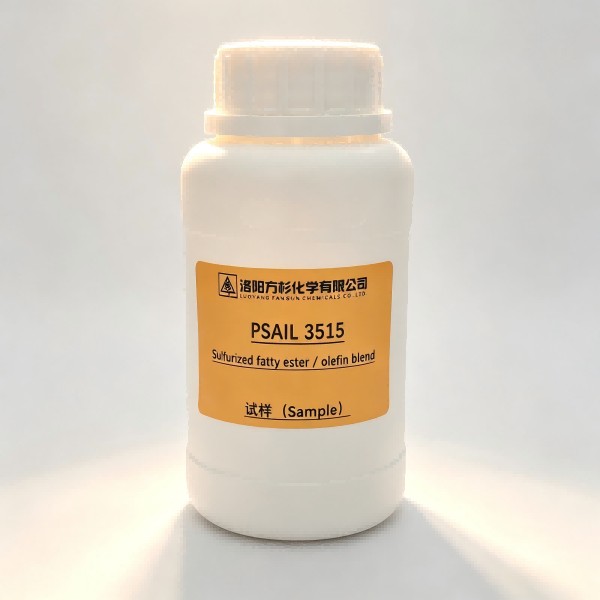
FAQ: Identifying Pilot Blend Risks Before Full-Scale Production
Pilot blending is where theory meets reality. Answering these boundary-focused questions can expose hidden risks related to incompatibility, foaming, demulsibility, and performance before you commit to a larger production run. Here are the questions I always address with my team during import substitution projects.
Q: What is the most common cause of additive package incompatibility in a pilot blend?
A: Base oil interaction is the primary culprit. An additive package optimized for a Group II paraffinic base stock may show poor solubility, haziness, or precipitation in a naphthenic or highly refined Group III base oil. Always confirm the base oil group used for the supplier's TDS data and discuss any potential deviations in your own formulation. Secondary causes include antagonism with other additives, such as a pour point depressant or a specific friction modifier you are adding separately.
Q: How can we predict foaming tendency before running a full ASTM D892 sequence?
A: While the D892 test is definitive, you can perform a simple shake test. Blend a small, 100ml sample of your finished oil in a graduated cylinder. Stopper it and shake vigorously for one minute. Let it stand and record the initial foam volume and the time it takes for the foam to collapse completely. While not a standardized test, comparing this result to your incumbent fluid provides a strong directional indicator of potential foaming issues. If the foam is dense, stable, and takes significantly longer to break, it warrants a discussion with the supplier about the antifoam component in their package.
Q: Our pilot blend failed the demulsibility test (ASTM D1401). What should we check first?
A: Poor demulsibility is often caused by polar contaminants or an interaction between certain additive components. First, ensure your blending equipment and sample containers were meticulously clean. Trace amounts of detergents, surfactants, or old lubricant residues can destroy water-separating properties. Second, discuss the demulsifier chemistry in the additive package with the manufacturer. Some high-performance lubricant additive packages are highly sensitive to the base oil's aromatic content, which can impact how they perform in this test.
Q: The pilot blend looks good, but the extreme pressure (EP) performance is lower than expected. Why?
A: This often points to an issue with additive activation. EP additives, particularly those based on sulfur and phosphorus, require sufficient temperature and pressure to form a protective film. If your test parameters (e.g., SRV or four-ball EP test) are less severe than those used by the supplier, you may not be seeing the full performance. It can also be a solubility issue, where active components are not fully dissolved in your base oil. Double-check the blend's appearance for any haziness and confirm your blending temperature and duration were adequate to ensure full homogenization.
Interpreting Common Performance Test Failures in Pilot Blends
When a pilot blend fails a bench test, the result itself is just a data point. The real value comes from understanding what that failure implies about the formulation. A knowledgeable supplier should be able to help you troubleshoot, rather than just sending another TDS. As a professional lubricant additive manufacturer, we view this as a core part of our technical service. The table below outlines common failures and potential root causes.
| Test Failure / Observation | Potential Root Cause(s) | Recommended Next Step |
|---|---|---|
| High Wear Scar Diameter (ASTM D4172) | Insufficient anti-wear (AW) additive activity; AW/EP additive antagonism; incorrect base oil viscosity; poor additive solubility. | Verify blend viscosity. Confirm additive package is fully dissolved. Discuss AW chemistry (e.g., ZDDP type) with the supplier for compatibility with your application. |
| Low PB/PD (Load Wear Index) | Inadequate extreme pressure (EP) performance; sulfur or phosphorus carrier is not activating at test temperatures; treat rate is too low. | Review the treat rate. Discuss the activation temperature of the EP components. Consider evaluating specialized explore fanschems oil-soluble sulfur-based ep/aw additives if the application is severe. |
| Poor Oxidation Stability (e.g., RPVOT) | Antioxidant package is depleted or incompatible with base stock; pro-oxidant contaminants are present; base oil itself has poor stability. | Run a baseline oxidation test on just the base oil. Check for metal contaminants (e.g., copper) in the blend. Discuss the type of antioxidant (aminic, phenolic) with the supplier. |
| Fails Copper Corrosion Test (ASTM D130) | Overly aggressive active sulfur from the EP components; insufficient metal deactivator/passivator in the package. | Confirm the test temperature and duration. Ask the supplier if their package is suitable for yellow metals and inquire about their metal deactivator strategy. |
From Successful Pilot to Production: Scaling Up with Confidence
A successful pilot blend is a major milestone. However, scaling up to a full production batch requires careful planning to maintain quality and consistency. The transition from a 1-liter lab blend to a 10,000-liter production batch introduces new variables that must be managed.
First, review your blending procedure. Lab-scale blending often relies on high-shear mixers and precise temperature control that may not be perfectly replicated in a large production vessel. Key parameters to validate during scale-up include:
- Order of Addition: Confirm the correct sequence for adding the additive package, base oils, and any other components like Viscosity Index Improvers. Adding components in the wrong order can lead to gelling or solubility issues.
- Blending Temperature and Time: Ensure the production tank can achieve and hold the required temperature for the necessary duration to guarantee complete dissolution and homogenization of the additive package. Insufficient heat or time is a common cause of batch-to-batch variation.
- Quality Control Checks: Pull a sample from the production blend and run a few key QC tests before drumming or packaging the entire batch. At a minimum, check viscosity, elemental analysis (e.g., via XRF), and visual appearance. This simple step can prevent a costly out-of-spec batch from being shipped.
Partnering with a supplier that offers flexible logistics is also beneficial. At Luoyang Fangshan Chemical, we have no minimum order quantity (MOQ), allowing you to order precisely what you need for initial production runs without holding excess inventory. Once validated, our 10,000-ton production capacity and 7-day lead time for large orders ensure a stable supply chain as you grow.
By addressing these technical and logistical points, you can translate a successful lab result into a reliable, commercially successful product. The right supplier acts as a partner in this process, providing the data and support needed to navigate the challenges of scaling up.
If you are evaluating new additive packages, our R&D team is available to discuss your specific formulation challenges. Contact us to request a sample or a technical consultation for your next project.
 WhatsApp
 Email
 +8616638861155