How to Source TTA Derivatives (Methylbenzotriazole) for Copper Protection
The most expensive mistake in this purchase is rarely price. It is a drum of copper inhibitor that clouds in your glycol concentrate, drops out of your oil blend, or arrives without the paperwork your customer audit requires. Sourcing TTA derivatives (methylbenzotriazole) means matching a grade to a base fluid first and negotiating price second. This guide gives lubricant, coolant and water-treatment formulators a way to do that before the first sample request.
Why a CAS Number Alone Does Not Define the Product You Need
Most supplier pages list the same headline: a tolyltriazole corrosion inhibitor that forms a protective film on copper and copper alloys. The reference identifier is usually TTA CAS 29385-43-1, the number commonly used for tolyltriazole, also written as methylbenzotriazole TTA. That identifier confirms the core molecule. It does not tell you three things that decide whether the material works in your plant:
- Physical form and solubility. The same base chemistry can be supplied as a solid, as a pre-dissolved solution, or as a modified derivative built for oil.
- Carrier and impurities. A solution grade carries a solvent or neutralizing agent. That matters for your pH, your freeze point and your compliance paperwork.
- Intended system. A grade proven in an aqueous glycol loop says little about a mineral-oil gear package.
So treat the CAS number as the first filter and the technical data sheet as the second. If a quotation shows only a CAS number and a price, ask for form, carrier and recommended system before comparing it with anything else.
Sourcing Checklist: Water/Glycol-Soluble TTA Grades vs Oil-Soluble Derivative Packages
Split your qualification into two tracks before you request any sample. Running both through one test protocol is how teams end up with confusing results. The table below shows what to verify on each track.
| Checkpoint | Water/glycol-soluble TTA grade | Oil-soluble derivative or package |
|---|---|---|
| Typical system | Antifreeze coolant, closed-loop water, water-based metalworking fluid | Industrial gear, hydraulic, compressor and turbine oils, greases |
| Form to request | Confirm whether solid or solution; ask for carrier and strength | Confirm whether a single derivative or part of a blended package |
| First lab check | Clear dissolution in your actual concentrate at storage temperature; no haze after standing | Clear blend in your base oil at blending and cold-storage temperature; no sediment |
| Interaction to test | Buffers, nitrite or other inhibitors, hard-water ions, pH drift | Antiwear and EP additives, detergents, other metal deactivators |
| Performance evidence | Copper strip corrosion and coolant-specific corrosion testing against your specification | Copper strip corrosion plus your oxidation, wear and EP tests on the finished oil |
| Disqualify if | Hazy at low temperature, or the grade only comes with oil-phase data | Falls out of solution, or raises copper staining in combination with active-sulfur additives |
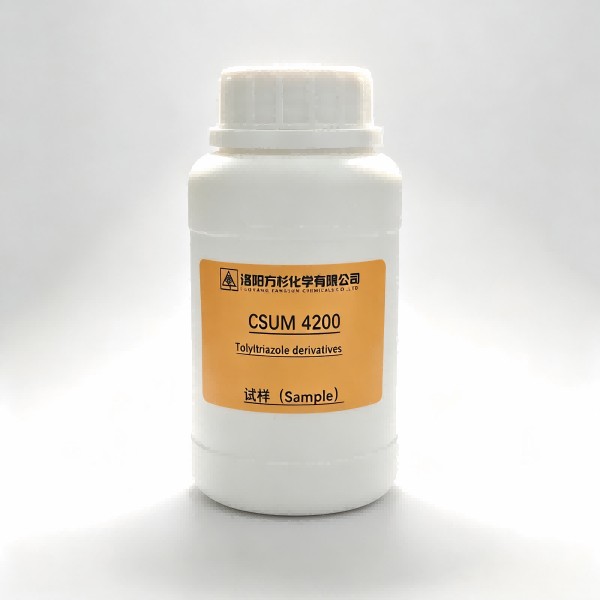
On the oil side, Fangshan lists derivative grades rather than only the plain molecule. Examples include TTA derivatives CSAIL 3900, triazole derivatives CSAIL 3000 and benzotriazole derivatives CSAIL T551. For aqueous systems, there is the tolyltriazole derivative CSUM 4200 in the water-based range. Verify solubility behavior in your own fluid from the data sheet and a bench test. A product name or series prefix is not a solubility guarantee.
How to Choose TTA for Copper by Base Fluid
Answering "how to choose TTA for copper" starts with the fluid, not the metal. Here is how we would sort the three most common cases.
TTA for antifreeze coolant
Conclusion: Choose a grade documented for water/glycol dissolution. Reasoning: Coolant concentrates are stored cold and diluted later, so a grade that dissolves at room temperature may still crystallize in a winter warehouse. Fits: engine coolant and heat-transfer concentrates with copper or brass radiators and heat exchangers. Limit: the inhibitor protects yellow metals only. Aluminum, solder and ferrous protection still depend on the rest of your package.
Water-based metalworking fluid
Conclusion: Qualify against your emulsifier and biocide system, not in plain water. Reasoning: Amines, alkaline pH and microbial control chemistry all influence how the inhibitor behaves over weeks. Fits: fluids that machine brass, bronze or copper parts. Limit: a clean 24-hour bench result will not predict sump life, so plan a longer hold. Related products sit in the water-based metalworking additives range.
Oil-soluble lubricant systems
Conclusion: Use an oil-soluble derivative and test it inside the finished package. Reasoning: Sulfur-bearing EP agents are the usual cause of copper staining, and the inhibitor has to hold up against them. Fits: gear, hydraulic and compressor oils that contact bronze bushings or copper-bearing components. Limit: if copper corrosion is the only issue, a thiazole or thiadiazole alternative may fit better. See the thiazole-based metal corrosion inhibitors page for the wider family. Where you want the inhibitor already balanced inside a blend, review the lubricant additive packages instead.
Documents and Evidence to Request Before Approving a Supplier
Work through this sequence. It keeps the qualification short and exposes gaps early.
- Send your system definition. Include base fluid, concentrate or finished-fluid use, storage temperature range, target metals and companion additives.
- Get the data sheet and the form. Ask for the physical form, carrier if any, and the supplier's recommended use level for your system type.
- Request a certificate of analysis for the lot you will receive. Compare it with your incoming specification, not just the catalog values.
- Check management-system certificates. Confirm the scope and validity dates printed on each certificate.
- Run a solubility and storage test first. Hold the blend cold and warm, and look for haze, crystals or separation before any performance test.
- Run performance tests against your own acceptance limits. Use copper strip corrosion and the tests your customer specification names.
- Agree the return and complaint route in writing. Do this before the first commercial order, not after a problem.
What Fangshan Can Support, and What Still Needs Agreement
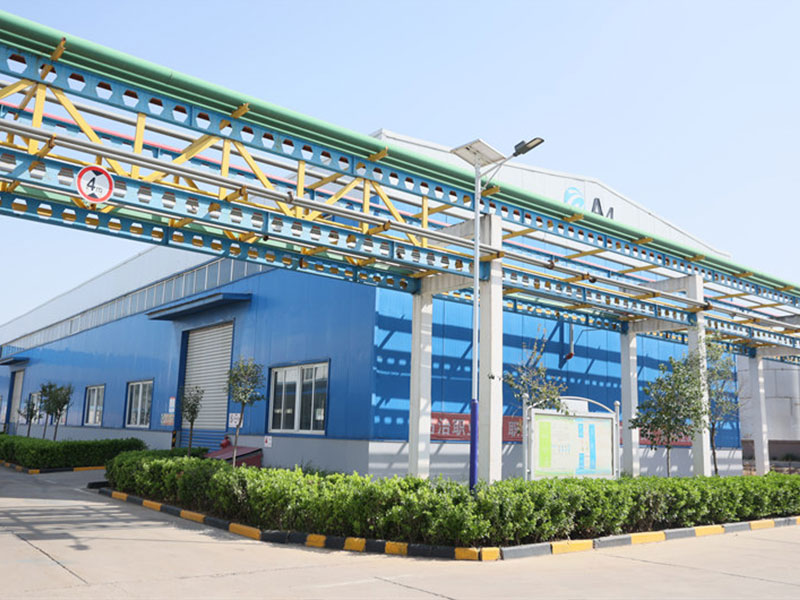
Luoyang Fangshan Chemical Co., Ltd. is a professional lubricant additive manufacturer founded in 2017, serving global markets with import-substitute additive products. These are the facts that bear on a copper-inhibitor purchase:
- Quality systems: ISO 9001:2015, ISO 45001:2018 and ISO 14001:2015 certification. Ask for the certificates for your file.
- Formulation support: an R&D team of more than 30 PhD and master's degree holders, relevant when your issue is compatibility with an existing package rather than a single-component swap.
- Capacity: functional-chemical production capacity above 10,000 tons, which speaks to continuity of supply as your volumes grow.
- Order terms: no MOQ. Samples are stated to ship in 3 days and bulk orders in 7 days. Confirm the exact dispatch date for your grade and quantity when you quote.
- Quality problems: if a product quality issue arises, the company's stated approach is to negotiate a return with you.
Some points stay open until you talk to us. They include the exact grade for your fluid, the packaging, the specification limits on your certificate of analysis, and the acceptance criteria for a return. Agree these before you place a first order. We do not assume any of them on your behalf.
Common Mistakes When Buying Copper Inhibitors
- Qualifying on price per kilogram. A solution grade and a solid grade have different active content, so compare cost per treated tonne of fluid.
- Testing in water only. The finished coolant or lubricant has other ingredients, and they change the result.
- Skipping the cold test. Crystallization shows up in storage, not at the bench on day one.
- Assuming one inhibitor covers every metal. For iron and steel, pair it with a ferrous rust inhibitor, such as those on the amine-based and carboxylic acid rust inhibitor page.
- Accepting a sample certificate as the commercial standard. Ask for the specification the bulk lots will meet.
Next Step: Send Your Fluid System for a Grade Check
If you are comparing suppliers, send us your base fluid, target metals, storage temperature and any companion additives. Daniel Zhang and the technical team will recommend a water/glycol-soluble or oil-soluble grade and quote a sample or a bulk quantity. Share your specification and tell us what you need to verify first.
 WhatsApp
 Email
 +8616638861155