How Thiadiazole-based Corrosion Inhibitors Protect Copper in Lubricants
Why can a finished lubricant show acceptable general oxidation control yet still stain, etch, or corrode copper-containing parts? The answer often lies at the metal-oil interface. Thiadiazole-based corrosion inhibitors are ashless additives used to protect copper and copper alloys by adsorbing onto reactive metal sites and creating a barrier that limits corrosive attack.
For lubricant formulators, the main question is not simply whether a thiadiazole chemistry is present. The useful question is whether its adsorption behavior, oil solubility, dosage response, and compatibility fit the full additive system. A copper inhibitor that protects well in a simple base oil may behave differently after it is combined with sulfur-bearing extreme-pressure chemistry, phosphorus additives, dispersants, antioxidants, or viscosity modifiers.
This article focuses on oil-soluble DMTD-type chemistry used in industrial lubricants. It does not treat the acidic aqueous corrosion conditions commonly discussed in laboratory research on steel. Copper protection in lubricating oils is a different formulation problem: low water content does not eliminate corrosion risk, and copper-active species can be generated or activated as the lubricant ages under heat and air exposure.
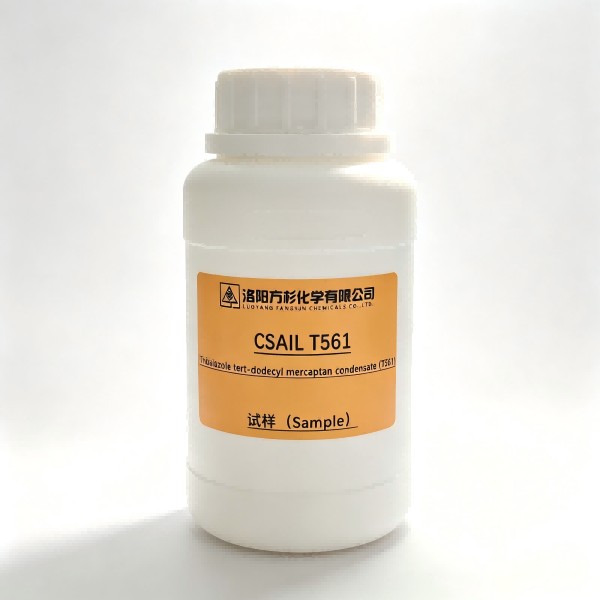
Start with the protection mechanism rather than the additive name
The direct answer is that thiadiazole chemistry protects copper by preferentially interacting with the copper surface before aggressive lubricant by-products or copper-reactive additive species can do so. Its nitrogen- and sulfur-containing molecular structure provides sites that can adsorb onto copper and help form a surface-associated film.
That film is not a thick coating in the conventional paint or plating sense. It is a thin boundary layer formed through chemical affinity and surface adsorption. When it is present and remains intact, it reduces access to reactive sites on the metal. This can suppress the reactions that lead to discoloration, deposits, loss of surface brightness, and corrosion of copper or copper-alloy components.
This matters in lubricants used around copper, brass, bronze, and other non-ferrous components. These materials may be present in bearings, bushings, thrust washers, coolers, electrical contacts, and hydraulic-system parts. The protection target is therefore the metal surface under realistic lubricant conditions, not a general claim that the oil will never oxidize.
How nitrogen-sulfur adsorption and surface-film formation suppress copper corrosion
Nitrogen-sulfur adsorption is the central differentiator of DMTD-type copper-passivation chemistry. Nitrogen and sulfur atoms in the molecule can interact with copper atoms at the metal surface. This affinity encourages the inhibitor to concentrate where it is needed instead of remaining only in the bulk oil.
| Mechanism step | What occurs at the copper surface | Practical effect in a lubricant | Limit or trade-off |
|---|---|---|---|
| Surface approach | The inhibitor is carried by the oil to copper or copper-alloy surfaces. | Protection can occur at wetted components rather than only in the lubricant reservoir. | Oil solubility and circulation conditions affect how effectively the chemistry reaches the surface. |
| Nitrogen-sulfur adsorption | Nitrogen- and sulfur-containing groups associate with reactive copper sites. | These sites become less available for corrosive reactions. | Other polar additives can compete for the same interface. |
| Surface-film formation | Adsorbed molecules create a boundary film over susceptible areas. | The film reduces direct contact between copper and reactive oil constituents. | A film can be weakened by heat, oxidation products, contamination, or unsuitable additive balance. |
| Barrier action | Access of oxygen, acidic oxidation products, moisture, and copper-active species is restricted. | Copper staining and corrosion tendency can be reduced. | The inhibitor does not remove contamination or reverse damage already present. |
| Film renewal | Fresh inhibitor molecules can adsorb as the oil continues to circulate. | Protection may persist while sufficient active chemistry remains available. | Long service intervals require monitoring of oil condition, not reliance on initial treat alone. |
The interaction is best understood as a competition for copper. Without a suitable inhibitor, reactive sulfur-containing components, oxidation-derived acidic species, dissolved moisture, or other active contaminants may contact the metal. With suitable thiadiazole chemistry, the copper surface is more likely to be occupied by inhibitor molecules that form a protective boundary layer.
Surface coverage matters. Too little active inhibitor may leave unprotected sites, especially where fresh metal is exposed by motion, wear, or high local flow. However, “more” is not automatically better. A higher concentration can alter blend compatibility, affect haze behavior, interact with other additive components, or create an unnecessary cost burden. The right conclusion is to establish the lowest practical concentration that provides acceptable copper protection in the finished oil, not in a simplified bench blend alone.
For a starting point in component selection, formulators can review thiadiazole-based metal corrosion inhibitors alongside the rest of the package rather than evaluating copper passivation as an isolated property.
Which formulation parameters change copper-protection results
Copper protection is an interaction between inhibitor chemistry, base oil condition, and the rest of the additive package. The following parameters deserve attention early in research. Each changes what happens at the metal surface.
Base-oil polarity and solvency
Conclusion: Select a copper inhibitor only after confirming it remains properly dispersed or dissolved in the intended base-oil blend. Reason: the inhibitor must travel through the lubricant and reach copper surfaces in an active form. Best fit: a formulation program where the final base-oil mix is already defined. Limit: a positive result in one base oil does not prove behavior in another base-oil combination.
Base-oil solvency can influence both additive clarity and the availability of the inhibitor at the interface. If a blend becomes hazy, separates, or loses additive uniformity, copper protection data from a fresh laboratory bottle may not represent stored or operating oil. Evaluate the actual blend after normal blending, aging, and any expected temperature cycling.
Sulfur-bearing EP and AW chemistry
Conclusion: Evaluate copper inhibitor performance with the intended sulfur-bearing anti-wear or extreme-pressure components already present. Reason: some sulfur chemistries can increase copper reactivity, particularly when heat and oxidation stress are present. Best fit: gear oils, greases, and other formulations using active sulfur-containing additive systems. Limit: sulfur level alone does not predict copper behavior; chemical type and package interactions matter.
This is where formulators often make the wrong comparison. A copper inhibitor should not be judged only by its standalone chemistry. It should be judged by whether it controls the finished lubricant’s effect on copper after the EP/AW system is added. When reviewing sulfur options, compare the inhibitor against the intended oil-soluble sulfur-based EP/AW additives in the same blend design.
Oxidation stability and lubricant aging
Conclusion: Treat copper protection and oxidation control as linked but separate objectives. Reason: oxidation can generate acidic or reactive products that challenge the inhibitor film, while copper itself may influence oxidation reactions. Best fit: oils expected to see sustained thermal and air exposure. Limit: a copper inhibitor is not a substitute for an antioxidant system.
In practice, the passivator aims to reduce copper’s exposure and reactivity, while antioxidants are selected to slow oil degradation. Both should be validated together. A blend can appear acceptable when fresh but change as oxidation products accumulate. Therefore, evaluate copper appearance or corrosion tendency after relevant aging work, not only at the start of the study.
Water and contaminant control
Conclusion: Maintain water control even when a copper passivator is used. Reason: water can support corrosive processes and may carry dissolved contaminants to metal surfaces. Best fit: circulating oils, hydraulic oils, and systems exposed to humid service conditions. Limit: an ashless inhibitor cannot correct severe ingress, poor reservoir hygiene, or incompatible process contamination.
For water-contaminated or water-based systems, use chemistry intended for that environment. Oil-soluble copper-passivation additives should not be assumed to perform identically in aqueous formulations. Where the application is water-based metal processing, assess the relevant water-based metalworking additives separately.
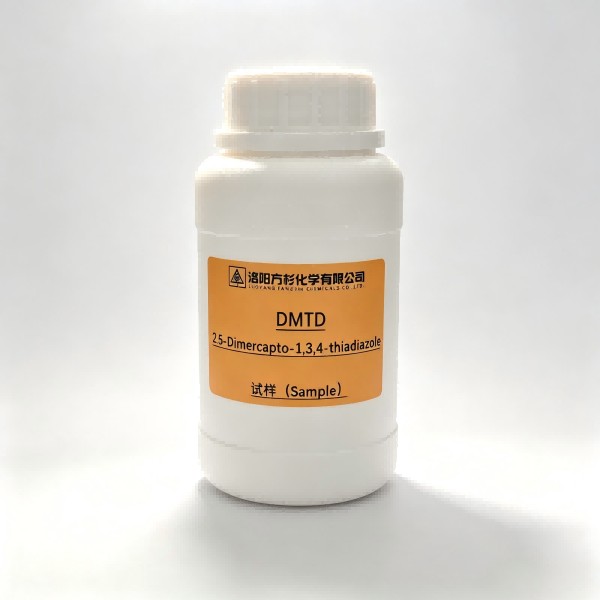
Do not confuse copper passivation with general rust prevention
The most damaging misunderstanding is treating copper protection and ferrous-metal rust protection as the same requirement. They address different surfaces and can involve different chemical mechanisms.
A copper passivator is selected to reduce reactions at copper and copper-alloy surfaces. A rust inhibitor for steel or cast iron is selected to control corrosion on ferrous surfaces, often by managing water displacement, adsorption, or acid neutralization at those materials. One additive may contribute to a broader corrosion-control strategy, but it should not be assumed to replace the other.
| Requirement | Primary material at risk | What the formulator should verify | Common mistake |
|---|---|---|---|
| Copper passivation | Copper, brass, bronze, copper-containing assemblies | Surface staining, corrosion tendency, and compatibility with EP/AW chemistry | Using low steel-rust tendency as proof of copper protection |
| Ferrous rust control | Steel and cast iron parts | Water-related corrosion behavior and storage protection | Assuming a copper inhibitor supplies full ferrous rust protection |
| Oxidation control | The lubricant itself and oxidation-sensitive components | Oil aging response and interaction with metal surfaces | Expecting the passivator to replace antioxidants |
| EP/AW performance | Loaded moving surfaces | Wear and load performance in the finished package | Increasing reactive EP chemistry without reassessing copper compatibility |
The same caution applies to test interpretation. A good result from a test aimed at steel in acidic aqueous media does not directly establish performance in an oil-soluble additive package protecting copper at lubricant operating conditions. The metal, medium, temperature exposure, oxygen availability, and additive interactions are different. Use test evidence that matches the actual application question.
A practical verification procedure for early-stage formulations
At the research stage, the goal is not to claim final qualification from one data point. The goal is to identify whether the selected chemistry provides a repeatable copper-protection benefit within the intended package.
- Define the copper-containing parts. Identify whether the lubricant contacts copper, brass, bronze, coolers, bearings, bushings, or electrical elements. This determines the material exposure that must be represented.
- Build the full candidate formulation. Include the proposed base oil, antioxidant, EP/AW system, dispersant, friction modifier, and other functional additives. Do not test the passivator only in base oil if it will be sold as part of a package.
- Prepare a control blend. Make a version without the copper inhibitor. This establishes whether the inhibitor, rather than another variable, changes the result.
- Assess blend appearance and stability. Check for haze, precipitation, separation, or unexpected color change after blending and after relevant storage or thermal exposure.
- Run copper-relevant screening. Use the copper-corrosion or copper-strip method specified by the applicable customer, industry standard, or internal protocol. Keep test conditions identical for control and treated blends.
- Age the oil before repeating the assessment. Include an oxidation or heat-aging stage appropriate to the product’s intended duty. Fresh-oil screening alone can miss interactions created during use.
- Review the full performance balance. Confirm that copper protection has not caused unacceptable changes in wear, load-carrying, foam, demulsibility, air release, or other product requirements.
- Set a formulation window. Document the selected treat range, blend order, base-oil scope, and conditions that require retesting.
A useful worked scenario is an industrial gear-oil development program that requires sulfur-containing EP chemistry while protecting bronze thrust components. The formulator should first establish the EP/AW package needed for the load requirement, then compare a control blend and a passivated blend under identical copper-relevant testing and aging conditions. If the passivated blend improves copper behavior but develops instability after aging, the next decision is not automatically to increase treatment. The team should check inhibitor solubility, additive order, antioxidant balance, and the specific sulfur chemistry before changing the dose.
What technical buyers should request before choosing a DMTD-type additive
Technical buyers should request evidence that supports formulation work, not just a generic statement that an additive “protects copper.” At the early research stage, the following checklist makes supplier discussions more productive.
- Product identity and intended use: Confirm whether the material is positioned as an oil-soluble copper passivator for lubricant applications.
- Recommended evaluation context: Ask which base-oil types and additive systems should be considered during screening, while recognizing that final validation remains formulation-specific.
- Compatibility guidance: Request information on blending order, appearance concerns, and known interactions that should be checked with sulfur, phosphorus, antioxidant, or friction-modifier systems.
- Quality documentation: Ask for the current technical data sheet, safety documentation, and batch-related quality information needed for qualification.
- Finished-oil test plan: Agree on the copper-relevant method, aging conditions, and pass/fail criteria before comparing samples.
- Scale-up support: Confirm sample availability, lead-time expectations, and the supplier’s ability to support a transition from lab blend to production batch.
Luoyang Fangshan Chemical Co., Ltd. was established in 2017 and operates with a research and development team of more than 30 PhD and master’s degree holders. Its functional-chemical production capacity exceeds 10,000 tons. For qualification planning, the company states that samples can be dispatched within 3 days and larger orders within 7 days, with no minimum order quantity. These are useful practical factors when a formulator needs to compare several candidate additive packages without committing to a large initial purchase.
Quality-system control also matters when research results must be reproduced. As a professional lubricant additive manufacturer, Fangshan Chemical lists ISO 9001:2015, ISO 45001:2018, and ISO 14001:2015 management-system certifications. Buyers should still verify the current documentation and confirm that the supplied material matches the qualification sample.
For projects that require more than a standalone inhibitor, review the copper-passivation requirement alongside high-performance lubricant additive packages so that corrosion control, oxidation stability, anti-wear behavior, and blend compatibility are assessed as one formulation task.
Request a sample and technical selection advice for your copper-containing lubricant formulation.
 WhatsApp
 Email
 +8616638861155