Why Thiadiazole-based Corrosion Inhibitors Lose Protection on Steel in Acid
A coupon test in 1 M HCl shows excellent protection. The same inhibitor on a pickling line gives patchy results, or the bath works on Monday and fails on Thursday. What changed? Thiadiazole-based corrosion inhibitors rely on adsorption onto the steel surface, and anything that disturbs that adsorption film changes the result. This article gives an ordered diagnostic path, with observable criteria at each step, so you can find the likely cause before you change chemistry or treatment conditions.
I work in technical sales for lubricant additives, so I will also be direct about scope. Our thiadiazole range is built mainly for lubricant and metalworking use. Acid cleaning and pickling is a different environment, and any inhibitor should be validated in your own acid, at your own temperature, on your own steel.
Define the symptom before assuming the cause
"Inhibitor failed" can describe four different observations. Keep them apart, because each points to a different branch of the investigation.
- Uniform high corrosion rate: weight loss is well above the lab result across the whole coupon or part.
- Localized attack: pitting or streaking while most of the surface looks protected.
- Time-dependent loss: protection is good at first, then gas evolution rises as the bath ages.
- Batch-to-batch scatter: identical bath, different results on different steel lots or after different pre-cleaning.
Write down which one you have. A suspected cause such as "the product is weak" is a hypothesis, not a finding, until the checks below support it.
Preliminary checks you can run without changing the bath
Start with records and observations. They cost almost nothing and they rule out the most common non-chemical causes.
- Compare the lab and plant conditions line by line. Check acid type, acid strength, temperature, agitation, immersion time and steel grade. If any one differs materially from the validated test, the lab number no longer applies. Stop here and retest under plant conditions.
- Check the dosing record. Compare added inhibitor against bath volume and any top-ups. Consider drag-out and dilution after water or acid additions.
- Look at the bath. Cloudiness, oily films or separated droplets suggest poor dispersion or solubility. This points to a dosing and mixing problem, not an adsorption problem.
- Inspect the steel before immersion. Note mill scale, visible rust, oil residue or old smut. Compare against a part that performed well.
- Check bath age and dissolved iron. If your site tracks iron content, compare the failing bath with a fresh one.
If dosing and conditions match the validated test and the bath looks clean, move to the boundary checks below. If they do not match, correct them first and rerun before suspecting the chemistry.
Where inhibitor protection weakens in acidic steel exposure
Four factors most often explain why thiadiazole-based corrosion inhibitors give strong lab data and weak field data: inhibitor concentration, protonation, competing ions, and surface condition. The table links what you can observe to what it may mean and what to do next. These are possible causes, not confirmed ones, until the next check supports them.
| Factor | What you may observe | What it may indicate | Next check | Stop or escalate when |
|---|---|---|---|---|
| Inhibitor concentration | Corrosion rises as the bath ages; protection returns after fresh dosing | Consumption, dilution, drag-out, or loss from poor dispersion | Run a dose-response coupon series in the actual bath, not fresh acid | Higher dose gives no improvement, which points to another factor |
| Protonation | Result changes sharply after acid strength or pH shifts; protection drops at higher acid strength or temperature | Thiadiazole nitrogen and sulfur sites interact with the surface differently once protonated, so adsorption strength changes | Repeat the test at two or three acid strengths and temperatures across your real range | The inhibitor only works in a narrow window your process cannot hold |
| Competitive ions | Different results in HCl versus H2SO4, or after contamination with chloride, sulfate, dissolved iron or other process ions | Other species compete for surface sites or alter the electrochemical balance | Test in a bath spiked with representative contaminants or in a used-bath sample | Contaminant sources cannot be identified or removed |
| Surface condition | Protection varies between steel lots; pitting where scale or oil remains | Scale, oil or smut blocks film formation; a freshly exposed surface behaves differently from an aged one | Test coupons with the plant's real pre-cleaning, and compare with a standard abraded coupon | Different steel grades or heat treatments give inconsistent results |
Scope limit: this table gives a diagnostic order, not guaranteed thresholds. Specific concentration windows, temperature limits and tolerable contaminant levels depend on your acid, steel and inhibitor, and need your own test data to set.
Diagnostic branches and corrective actions
Work through the branches in order. Each ends with a way to confirm the fix actually changed the original symptom.
Branch A: protection fades over time
Take a sample from the aged bath and test fresh coupons in it, with and without a fresh inhibitor addition. If protection recovers with the addition, depletion is the likely cause. Adjust the replenishment schedule and confirm with a weight-loss coupon after the next full cycle. If protection does not recover, suspect contamination from dissolved iron or process ions and move to Branch C.
Branch B: protection is poor from the start
Check dispersion and conditions first, then test acid strength and temperature. A strong lab result at one strength does not transfer to a hotter or more concentrated bath. If the result tracks temperature or acid strength, the protonation and adsorption window is the likely issue. The practical options are narrowing the operating window or testing an alternative inhibitor chemistry.
Branch C: results differ between acid types or contaminated baths
Compare the same inhibitor dose in clean HCl, clean H2SO4 and a used-bath sample. If only the used bath underperforms, treat contamination as the primary suspect, and check how often the bath is renewed. Alternative explanations remain, since a used bath is also older and may have lost inhibitor. Separate those two effects with the dose-response test from the table.
Branch D: scatter between steel lots or parts
Run coupons from the failing lot through identical pre-cleaning, then compare with coupons that were abraded to bare metal. If bare coupons perform well and plant-cleaned ones do not, the surface is the problem. Fix the pre-cleaning (degreasing, scale removal) and recheck the next lot.
A worked example (illustrative, not a customer case)
A line reports good protection on day one and visible gas evolution by day four. Dosing records show the initial charge but no top-ups. A used-bath sample with a fresh addition restores protection, while a clean bath with the original dose performs as validated. The evidence favors depletion over a weak product. The corrective action is scheduled replenishment. The result check is a day-four coupon matching the day-one result. If it did not, the next suspect would be accumulated contamination.
Common mistakes that waste testing time
- Raising the dose first. More inhibitor does not fix protonation, contamination or a dirty surface, and it adds cost.
- Testing only in fresh acid. A clean-bath result says little about a bath carrying iron and process ions.
- Using abraded coupons to predict plant parts. Real scale, oil and aged surfaces behave differently.
- Changing two variables at once. If you alter dose and temperature together, you cannot tell which one mattered.
- Relying on one measurement. Combine weight loss with visual inspection, since pitting can hide in an acceptable average.
- Ignoring hydrogen-related risk. For high-strength steels, escalate to your materials specialist before relying on any inhibitor result.
Prevention and support boundary
To prevent recurrence, keep a short log for each bath: acid strength, temperature, inhibitor additions, bath age, iron level where measured, and a periodic coupon result. When performance shifts, this log lets you match the change to a branch above instead of guessing.
Escalate when the same problem returns after you have verified dosing and surface preparation, when localized attack appears, or when the working window your process needs is narrower than the inhibitor allows. For a supplier review, send the following:
- Acid type, strength and operating temperature range
- Steel grade and surface condition before treatment
- Inhibitor dose, addition schedule and bath age at failure
- Coupon results, with photos of the surface and the bath
- Any known contaminants or recent process changes
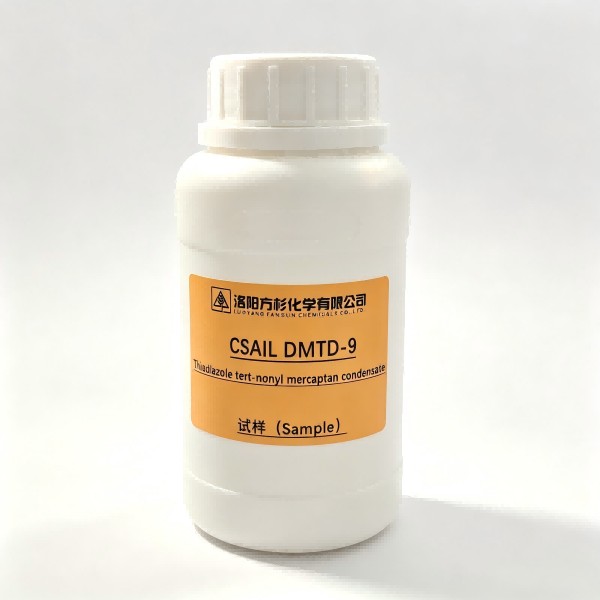
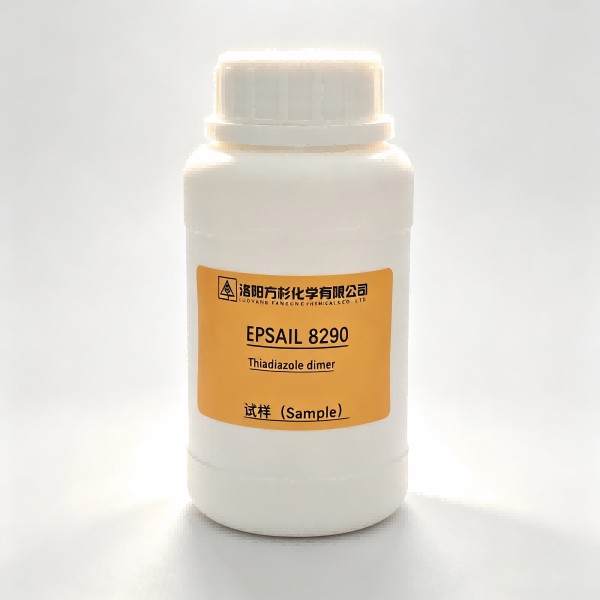
On the supply side, Luoyang Fangshan Chemical was founded in 2017 and operates under ISO 9001:2015, ISO 14001:2015 and ISO 45001:2018 management systems. Our R&D team includes more than 30 PhD and master's degree holders, and functional chemical capacity exceeds 10,000 tons. Samples ship within 3 days and bulk orders within 7 days, with no MOQ. If a delivered product has a quality problem, we handle return through consultation. As a professional lubricant additive manufacturer, we are also open about fit. Our thiadiazole-based metal corrosion inhibitors are developed mainly for lubricant use, such as DMTD-type additives for oil formulations. Water-based options such as thiadiazole derivatives csum 5202 are aimed at metalworking fluids. Neither is a pickling-acid product by default, so check suitability on your own samples.
If your investigation shows the problem is rust or corrosion control in oils instead of acid baths, the ferrous rust options on our carboxylic acid variants page and our lubricant additive packages and blending solutions are the places to start.
If you are comparing chemistries or planning a validation run, send your acid conditions and test records to our technical team for selection advice, and we can arrange a sample for your own coupon testing.
 WhatsApp
 Email
 +8616638861155