Verify Thiadiazole octyl mercaptan condensate Quality Before Bulk Purchase
Before issuing a bulk purchase order, a technical buyer should confirm more than a product name, appearance, and quotation. A material offered as Thiadiazole octyl mercaptan condensate may be described by alternate market names such as DMTD-8, BSDM-8, or CUVAN 826. Those names can help start a supplier search, but they do not prove chemical equivalency, batch consistency, or suitability in a finished lubricant formula.
That gap creates sourcing risk. An ashless metal deactivator may be intended for automotive or industrial lubricants, yet the buyer still needs to establish whether the offered lot matches the required active chemistry, handling characteristics, compatibility window, and documented quality basis. A low price without a defined acceptance method can become expensive after blending, field testing, or customer approval.
Luoyang Fangshan Chemical Co., Ltd. supplies lubricant additives, industrial lubricant additives, oil additives, additive components, and additive packages. The company was established in 2017 and states that its functional chemical production capacity exceeds 10,000 tons. For buyers comparing an import-substitute additive source, that scale matters, but it should still be matched with product-specific documents and a controlled qualification plan.
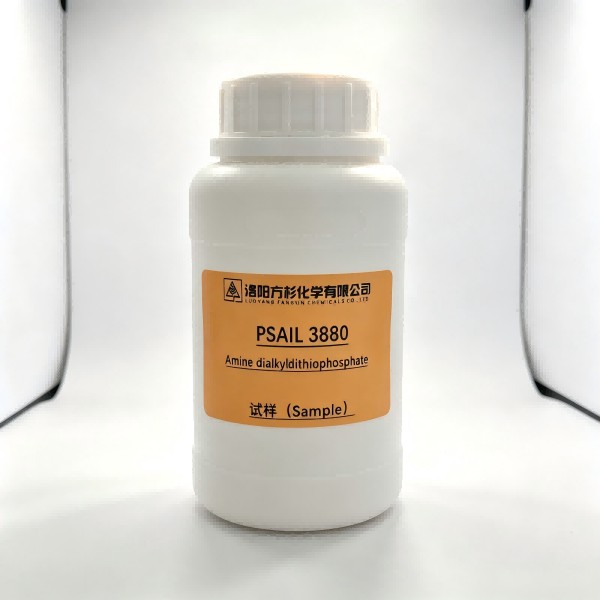
Define the acceptance target before comparing DMTD-8 offers
Conclusion: Do not approve an offer based on an alternate name alone. Define the exact function required in your formulation, the proof required from the supplier, and the pass or fail criteria before asking for commercial pricing.
The reasoning is simple. A trade name can be used loosely in the market, while your formula may depend on a particular balance of metal deactivation, corrosion control, extreme-pressure contribution, antioxidant support, solubility, odor profile, or interaction with other additives. A supplier cannot confirm suitability from the label “DMTD-8” alone if the base oil, package composition, target application, and evaluation method are not known.
This approach fits buyers sourcing additives for industrial gear oils, automotive lubricants, greases, hydraulic fluids, or other oil-based formulations where copper-containing components or yellow-metal protection are relevant. It does not replace your own formulation approval process. A supplier document can support a decision, but it cannot prove finished-oil performance in every base stock and additive system.
Information to place in the first RFQ
- Requested product identity: State DMTD-8 and any internal material code, reference product name, or alternate market designation used by your formulation team.
- Intended use: Identify the lubricant category and whether the product is being evaluated as a metal deactivator, corrosion-control component, antioxidant-supporting component, or part of a broader additive package.
- Base oil and additive environment: Indicate mineral, synthetic, or mixed base oil where disclosure is possible, plus known sulfur-, phosphorus-, amine-, molybdenum-, or triazole-containing components.
- Acceptance evidence: Request the current technical data sheet, safety data sheet, certificate of analysis format, product identifier, and lot information for the proposed shipment.
- Performance protocol: Specify which finished-oil tests govern approval. If friction, wear, load carrying, oxidation, or corrosion behavior is under review, define the method, specimen, conditions, and acceptance limit in your own request.
- Commercial scope: Confirm shipping terms, packaging, export documents, inspection responsibility, and what happens if delivered goods do not match the agreed specification.
For broader formula design, buyers may also review high-quality lubricant additive components rather than assessing the metal deactivator in isolation. This is useful when a single additive must coexist with anti-wear agents, sulfurized EP additives, rust inhibitors, or friction modifiers.
Check whether the supplier fits an export-oriented additive program
Conclusion: A suitable supplier should be assessed on documented operating facts and the scope it can support, not on broad product claims. For a bulk program, ask whether the supplier’s quality credentials, manufacturing scale, technical resources, and order terms fit your qualification stage.
Luoyang Fangshan Chemical Co., Ltd. states that it operates under ISO 9001:2015 quality management, ISO 45001:2018 occupational health and safety management, and ISO 14001:2015 environmental management systems. These certifications are relevant evidence that management-system controls are in place. They are not, by themselves, proof that a specific DMTD-8 lot meets your formulation requirements. Product-level evidence remains necessary.
The company also states that its R&D team includes more than 30 PhD and master’s degree holders. This can be relevant when a buyer needs discussion around custom additive packages or formula compatibility assessment rather than a simple catalog purchase. The limit is clear: technical resources do not remove the need for mutually agreed test conditions, reference samples, and release criteria.
Its stated functional chemical production capacity exceeds 10,000 tons, which may suit buyers seeking a manufacturer rather than an unknown trading source. However, total functional chemical capacity should not be treated as a production-capacity statement for one individual product. Confirm the available supply position for the required material during the RFQ stage.
| Buyer concern | Relevant disclosed fact | Why it matters | What still needs confirmation |
|---|---|---|---|
| Quality-system evidence | ISO 9001:2015 quality management system | Shows a stated quality-management framework. | Product specification, release criteria, and lot records for the offered material. |
| Supply scale | Functional chemical capacity exceeding 10,000 tons | Indicates meaningful overall manufacturing scale. | Specific material availability, packaging, and shipment allocation. |
| Technical communication | More than 30 PhD and master’s degree holders in the R&D team | May support formula-level discussion and compatibility assessment. | Whether the supplier can address your exact base oil, test plan, and additive combination. |
| Initial qualification order | No MOQ stated | Can help a buyer avoid committing to a large first order before approval. | Sample form, freight arrangement, documentation, and acceptance process. |
Buyers developing a package rather than purchasing a standalone component may also consider high-performance lubricant additive packages when the sourcing objective is to reduce the number of individual additive interfaces. That choice fits a buyer seeking a defined package approach; it does not fit a project that requires direct control of every component ratio.
A supplier-evaluation comparison based on batch traceability, retained samples, test-method disclosure, export documents, and lot-to-lot consistency
Conclusion: Treat these five items as minimum supplier-comparison fields. A seller that cannot clearly answer them may still be able to quote material, but the buyer has less basis for approving bulk supply.
The comparison below is designed for a technical purchasing team. It separates a quotation-level offer from a supplier relationship that can be evaluated with evidence. The “Fangshan information currently disclosed” column intentionally identifies where the company brief provides evidence and where the buyer should request clarification. This is more useful than assuming an undocumented process exists.
| Evaluation item | What a buyer should request | Why it affects bulk risk | Fangshan information currently disclosed |
|---|---|---|---|
| Batch traceability | Lot number on documents and packaging, plus a defined link between the shipment and certificate of analysis. | Allows the buyer to identify which material entered a blend if a later issue occurs. | ISO 9001:2015 is stated; lot-traceability records and format are not described in the supplied information. |
| Retained samples | Ask whether a sealed retained sample is held for each delivered batch, how it is labeled, and how long it is retained. | Creates a reference point if the buyer’s incoming result differs from a later investigation. | No retained-sample practice is stated. Request written confirmation before treating it as an agreed condition. |
| Test-method disclosure | Request the test method, units, test conditions, and reporting format for every listed quality item. | A value without a method may not be comparable between suppliers or laboratories. | No product-specific test methods are supplied in the company brief. The buyer should ask for the current product document set. |
| Export documents | Confirm commercial invoice, packing list, safety data sheet, certificate of analysis, origin documents where required, and any buyer-specific paperwork. | Incomplete documents can delay customs clearance or prevent internal material release. | Export-document scope is not specified. Agree the required document list before order confirmation. |
| Lot-to-lot consistency | Compare certificates from more than one offered lot and define the buyer’s acceptance range. | A single passing sample does not establish stable repeat supply. | Overall manufacturing capacity is stated, but lot-to-lot product data are not supplied. Request representative batch records. |
This is the point where a reseller quotation and a qualified supply option often separate. A reseller may offer an attractive price but lack access to original lot data, retained samples, or test-method details. A manufacturer may have stronger documentation potential, but the buyer should verify the actual records rather than assume them.
For related chemistry, a buyer can compare the role of dmtd additives for lubricant with other deactivator families. The correct choice depends on the finished lubricant, metals present, test protocol, and restrictions in the target market. One chemistry is not automatically interchangeable with another.
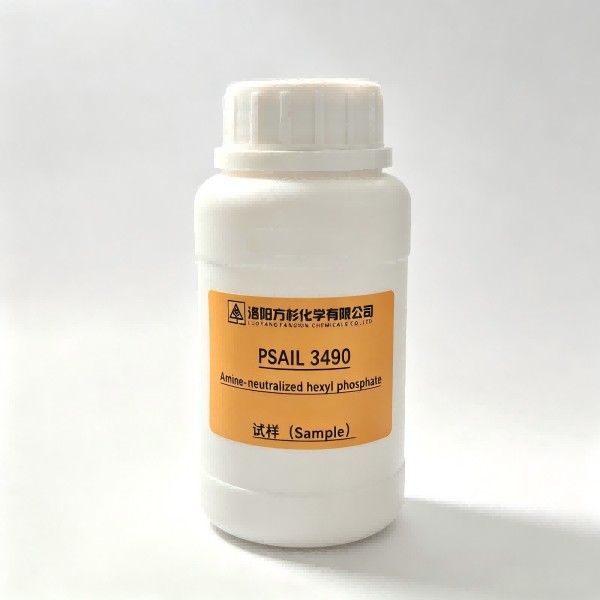
Run equivalency validation in a controlled sequence
Conclusion: Use a staged qualification sequence that starts with identity and document review, then moves to laboratory and finished-formula evaluation. This sequence fits buyers replacing an imported additive or approving a second source. It does not apply when the buyer only needs a non-production research reference and accepts a limited document set.
- Set the reference material. Identify the currently approved product or internal benchmark. Record the product code, supplier, relevant documents, and the finished formula in which it has been accepted.
- Request comparable supplier documents. Ask for the proposed product’s technical data sheet, safety data sheet, certificate of analysis template, and declaration of the exact product identity offered.
- Agree the incoming inspection plan. Decide which appearance, handling, chemical, or performance checks your laboratory will run before material is placed into a development blend.
- Screen compatibility in the intended base oil. Evaluate the candidate in the actual base oil and additive environment whenever possible. A result in a simplified solvent system may be useful for screening, but it does not prove finished-oil compatibility.
- Test the finished lubricant against your release method. Where relevant, include the buyer’s corrosion, oxidation, friction, wear, or load-carrying evaluations. The company brief references SRV testing, friction coefficient, wear scar, PB/PD, extreme-pressure effect, and oxidation performance as technical concerns. The buyer should define the required method and acceptance threshold rather than rely on unqualified claims.
- Review more than one lot before routine bulk approval. Compare documents and test outcomes across offered lots where your approval program allows. This helps distinguish a favorable one-time sample from repeatable supply.
- Document bulk acceptance and deviation handling. Confirm what documentation accompanies shipment, how discrepancies are reported, and what evidence is required for a quality claim.
A practical example is an industrial gear oil blender seeking to replace an existing imported ashless metal deactivator. The buyer should not merely add the candidate at the same treat rate and compare one visual result. The appropriate review is to hold the whole formula constant, compare the benchmark and candidate in the same base oil, use the same internal performance methods, and inspect the proposed supplier’s lot documentation. If the candidate changes corrosion behavior, friction, oxidation response, or compatibility with existing EP chemistry, the buyer must decide whether formula adjustment is acceptable.
When the formula also contains sulfur-based EP chemistry, assess the interaction at finished-oil level. Buyers can review oil-soluble sulfur-based EP/aw additives as part of the broader component-selection discussion. That review is especially relevant where the formula must balance load carrying with metal protection, but it cannot substitute for actual blend testing.
Prevent avoidable commercial and technical mistakes
Conclusion: The most common purchasing errors occur when commercial terms move ahead of technical definition. Keep specification acceptance, documents, sampling, and claim handling aligned before the first bulk order.
- Mistake: treating alternate names as proof of equivalency. Ask for identity and performance evidence. A shared trade name does not demonstrate the same composition or formula behavior.
- Mistake: comparing certificates without test methods. Request the method and reporting conditions. Values generated by different methods may not be directly comparable.
- Mistake: approving one sample as proof of routine consistency. Compare more than one lot when the material will enter a recurring production formula.
- Mistake: requesting a sample without defining the intended test. State the base oil, additive system, use case, and acceptance result expected from the sample program.
- Mistake: assuming technical tests are universal. SRV, wear scar, PB/PD, oxidation, and corrosion evaluations are only meaningful when the buyer defines applicable methods and limits for the application.
- Mistake: leaving export paperwork until shipment. List required documents in the purchase order or pro forma stage, especially if internal release or customs procedures depend on them.
- Mistake: treating price as the full landed cost. Include sample evaluation, laboratory work, documentation review, freight, customs administration, and the cost of a failed blend trial in the sourcing comparison.
Use the disclosed cooperation terms without assuming unstated commitments
Conclusion: Fangshan’s stated terms can support an initial qualification discussion, but product-specific acceptance conditions should be agreed in writing before bulk release.
The company states that samples can be sent within 3 days and bulk goods within 7 days. These are stated lead-time terms, not a guarantee that every product, destination, or order configuration will follow the same schedule. Buyers should confirm current availability, order cut-off, packaging, transport route, and export-document timing for the exact material requested.
No MOQ is stated. This may suit a technical buyer who wants to qualify a smaller quantity before committing to routine volume. The limit is that a no-MOQ position does not define freight cost, packaging format, payment terms, or sample quantity. Each of those points still requires quotation-stage agreement.
For quality issues, the company states that returns can be negotiated. A buyer should convert that general term into an operational agreement: define the approved specification, inspection period, evidence required for a claim, treatment of opened material, responsibility for return freight, and the remedy if the delivered material does not meet the agreed basis.
Daniel Zhang, Sales Engineer for global market development, supports custom additive packages, formula compatibility assessment, and cross-border customer management. Buyers requiring a second-source study can provide their application and qualification requirements so the discussion starts from technical fit rather than an unverified name match.
Request a quote or sample discussion with your target application, required documents, and acceptance test plan.
 WhatsApp
 Email
 +8616638861155