Thiazole-Based Corrosion Inhibitors Versus Thiadiazole for Steel Protection
Which chemistry should a formulator shortlist when steel corrosion protection is the target: thiazole or thiadiazole? The direct answer is that neither ring family can be selected by name alone. Thiazole-based corrosion inhibitors and thiadiazole derivatives can both contribute useful surface protection in the right system, but the better choice depends on the steel grade, fluid type, water exposure, acidity, companion additives, and the test method used to judge corrosion.
For early-stage ingredient selection, thiadiazole is often the more familiar family in sulfur-containing lubricant formulations and metal deactivation work. Thiazole, triazole, benzotriazole, and tolyltriazole-related materials may be relevant where the metal system includes copper or copper alloys, or where a specific adsorption profile is required. That does not prove steel protection. A steel coupon result in an acidic aqueous medium cannot automatically predict performance in a dry industrial gear oil, a water-miscible cutting fluid, or a grease.
Does thiazole or thiadiazole protect steel better?
Choose the chemistry only after matching it to the service environment and the required corrosion test. Thiadiazole is a reasonable first screening route when the formulation already contains sulfurized or extreme-pressure chemistry and the main concern is additive interaction within an oil-based system. Thiazole-related materials deserve separate screening when the target metal set includes yellow metals or when the selected derivative has demonstrated compatibility in the intended fluid.
The reason is surface adsorption. Organic inhibitors do not “coat steel” in a universal way. Their heteroatoms, ring arrangement, substituent groups, solubility, and concentration affect how they approach and remain on a metal surface. Water content and acid contamination can alter that behavior again. A molecule that performs well in one base oil or emulsion may be ineffective, unstable, or unsuitable in another.
For steel-only protection, avoid assuming that a compound sold as a metal deactivator is automatically a rust preventive. Metal deactivation and corrosion inhibition overlap, but they are not identical functions. A deactivator may reduce metal-catalyzed oil oxidation or protect copper surfaces while contributing little to steel rust control in a humid storage test. Pair the azole candidate with the correct rust inhibitor strategy when water displacement, neutralization, or film persistence is also needed.
For broader component selection, review high-quality lubricant additive components & chemical additives as individual formulation building blocks rather than treating one inhibitor as a complete package.
How do the two ring families differ in the ways that matter?
The structural difference is real, but the formulation consequence comes from the full derivative rather than the parent ring alone. Thiazole contains one nitrogen and one sulfur atom in a five-membered aromatic ring. Thiadiazole contains one sulfur atom and two nitrogen atoms in the five-membered ring, with several positional isomers possible. Commercial products are generally substituted derivatives, condensates, or reaction products, so the full product identity matters more than a broad family label.
The following table gives a practical shortlisting comparison. It is not a performance ranking. “Likely fit” identifies where to start screening, not a guarantee of passing a corrosion specification.
| Selection factor | Thiazole-related chemistry | Thiadiazole-related chemistry | What the formulator should verify |
|---|---|---|---|
| Ring structure | Five-membered aromatic ring containing one sulfur and one nitrogen. | Five-membered aromatic ring containing one sulfur and two nitrogen atoms; isomer and substitution pattern matter. | Request the exact derivative, active content basis, and solubility information before comparing products. |
| Adsorption behavior | Adsorption can be influenced by sulfur and nitrogen donor sites, aromatic character, and substituents. Performance varies widely among derivatives. | Additional ring nitrogen may change interaction with metal surfaces and additive compatibility, but does not establish superior steel protection by itself. | Test the candidate in the final or near-final formulation, not only in a solvent solution. |
| Acid-media evidence | Acid corrosion studies on individual azole derivatives may indicate adsorption potential, but results are medium-specific. | Studies involving individual thiadiazoles can also indicate acid-media inhibition, but those findings cannot be transferred directly to lubricants. | Match acid type, temperature, immersion time, steel grade, and inhibitor concentration to the actual service question. |
| Likely metal-system fit | A relevant screening family where yellow-metal protection or mixed-metal systems are involved, subject to derivative-specific data. | A relevant screening family for sulfur-containing lubricant additive systems and metal deactivation applications, subject to steel corrosion testing. | Define whether the protected system contains only ferrous metals or also copper, brass, bronze, or soldered components. |
| Main limitation | Family naming can hide major differences among thiazole, triazole, benzotriazole, and substituted materials. | Good performance against one metal or in one oil does not demonstrate protection in wet steel, acidic water, or emulsions. | Do not approve an ingredient without application-relevant corrosion and compatibility data. |
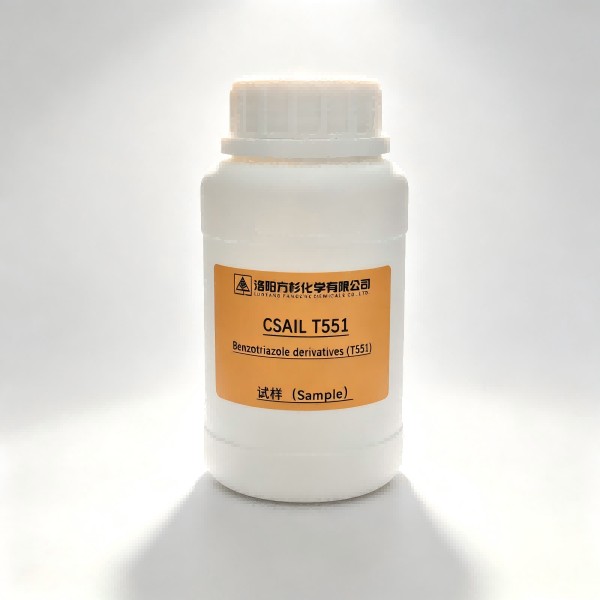
A naming warning is needed here. “Thiazole-based” is sometimes used broadly in commercial classification, while actual products may be triazole, benzotriazole, tolyltriazole, or other nitrogen-containing heterocyclic derivatives. Read the technical documentation and chemical identity carefully. For example, a product identified as tta derivatives csail 3900 should not be assumed to behave like every other material grouped under an azole category.
What evidence is needed before claiming steel protection in acidic media?
Use acid-media results only as a screening indicator unless the test reproduces the actual exposure conditions. Acid corrosion testing can show whether a candidate adsorbs on steel and lowers corrosion under a defined condition. It does not answer whether the same material will protect steel during storage, in a circulating lubricant, or in a metalworking fluid exposed to tramp oil and microbial contamination.
Ask for the following information whenever an acid-media corrosion claim is being used to support an ingredient decision:
- Steel identity: Confirm the steel grade, surface preparation, coupon area, and whether the surface was polished, abraded, or pre-rusted.
- Acid identity and concentration: Different acids produce different corrosion mechanisms. A result from one acid cannot be treated as a general steel-protection result.
- Temperature and exposure period: A short room-temperature immersion and a hot extended exposure answer different questions.
- Inhibitor concentration: Compare candidates at equal active concentration, not merely equal product dosage.
- Measurement method: Weight-loss testing, electrochemical methods, visual ratings, and dissolved-metal analysis each provide different evidence.
- Blank and reference controls: The test needs an untreated control and, where possible, a known internal reference formulation.
- Post-test observations: Record deposits, staining, phase separation, odor changes, and evidence of corrosive interaction with other additives.
A direct selection rule follows: if your actual failure mode is acid pickling, acid cleaning, or acid-contaminated process water, select candidates using acid-media data that resembles that duty. If the actual failure mode is humidity corrosion in packaged bearings or gearboxes, an acid test alone is not sufficient. Use the relevant water-contamination, humidity, storage, or salt exposure method required by your internal specification.
When is thiadiazole the more suitable first shortlist?
Start with thiadiazole when the formulation has sulfur-containing additive chemistry and the target is a lubricant or industrial oil system that requires compatibility screening around metal protection and oxidation control. This route fits early work on industrial gear oils, hydraulic fluids, greases, and related oil-based blends where other additive functions may influence corrosion behavior.
That choice has limits. A thiadiazole derivative may interact with extreme-pressure, antiwear, antioxidant, detergent, dispersant, or phosphorus-containing components. It may also affect color, odor, haze, filterability, or yellow-metal appearance depending on the system. These are formulation questions, not ring-family questions.
Where a sulfurized EP component is included, screen the inhibitor alongside the EP component rather than in isolation. Sulfur chemistry may improve load-carrying behavior while creating a separate metal-protection challenge. Buyers assessing this balance can compare oil-soluble sulfur-based EP/AW additives with their selected inhibitor package during the same blend trial.
Thiadiazole should not be selected merely because the product is described as a metal corrosion inhibitor. For a steel-focused application, require a clear steel test plan. For mixed-metal applications, add copper and brass testing where those materials are present in coolers, bushings, pumps, or fittings. The appropriate selection may be a combination of a metal deactivator and a separate ferrous-metal rust inhibitor.
When should thiazole-related chemistry remain on the shortlist?
Keep thiazole-related options in the shortlist when the metal system is mixed, when yellow-metal compatibility is important, or when a particular triazole-type derivative has appropriate data in the intended formulation. This is especially relevant for lubricants and metalworking fluids that contact copper-containing heat exchangers, bronze components, brass fittings, or electrical assemblies.
The limitation is that a favorable copper result does not prove ferrous-metal rust prevention. A buyer should separate the questions:
- Does the ingredient reduce copper or brass staining under the required test?
- Does it control corrosion on the specified steel coupon or finished part?
- Does it remain dissolved or properly dispersed after blending and storage?
- Does it remain compatible with water, emulsifiers, amines, EP agents, and other package components?
- Does it change demulsibility, foam, air release, or appearance in a way that the finished lubricant cannot accept?
For water-miscible systems, the chemistry must also be evaluated at working dilution and under realistic water quality. Hard water, pH adjustment, microbial by-products, and tramp oil can all alter inhibitor availability at the metal surface. For this reason, water-based selection should begin with water-based metalworking additives & aqueous processing solutions that are intended for aqueous processing rather than assuming an oil-soluble candidate will transfer.
What is the practical test sequence for an early formulation decision?
Use a staged test sequence that eliminates incompatible candidates early and reserves costly application testing for the finalists. This approach is suitable when comparing thiazole-related and thiadiazole-related materials before a sample request or pilot blend.
- Define the actual metal set. List steel grade, cast iron if present, and all yellow metals. Include plated, galvanized, or soldered parts where applicable.
- Define the fluid environment. State whether the product is a neat oil, grease, water-glycol fluid, water-miscible concentrate, or working emulsion. Record expected water exposure and operating temperature.
- Identify the main corrosion mode. Distinguish acid attack, humidity rust, storage corrosion, water contamination, copper staining, or oxidation-related metal catalysis.
- Build matched bench blends. Use the same base fluid and the same companion additive package. Change only the inhibitor candidate and dose on an equal active basis.
- Run physical compatibility checks first. Inspect clarity, sediment, separation, odor, and appearance after blending and after the internal storage condition.
- Run metal-specific corrosion tests. Select the method that represents the actual failure mode. Test steel and yellow metals separately when both are present.
- Assess lubricant performance after corrosion screening. Check whether the inhibitor alters required antiwear, EP, oxidation, foam, demulsibility, or other project-specific properties.
- Document the decision. Record the complete formulation, lot identity, active basis, test method, observations, and pass/fail threshold. This prevents misleading comparisons later.
A useful worked example is a gear oil project containing steel gears, a copper-containing cooler, and sulfurized EP chemistry. Do not ask only, “Which azole protects steel?” First test the candidate package for steel corrosion and copper staining in the selected base oil with the sulfurized EP component present. Then verify that the blend still meets the project’s antiwear and oxidation requirements. In that scenario, a thiadiazole may be an appropriate first candidate, while a thiazole-related material may remain necessary for the yellow-metal portion of the problem. The final choice could be one chemistry, another, or a balanced combination, depending on measured results.
What should buyers ask a supplier before requesting samples?
Request technical clarification that makes the comparison reproducible. Price per kilogram is not enough for an inhibitor shortlist because active content, dosage, and testing burden can change the actual formulation cost.
| Buyer question | Why it changes the decision | When the answer is insufficient |
|---|---|---|
| What is the exact chemistry or commercial derivative? | It distinguishes a broad family name from the actual material being tested. | A family label without product identification does not permit a technical comparison. |
| Is the product intended for oil-based, water-based, or mixed systems? | Solubility and stability differ substantially by medium. | General metal-protection language without fluid compatibility information is not enough. |
| Which metals and test conditions have been evaluated? | It separates steel evidence from copper or brass evidence. | A result for another metal or another medium cannot be treated as steel approval. |
| What companion additives require compatibility testing? | EP agents, phosphorus chemistry, amines, and emulsifiers can alter performance. | Single-component data cannot replace a finished-blend trial. |
| Can samples be supplied for matched trials? | Side-by-side blend testing is the soundest basis for selection. | A sample without suggested handling or formulation context may delay screening. |
Luoyang Fangshan Chemical Co., Ltd. supports this type of formulation discussion as a professional lubricant additive manufacturer with functional chemical production capacity exceeding 10,000 tons. Our facility holds ISO 9001:2015, ISO 45001:2018, and ISO 14001:2015 management system certifications. These are operational trust signals, not substitutes for application testing.
For qualified evaluation work, samples can be dispatched within 3 days and larger orders within 7 days, with no MOQ stated by the company. Product-quality issues may be handled through negotiated return arrangements. These terms help buyers plan screening work, but the final technical decision should still be based on the agreed test conditions and formulation compatibility results.
Ask our technical team for a sample plan or selection advice for your steel, mixed-metal, oil-based, or water-based corrosion test program.
 WhatsApp
 Email
 +8616638861155