Tolyltriazole Derivatives Require Isomer and Solubility Checks
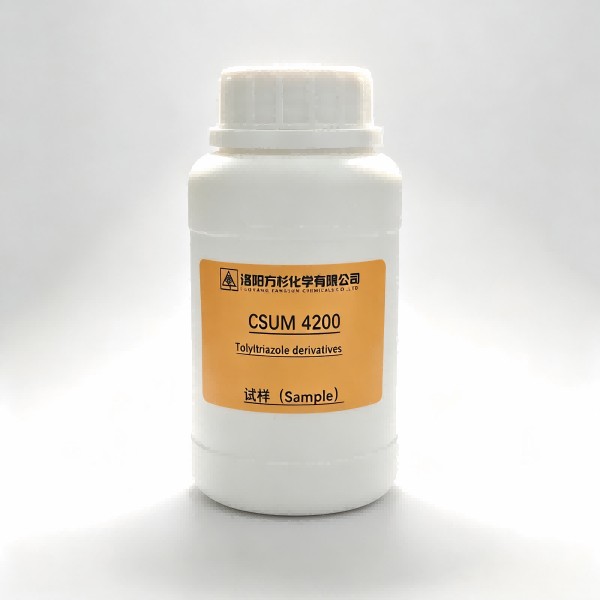
How can a purchaser confirm whether a triazole material is suitable for an oil formulation, a water based fluid, or a metal protection concentrate? The answer starts with identity. Tolyltriazole derivatives may be supplied as mixed methyl benzotriazole isomers, as the neutral acid form, or as salts designed for improved water handling. These differences affect receiving inspection, blending sequence, storage expectations, and the type of formulation in which the material can be evaluated.
For technical purchasers and formulators, the name “tolyltriazole” alone is not enough for approval. A useful purchasing specification should identify the isomer composition, physical form, solvent or carrier where applicable, solubility target, and the intended metal system. This is especially relevant when the objective is copper corrosion control or metal deactivation in industrial lubricants, metalworking fluids, hydraulic oils, or related additive packages.
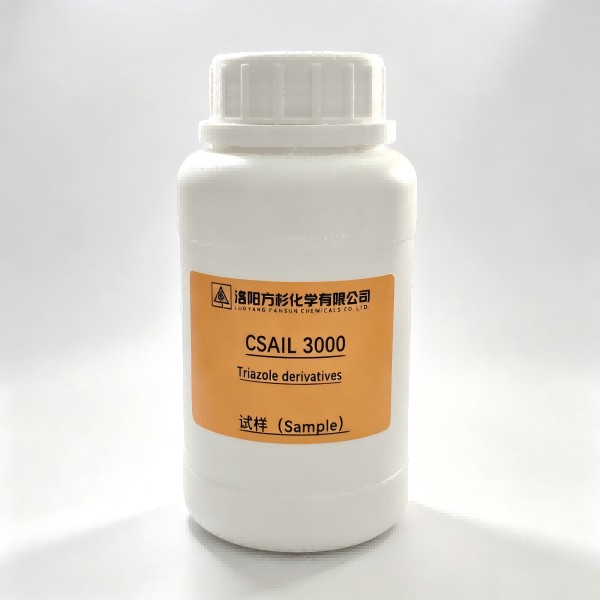
Luoyang Fangshan Chemical Co., Ltd. manufactures functional chemicals and lubricant additive products with production capacity exceeding 10,000 tons. Our technical work is supported by an R&D team of more than 30 PhD and master’s degree holders, which is useful when purchasers need support connecting material identity with formulation screening. Samples can be dispatched within 3 days and bulk orders within 7 days, subject to order confirmation and practical shipping arrangements. There is no minimum order quantity.
What identity information should be verified before evaluation?
Conclusion: Do not approve a material based only on a general trade name. Confirm the molecular family, isomer basis, acid or salt form, and physical presentation before comparing it with an existing formula.
The reason is straightforward. Materials described with a similar triazole name can behave differently in a blend because their form differs. A neutral material may suit an oil phase or require a compatible carrier. A salt may be designed for aqueous incorporation, but its solubility can still depend on water quality, pH, concentration, and the other ingredients already present. Two products can both be described as copper corrosion inhibitors while requiring different addition methods.
This recommendation fits qualification work, second source assessment, reformulation, and import substitution projects. It does not replace performance testing in the finished lubricant or fluid. Identity verification prevents avoidable mismatch, but corrosion behavior, filterability, foam, appearance, and storage stability must still be assessed in the actual formulation.
Request these documents and details from the supplier
- Product identity: Ask whether the material is a mixed isomer product, a defined isomer product, a neutral acid, or a salt.
- Composition statement: Request disclosure of the relevant methyl benzotriazole isomers and any solvent, carrier, or neutralizing component.
- Physical form: Confirm whether the supplied product is a powder, flakes, granules, solution, dispersion, or liquid concentrate.
- Solubility guidance: Request the recommended medium, mixing order, temperature range if applicable, and any pH conditions for aqueous use.
- Application boundary: Ask which metal systems and lubricant types the product is intended to support, and where it should not be assumed suitable without testing.
- Quality documents: Align the requested certificate of analysis and safety documentation with the identification fields used in your incoming inspection procedure.
For a broader view of materials used in finished formulations, review our lubricant additive components. A component should be selected as part of a system, not isolated from the base oil, emulsifier package, antiwear chemistry, and target metal surfaces.
Comparison: 4 methyl and 5 methyl benzotriazole isomers and acid versus salt forms
Direct answer: 4 methyl and 5 methyl benzotriazole are positional isomers. They have the same broad molecular family but differ in the location of the methyl group on the benzene ring. Commercial material may contain both isomers. The acid form is the neutral triazole material, while a salt form is produced by neutralizing the triazole with a suitable base or cation source.
The isomer question matters because “tolyltriazole” may describe a mixed product rather than one isolated compound. The acid versus salt question matters because the neutral and salt forms can show very different handling behavior in water. Buyers should not assume that a water soluble salt is directly interchangeable with a neutral acid product in an oil formulation.
| Comparison point | 4 methyl benzotriazole | 5 methyl benzotriazole | Mixed isomer material |
|---|---|---|---|
| Structural distinction | Methyl group in the 4 position | Methyl group in the 5 position | Contains both positional isomers |
| Purchasing question | Ask whether a defined isomer is required | Ask whether a defined isomer is required | Ask for stated isomer composition or range |
| Typical commercial relevance | May be present in a mixed product | May be present in a mixed product | Common identity basis for commercial tolyltriazole materials |
| Formulation limit | Structure alone does not predict finished fluid performance | Structure alone does not predict finished fluid performance | Must be tested in the intended formulation |
| Form | Handling implication | Solubility implication | Best fit | Limit |
|---|---|---|---|---|
| Neutral acid form | May require controlled incorporation into a suitable carrier or phase | Usually less directly compatible with water than a corresponding salt | Oil oriented concentrates or systems using a compatible carrier | Do not assume direct dissolution in water |
| Salt form | May be easier to introduce into an aqueous phase | Water behavior depends on cation, pH, concentration, and other formulation ingredients | Aqueous lubricant formulations and water based processing fluids | Do not assume every salt remains clear in hard water or mixed electrolyte systems |
| Solution product | Requires confirmation of solvent or carrier identity | Apparent solubility may come from the carrier rather than the active material alone | Controlled dosing into compatible blends | Check solvent compatibility, odor, flash requirements, and finished fluid appearance |
Which form should be selected for a water based product? Start with a salt or a supplier recommended aqueous product when the additive must enter the water phase. This is suitable for soluble concentrates and certain water based metalworking fluids. The limit is that solubility in plain water does not prove stability in the final fluid. Amines, borates, phosphates, surfactants, hardness salts, and pH adjustment can change clarity or cause separation.
Which form should be selected for an oil product? Start with the form demonstrated to be compatible with the selected base oil and package. This fits industrial lubricant additives where the component must remain uniformly distributed during storage. The limit is that “oil compatible” should be confirmed by a blend test at the intended dosage and storage condition, not inferred from chemical family alone.
For product families intended for aqueous processing, our water based additive series provides a relevant starting point. The selection still needs to account for the final fluid’s pH, metal exposure, and concentrate dilution route.
How should a buyer compare acid and salt forms during incoming qualification?
Conclusion: Run a structured bench comparison using the final formulation environment, not a single solubility observation in a laboratory beaker.
The reason is that water compatibility and formulation stability are different questions. A salt form may dissolve quickly in deionized water yet show haze after contact with hardness ions or other additives. A neutral form may appear unsuitable in water but perform well when first dissolved in a compatible intermediate concentrate. The right evaluation route depends on the form being purchased.
A practical qualification procedure
- Define the use case. State whether the target is an oil, a water based concentrate, an emulsion, or a finished diluted fluid. List the metal surfaces that will contact the product.
- Lock the identity. Record the supplier’s designation, isomer statement, acid or salt designation, physical form, and carrier information.
- Prepare the actual blend sequence. Add the material using the order planned for production. Do not change the order only to obtain a clearer laboratory sample.
- Observe incorporation. Record dissolution time, clarity, sediment, gel formation, haze, phase separation, and any need for extended mixing.
- Check post blend stability. Reinspect after the internal storage period specified by your quality procedure. Compare a retained reference blend where available.
- Run relevant corrosion testing. Use the test method and metal coupons required by your product standard or customer requirement. Do not treat appearance as proof of corrosion protection.
- Review side effects. Check whether the addition changes foam, odor, filterability, emulsion behavior, or compatibility with other additives.
- Approve only the defined form. Your approved material description should distinguish acid versus salt and should not accept an alternative form without a change review.
This procedure suits product development and supplier qualification. It does not establish universal treat rates or predict all service conditions. Finished fluid performance depends on the full additive system, base stock, operating temperature, contamination, and the metals present.
What mistakes cause avoidable formulation failures?
Conclusion: Most preventable failures arise from treating material name, active form, and finished fluid compatibility as the same thing. They are not the same thing.
- Approving by name only: A purchase order that states only “tolyltriazole” leaves room for changes in isomer mixture, salt status, or carrier. Specify the approved identity and physical form.
- Assuming all salts behave alike: Salt behavior can vary with the counterion and formulation pH. Verify the actual supplied material in your concentrate and diluted fluid.
- Using plain water as the only screen: A clear water solution may fail after contact with emulsifiers, amines, hardness salts, or other functional additives. Test the real blend.
- Ignoring carrier effects: A liquid product may appear easy to blend because a solvent carries it. Confirm whether that solvent is acceptable in your finished product.
- Changing addition order without control: The same ingredients may produce different appearance or stability results when added in a different sequence. Document the sequence used during approval.
- Equating solubility with metal protection: Dissolution only confirms physical incorporation. It does not verify copper corrosion performance, compatibility, or service life.
- Replacing a triazole without system review: Other corrosion inhibitor families can have different compatibility profiles. Review options such as thiadiazole corrosion inhibitors only against clear performance requirements and controlled comparative testing.
For formulations where friction control and antiwear chemistry are also under review, triazole selection should be coordinated with the rest of the package. A corrosion inhibitor does not replace an extreme pressure agent, an antioxidant, or a friction modifier. Likewise, a material chosen for copper protection may need compatibility checks with phosphorus, sulfur, and molybdenum containing additives.
How should an RFQ define the required material?
Direct answer: An effective RFQ describes the chemical form and the formulation environment. It should not request a generic name without acceptance criteria.
Use the following buyer checklist when requesting a quotation, a technical data sheet, or an evaluation sample:
| RFQ item | What to state | Why it matters |
|---|---|---|
| Material identity | State whether you require a mixed isomer material, defined isomer material, acid form, or salt form | Prevents comparison of unlike materials |
| Target formulation | Identify oil based, water based, concentrate, emulsion, or finished fluid use | Guides solubility and handling recommendations |
| Metal system | List copper and other relevant metals in the equipment or process | Supports appropriate corrosion screening |
| Physical preference | Specify powder, liquid, solution, or other required handling form | Supports receiving and production planning |
| Compatibility needs | List known amines, surfactants, phosphorus additives, sulfur additives, or base oil types | Helps identify foreseeable blend risks |
| Documentation need | Request the data required for incoming quality control and regulatory review | Creates a usable approval record |
Luoyang Fangshan Chemical Co., Ltd. operates with ISO 9001:2015 quality management, ISO 45001:2018 occupational health and safety management, and ISO 14001:2015 environmental management systems. For buyers building an approval file, these management system references can be considered alongside the specific product documentation and the buyer’s own performance testing requirements.
We can support evaluation discussions for additive components and additive packages, but no generic triazole selection should be treated as a guaranteed replacement for a current supplier material. The confirmed route is to compare defined forms under the same formulation method and performance criteria.
When is a different corrosion inhibitor family a better option?
Conclusion: Consider another inhibitor family when the target metal, base fluid, pH range, or compatibility requirement does not fit the confirmed behavior of the selected triazole form.
This applies when a formulation needs protection for black metals in addition to copper, when the water system contains ingredients that destabilize the chosen salt, or when the product requires a different balance of rust prevention and metal deactivation. For example, an amine based or carboxylic corrosion inhibitor may be reviewed for black metal protection needs, while a triazole remains under consideration for copper related concerns.
The limit is clear: combining inhibitor families can create new compatibility questions. Each candidate needs screening in the intended package. Review our black metal rust inhibitors where the formulation requires a separate assessment of ferrous metal protection.
Request a sample and technical selection advice with your required isomer form, acid or salt preference, target fluid type, and metal system.
 WhatsApp
 Email
 +8616638861155