Treat-Rate Test Plan for Metalworking Fluid Additives
How do you decide on a dosage before a fluid reaches a production machine? Most formulation teams already know what each additive family does. The harder question is how many tests you must run, in what order, and which result lets you move a treat rate up or down. This guide builds that plan for metalworking fluid additives, from first beaker to pilot machining, so you finish with a dosage window you can defend.

The outcome you are building toward
You are starting with a candidate formulation and a rough dosage range, usually taken from a supplier recommendation or an earlier product. You finish with three things on paper:
- A tested low, target and high treat rate for each functional additive.
- A pass/fail record for compatibility, foam, corrosion, hard-water stability and friction/wear.
- A written rule for which later changes need only a bench re-check and which need a new pilot run.
This is not a product overview. If the formulation is not yet frozen, finish the base chemistry first, because every step below assumes the base oil or water phase, emulsifier and biocide system stay fixed.
Inputs to collect before the first beaker
Some missing inputs block the whole plan. Others can be settled while early tests run.
| Input | Blocks progress? | Why it matters |
|---|---|---|
| Fixed base formulation (oil or water phase, emulsifier, biocide) | Yes | Changing the base mid-test makes treat-rate trends unreadable. |
| Acceptance criteria written by your own team (foam, corrosion rating, wear and friction targets) | Yes | Without them, every result becomes a judgment call. |
| Lowest and highest water hardness at the target sites | Yes, for emulsions | Hard-water instability shows up only at the extremes. |
| Metals being machined (steel, cast iron, aluminum, copper alloys) | Yes | Decides whether you test ferrous rust protection, yellow-metal staining, or both. |
| Operation type (grinding, tapping, deep drilling, stamping) | Can be refined later | Sets pilot severity, but the bench stages can start without it. |
| Sump life and filtration setup | Can be refined later | Matters for aging tests, not for the first dosage ladder. |
Keep one untreated control and one reference fluid (your incumbent, if you are replacing an imported product) in every run. A result without a control tells you very little.
The staged treat-rate protocol
Run the stages in this order. Each one removes a failure mode that would otherwise contaminate the next.
- Define the ladder. For each additive pick three to five levels around the supplier's suggested range: below, at and above target. Change one additive at a time first. Interaction runs come later.
- Compatibility and stability. Blend each level in the real base. Check clarity, haze, separation and sediment at blending temperature, after cooling, and after a hold period that matches your storage conditions. Success looks like a uniform product at every level. Typical mistake: blending additives into cold base without enough mixing, then blaming the chemistry for the haze.
- Foam. Dilute to working concentration (for water-miscible fluids) and run your foam method at the agitation and temperature the machine will see. Record foam height and the time to collapse. Typical mistake: testing in distilled water only. Foam behavior often changes with hardness, so repeat this stage in step 5.
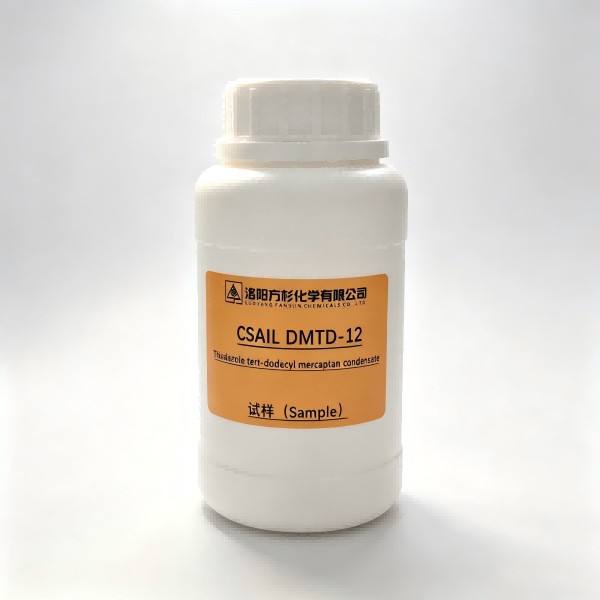
- Corrosion and staining. Test ferrous protection with your chosen method, and add a copper or aluminum staining check if those metals are machined. This is where a rust inhibitor ladder pays off. Options include amine-based rust inhibitors for black metals and thiazole-based metal corrosion inhibitors for yellow metals. Typical mistake: raising rust inhibitor until the panel passes, without checking the effect on foam and emulsion stability.
- Hard-water stability. Dilute at the soft and hard extremes of your sites. Watch for creaming, soap-like scum or oil separation over the sump-life period you care about. Re-test foam on the same samples.
- Friction and wear screening. Run SRV, four-ball (PB/PD) or your equivalent method across the EP/AW ladder. Record coefficient of friction, wear scar and load-carrying results at each level. Chemistry choices here include phosphate esters for metalworking and oil-soluble sulfur-based EP/AW additives. Look for the point where more additive stops improving results; paying for dosage beyond it adds cost and often adds foam or stability risk.
- Select a window, not a point. Choose the narrowest range where every stage passes. Then confirm with a combined run where all additives are at the proposed target, followed by runs at the low and high edges together.
When bench results stop and pilot machining starts
Bench screens rank formulations. They do not reproduce heat, chip evacuation, tool geometry, sump aging or cross-contamination from tramp oil. The table below shows where bench data is enough to adjust a treat rate and where it is not.
| Situation | Bench result enough? | Required before changing the treat rate |
|---|---|---|
| Small trim of a rust inhibitor inside a window that already passed pilot | Usually yes | Repeat corrosion, foam and hard-water checks on the new level. |
| EP/AW level raised or lowered by a meaningful step | No | Pilot machining on the most severe operation, with tool life and surface finish recorded. |
| Swapping to a different EP chemistry (for example phosphate ester to sulfur-based) | No | Full ladder repeat, then pilot, plus a yellow-metal staining check. |
| New metal alloy added to the plant | No | Staining and corrosion on the real alloy, then a pilot cut. |
| Different water source or much harder water | Partly | Hard-water and foam stages repeated; pilot if emulsion behavior changes. |
| Foam passes at bench but the machine has high-pressure coolant delivery | No | Pilot with real pump and nozzle, observing foam in the tank. |
| Replacing an imported product with an import-substitute additive | No | Side-by-side pilot against the incumbent under identical settings. |
The working rule: if a change can alter friction, heat or emulsion behavior under real load, a bench test is a filter, not a verdict. If the change only touches protection during storage or idle time, bench data carries more weight. The limit of this rule is that very mild operations such as light deburring may never expose EP differences, so a pilot there proves little. Choose the pilot operation that is hardest for your fluid, not the easiest.
Completion check and recovery
The plan is complete when all of the following are true:
- Every stage has a recorded pass at the low, target and high edges of the window.
- The combined-additive run passes at all three levels.
- A pilot run matches or beats the reference fluid on the criteria you set at the start.
- The decision rule for future changes is written down.
If something fails, go back to the stage that owns the symptom.
| Symptom | Likely cause | Step to revisit |
|---|---|---|
| High friction coefficient | Friction-modifier or lubricity level too low, or competing polar additives | Step 6, then check interaction runs in step 7 |
| Poor extreme-pressure result | EP chemistry or level insufficient for the load | Step 6 ladder, then pilot |
| Large wear scar | AW level too low, or additive displaced by corrosion inhibitor | Step 6 and step 4 together |
| PB/PD results below target | Insufficient EP level or wrong chemistry for the metal pair | Step 6, and consider a different family |
| Weak oxidation resistance in aging | Antioxidant level too low or consumed by other components | Aging hold in step 2, then re-run step 6 on aged samples |
| Foam rises at hard-water extreme | Surfactant-like additive interacting with hardness ions | Steps 3 and 5 repeated on the same sample |
Common mistakes that cost weeks
- Changing two additives between runs, which makes the cause unreadable.
- Reading a single SRV or PB/PD result as a trend without repeat runs.
- Skipping aged-sample testing, so performance is only proven on fresh fluid.
- Locking a single dosage figure instead of a window, leaving no room for blending variation.
Variations that change the procedure
Three variations alter the plan; everything else follows the same stages.
- Neat (straight) oils versus water-miscible fluids. Neat oils skip steps 3 and 5 but add stronger focus on oxidation and EP depth. For water-miscible systems, water-based metalworking additives need the full hard-water sequence.
- Formulating from single components versus a packaged system. With components, you run the ladder for each additive and then interactions. With a pre-blended package, you test the package dose as one variable and only trim individual components later. Both options are available through high-performance metalworking fluid additives, and the choice depends on how much formulation control your team wants.
- Import substitution. Run the incumbent and the substitute in parallel at every stage, so the comparison is built into the data.
On the supply side, Fangshan Chemical was founded in 2017 and its R&D team includes more than 30 PhD and master's degree holders. Functional chemical capacity exceeds 10,000 tons, and the quality system is certified to ISO 9001:2015, ISO 14001:2015 and ISO 45001:2018. For test planning, the practical points are that samples ship within 3 days, bulk orders ship within 7 days, and there is no MOQ, so a ladder can be built from small lots before committing to volume. If a delivered product has a quality problem, return terms are settled through consultation. As a professional lubricant additive manufacturer, we can also review formula compatibility before you start step 2.
If you share your base formulation, target metals and acceptance criteria, we can suggest a starting dosage ladder and send samples for it. Contact our sales engineering team to request samples or selection advice.
 WhatsApp
 Email
 +8616638861155