Trixylyl Phosphate Safety and Use FAQs
Can a material be approved for an industrial lubricant formula before its safety documents, composition range, and end-use conditions have been checked? Usually, no. Trixylyl phosphate should be assessed as a specific commercial material rather than treated as a generic phosphate ester, because supplier grade, intended application, local chemical rules, and blend interactions can affect the approval decision.
This FAQ is intended for EHS teams, procurement staff, formulation engineers, and technical buyers who are qualifying a lubricant additive component. It focuses on the questions that should be answered before purchase, plant receipt, blending, or use in finished industrial oils.
What should a buyer confirm before approving a phosphate ester component?
Start with identity, documentation, intended use, and blend validation. These four items determine whether a material can move from supplier qualification to controlled plant evaluation. A product name alone is not enough for an EHS or formulation approval.
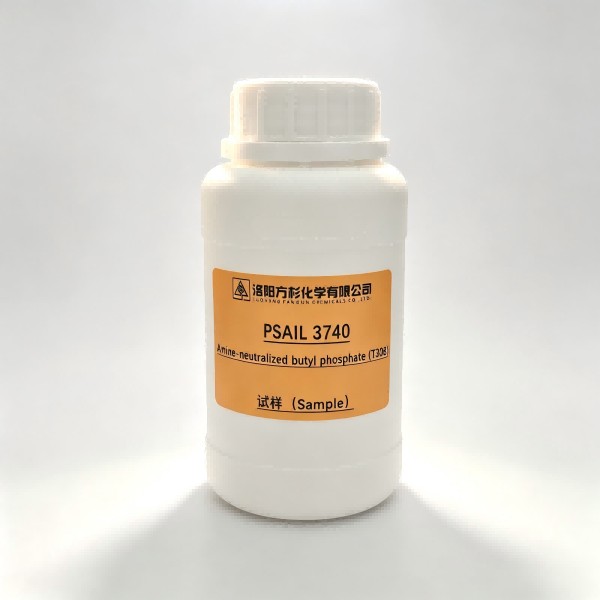
The linked product listing for trixylyl phosphate PSail 3220X identifies a specific material for buyers researching this phosphate ester category. Before treating it as interchangeable with another supplier’s material, compare the applicable technical and safety documents side by side.
| Approval item | What to request or verify | Why it affects the decision | When it is not enough |
|---|---|---|---|
| Material identity | Product name, CAS reference where applicable, supplier grade, and current revision date | Prevents an internal approval from being applied to a different commercial material | Identity alone does not establish compatibility, regulatory status, or performance |
| Safety documentation | Current Safety Data Sheet and local handling information | Supports hazard communication, storage controls, PPE selection, and emergency planning | An SDS must be reviewed against the destination country and actual workplace conditions |
| Technical documentation | Technical data sheet, certificate format if needed, and agreed receiving checks | Allows purchasing and QC teams to define the correct incoming-material controls | A technical sheet does not prove finished-fluid performance |
| Use conditions | Base oil type, other additives, treat-rate concept, operating temperature, metals, seals, and fluid application | These variables influence blend stability and practical suitability | A positive result in one oil family cannot automatically be transferred to another |
For a buyer evaluating several phosphorus-containing options, compare the chemistry family first. The selection may involve phosphate compounds for lubricants, phosphate ester products, phosphate amine salts, or sulfur-containing EP/AW additives. They should not be substituted solely because each may be discussed in connection with anti-wear or extreme-pressure lubricant design.
How is this material normally considered in lubricant formulation?
Is it a finished lubricant or an additive component?
It should be evaluated as an additive component unless the supplier’s product documentation defines another status. The decision is relevant because an additive component is normally qualified within a complete formula, not as a standalone finished fluid. The finished lubricant must still be assessed for its own hazard communication, application performance, handling requirements, and customer specifications.
This approach fits industrial oil formulators developing or revising a blend. It does not replace an application test when the fluid will contact sensitive metals, seals, coatings, filtration systems, or process equipment.
Can Trixylyl phosphate be used as a direct replacement for another phosphate ester?
Do not assume direct replacement. A replacement decision requires a controlled comparison of the two commercial materials in the intended base oil and package. Differences in supplier grade, chemical distribution, impurity profile, solubility behavior, color, odor, storage behavior, and interaction with other additives can change the outcome.
A replacement may be considered where the formulation owner has a defined target, a retained benchmark sample, and a laboratory or pilot-blend process. It is not appropriate to substitute material directly into production simply because the materials share a phosphate ester description.
Which formulation checks should be planned first?
Begin with compatibility and finished-fluid screening, then move to application-specific tests. A sensible first-stage program is shown below. The actual test methods and acceptance limits should come from the fluid specification, customer requirement, or internal quality plan.
- Confirm the intended base oil and all co-additives in the trial formulation.
- Prepare a controlled benchmark blend and a candidate blend using the same mixing procedure.
- Observe blend appearance and storage behavior under the conditions defined by your quality system.
- Check whether the candidate changes viscosity, acidity-related controls, corrosion behavior, demulsibility, foam, filterability, or other required finished-fluid properties.
- Run the application-relevant wear, load, oxidation, or corrosion tests required for the target lubricant category.
- Review results with EHS, quality, procurement, and the formulation owner before scale-up.
For example, an industrial gear oil developer may need a different validation sequence from a hydraulic-oil blender. Gear oil work may concentrate on the project’s load-carrying and wear requirements, while hydraulic fluid development may place greater emphasis on the complete fluid’s stability, cleanliness, corrosion control, and equipment compatibility. See the available industrial gear oil packages page when reviewing the wider package-based approach rather than a single-component change.
Boundary-focused FAQs covering identified uses, handling documentation, and when regulatory or SDS review is needed before industrial use
What uses can be identified from a supplier discussion?
Identify the intended industrial use precisely before approval. “Lubricant additive” is too broad for a final EHS or technical decision. State whether the proposed use is for an industrial oil blend, a gear lubricant, a hydraulic fluid, grease, metalworking-related formulation, or another defined process.
The reason is practical: end use determines potential exposure routes, workplace controls, customer declarations, finished-product classification, and performance testing. A proposed use should be rejected or held for review if the buyer cannot define the finished product, blend site, destination market, and expected operating conditions.
Which documents should be available before receiving industrial material?
At minimum, review the current SDS and the technical product information needed for receiving and formulation control. Procurement should also align the purchase order, receiving inspection, and warehouse identification process with the approved product name and supplier.
- Safety Data Sheet: review the current version for hazard communication, handling, storage, transport, disposal, exposure controls, and emergency information.
- Technical data sheet: use it to understand the supplier’s stated product description and the checks relevant to your internal material specification.
- Product identity record: match product name, supplier, lot traceability approach, and purchase documentation.
- Destination-market review: confirm whether local inventory, labeling, workplace, transport, or customer disclosure obligations apply.
- Finished-fluid assessment: determine whether the blended lubricant requires its own SDS, classification review, label, or customer declaration.
These documents are not interchangeable. An SDS supports safe handling of the supplied material. It does not replace a technical suitability evaluation. Likewise, a technical sheet does not establish legal compliance in every market.
When is an SDS review required before use?
Review the SDS before first receipt, before first plant use, and whenever the document is revised or the use changes. This applies when a material is newly sourced, transferred to another site, introduced into a new blending process, or sold into a new market.
Review should also be repeated when conditions change materially. Examples include a new supplier grade, a new warehouse arrangement, different packaging, a process that increases worker contact, or a revised finished-lubricant composition. An SDS review is not a one-time purchasing formality.
When should regulatory review be escalated?
Escalate to qualified regulatory or EHS personnel before import, export, relabeling, repackaging, or sale into a market that has not been assessed. The review should also be escalated if the material will be used in a regulated end-use sector, if customer restricted-substance declarations are requested, or if the finished formulation changes classification or disclosure obligations.
No general FAQ can determine compliance for every jurisdiction. The applicable answer depends on the destination country, legal entity, annual volume, intended use, supply-chain role, and current chemical-control rules. Do not use a general article as a substitute for the current SDS, local legal review, or official regulatory guidance.
What handling controls should a plant define before blending?
Use the SDS and site risk assessment to set handling controls; do not copy controls from another additive without review. A practical receiving and blending plan should cover worker protection, container management, spill response, segregation, labeling, and waste handling according to the supplied documentation and site rules.
| Plant-control area | Action before first use | Reason | Limit of this guidance |
|---|---|---|---|
| Receiving | Verify product identity, package condition, lot information, and approved documentation | Avoids receipt of an unapproved or damaged material | Receiving inspection does not replace laboratory acceptance testing where required |
| Storage | Assign storage conditions and segregation rules from the current SDS and site assessment | Storage conditions affect worker safety and material control | Do not infer storage rules from another phosphate ester |
| Blending | Use written charging instructions, closed-transfer practices where required, and trained operators | Reduces avoidable handling variability and exposure potential | Specific PPE and engineering controls must follow the SDS and site assessment |
| Spills and waste | Define response materials, waste route, and reporting process before use | Prevents improvised decisions during an incident | Local waste and emergency rules control the final procedure |
A common error is to rely on a historical plant instruction after changing suppliers. Even when the commercial description appears similar, the current supplier SDS and approved internal assessment should control the handling procedure.
How should procurement compare supplier readiness and supply terms?
Compare the supplier’s documentation response, technical communication, and stated delivery terms alongside price. A low unit price does not reduce the work created by missing SDS revisions, unclear product identity, or a trial sample that cannot be traced to the proposed commercial supply.
Luoyang Fangshan Chemical Co., Ltd. states that it operates ISO 9001:2015 quality management, ISO 45001:2018 occupational health and safety management, and ISO 14001:2015 environmental management systems. The company also states that its functional chemical production capacity exceeds 10,000 tons and that its R&D team includes more than 30 PhD and master’s degree holders. These are useful supplier-qualification facts, but buyers should still confirm the documents and grade required for their own approval file.
For development work, the company states that samples can be dispatched within 3 days and bulk orders within 7 days, with no MOQ. These stated terms may help a buyer plan a screening program, particularly when a lab needs a controlled sample before committing to a larger purchase. Confirm current availability, transport arrangements, destination requirements, and exact commercial terms at the time of inquiry.
Buyer checklist for a technically controlled RFQ
- State the intended lubricant or industrial-fluid application.
- Specify the destination country or countries.
- Request the current SDS and relevant technical documentation.
- Identify whether the request is for laboratory evaluation, pilot blending, or regular production supply.
- Describe the base oil, existing additive package, and any known compatibility concern.
- State required customer declarations, incoming QC needs, and documentation format.
- Confirm whether the buyer needs a sample, commercial quotation, or technical selection discussion.
Where a formulation requires multiple components rather than one material, review lubricant additive packages as a separate sourcing path. A package evaluation still requires finished-fluid validation, but it may be more suitable than changing individual components without a full formulation plan.
Request a current SDS, technical documentation, and a sample discussion for your intended Trixylyl phosphate application.
 WhatsApp
 Email
 +8616638861155