A Turbine Oil Additive Package Has to Protect Against Varnish and Water at the Same Time
Every formulator working on circulating turbine oils meets the same tension. Add more antioxidant and the oil lasts longer, but polar by-products and some additive chemistries can slow water release. Tune for fast demulsibility and you may give up oxidation life, which brings sludge and varnish. A well-built turbine oil additive package does not maximise either property. It sets both inside a window that your field conditions can tolerate, and this article explains how to find that window before you commit to qualification.
Where varnish and water collide in circulating turbine systems
A steam or gas turbine reservoir holds oil for months or years. It cycles through bearings, coolers and filters, and it sees heat spots, air entrainment and occasional water ingress from gland steam, cooler leaks or condensation. Two failure modes grow from that environment.
- Varnish. Oxidation creates soluble polar degradation products. When oil cools in a servo valve or a low-flow zone, those products pass their solubility limit and deposit as a thin film. The film can make valves stick and raise bearing temperatures.
- Persistent emulsion. Water that will not settle in the reservoir promotes rust, strips additives into the aqueous phase and accelerates oil breakdown. Surface-active contaminants and oxidation products make this worse.
The two problems feed each other. Oxidation products are polar, so they worsen water separation. Free water and metal wear particles catalyse oxidation. A package that treats only one side of this loop will look fine in a single-property test and then fail in service.
How antioxidant and demulsifier balance prevents varnish formation without sacrificing water separation
Three levers decide the outcome: antioxidant type and treat rate, demulsifier or surfactant load, and the polarity of everything else in the formulation (rust inhibitor, metal deactivator, any anti-wear component). The table below shows the logic we use when discussing a formulation with technical buyers.
| Lever | Too low | Too high | Practical balance |
|---|---|---|---|
| Antioxidant system (phenolic / aminic) | Fast oxidation, rising acid number, soluble varnish precursors | Diminishing return; extra polar material and possible solubility issues in the base oil | Use a synergistic phenolic and aminic blend, and confirm the treat rate by oxidation test rather than by assuming more is better |
| Demulsifier / surface-active agent | Slow water release, emulsion in the reservoir | Foaming, poorer air release, and sometimes filter or seal interaction | Use the minimum dose that passes your demulsibility target after oxidation aging, not just on fresh oil |
| Rust inhibitor (acidic or amine type) | Rust on steel surfaces when water is present | Can emulsify water and hurt separation | Choose a type known to be compatible with the demulsifier and check demulsibility with both present |
| Metal deactivator | Copper-catalysed oxidation in coolers and bearings | Extra polarity; possible solubility issues | Low dose, matched to the copper alloys actually in the system |
The reasoning is simple. Antioxidants protect the base oil so that fewer polar species form. Fewer polar species means the demulsifier has less interference, so it can work at a lower dose. A lower demulsifier dose then leaves less surfactant to fight air release or to be depleted by water washing. Control oxidation first and the water side becomes easier to manage.
Where this does not apply: if the reservoir is regularly flooded with water, no balance in the formulation replaces mechanical removal such as coalescers or centrifuges. If the unit runs with severe local overheating, oil chemistry alone cannot stop varnish. Fix the heat source and the filtration strategy as well.
Matching requirements to package components and their limits
Before comparing suppliers, write down what the oil must survive. Then map each requirement to a component class and note what could go wrong. Our turbine oil additive packages and blending solutions for turbine oil are built around this kind of mapping, and the individual components behind them are available separately in our range of lubricant additive components and chemical additives.
| Field requirement | Component class | Limit to verify |
|---|---|---|
| Long oxidation life, low varnish potential | Phenolic and aminic antioxidants | Treat rate versus base oil quality; confirm with your own aging test |
| Water release after contamination | Demulsifier | Test on aged oil as well as fresh oil |
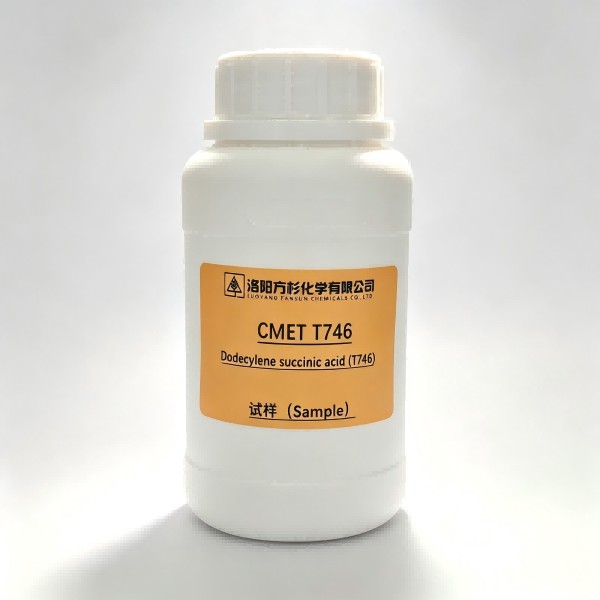
| Rust protection with water present | Rust inhibitor, for example dodecenyl succinate or other carboxylic types | Effect on demulsibility and filterability |
| Copper corrosion and catalysis control | Thiazole-based metal deactivators | Compatibility with antioxidants; dose with the actual alloys in mind |
| Light load protection for gearbox-equipped units | Phosphate ester or amine phosphate anti-wear component | Hydrolytic stability and acid number growth with water present |
The last row matters for geared turbines. Phosphorus-based anti-wear chemistry can hydrolyse when water is present, which raises acidity and may add to deposit tendency. If your unit has no gearbox and the oil is a straight R&O fluid, you may not need that component at all.
An illustrative scenario: validating a package for a gas turbine reservoir
This is a general scenario, not a completed customer project. We have no documented field case to cite here, so treat the figures as placeholders for your own targets.
Imagine a gas turbine with a servo-valve sticking history. The reservoir runs warm and sees small amounts of condensate water after shutdowns. The operator wants an oil that resists varnish but still drops water within the reservoir residence time.
- Define the pass criteria. Decide your targets for oxidation life, demulsibility, foam and air release, rust protection and varnish potential, using your turbine OEM requirements or the oil spec you work to.
- Request candidate blends. Ask for two or three treat-rate variations on the same base oil so you can see the trade-off, instead of one point.
- Run fresh-oil screening. Demulsibility, foam, air release, rust and copper corrosion on every candidate.
- Age the oil. Run an oxidation test, then repeat demulsibility on the aged sample. Many weak candidates pass fresh and fail here.
- Measure varnish tendency. Use membrane patch colorimetry after aging, and check remaining antioxidant by voltammetry if you track it.
- Pick the lowest-risk point. Choose the blend that passes both sides with some margin, not the one that tops either test.
Notice what this sequence avoids. It never asks a single fresh-oil test to prove field performance.
Performance tests that expose the trade-off
- ASTM D943 (TOST) and ASTM D2272 (RPVOT): oxidation life. Use them to rank antioxidant treat rates.
- ASTM D1401 and ASTM D7646 (where relevant): water separation. Run on aged samples too.
- ASTM D7843 (MPC): varnish potential after aging. The test that connects chemistry to the valve-sticking symptom.
- ASTM D6971 (RULER): remaining antioxidant, useful for tracking depletion over time.
- ASTM D892 and D3427: foam and air release, which reveal an over-dosed surfactant.
- ASTM D665 and D130: rust and copper corrosion.
Acceptance numbers depend on your OEM or the specification you work to. We do not quote universal pass values here because they vary by turbine type and oil grade.
Common mistakes when selecting a package
- Judging by fresh-oil demulsibility only. Aged oil behaves differently.
- Raising antioxidant dose without checking solubility. Excess can itself become a deposit precursor.
- Ignoring the rust inhibitor's effect on water separation. It is a frequent hidden cause of slow demulsibility.
- Changing base oil without re-testing. The same package behaves differently across Group I, II and III stocks.
- Skipping copper metal deactivator review. Cooler tubes and bearings are common catalytic sources.
Boundaries, transferability and next step
The balance approach fits circulating R&O turbine oils where varnish and incidental water are the main risks. It is a weaker fit when the system faces heavy continuous water ingress, extreme local temperatures, or when an OEM approval is required that the package has not been tested against. In those cases, confirm approval requirements first, and treat any blend as a candidate until your tests say otherwise.
To assess a new application, we need these inputs:
- Turbine type and oil grade or viscosity
- Base oil group and supplier, if known
- Reservoir temperature, residence time and filtration type
- Known water sources and metals present (copper alloys, steel)
- Current oil problems: varnish, emulsion, rust, foam
- Specification or OEM requirement you must meet
On the supply side, here is what we can state. Luoyang Fangshan Chemical Co., Ltd. was founded in 2017 and operates under ISO 9001:2015, ISO 45001:2018 and ISO 14001:2015 management systems. Our R&D team includes more than 30 PhD and master's degree holders, and production capacity for functional chemicals exceeds 10,000 tons. Samples ship within 3 days, bulk orders within 7 days, and there is no MOQ, so you can test several treat-rate variations without a volume commitment. If a delivered product has a quality problem, we handle it through negotiated return. As a professional lubricant additive manufacturer focused on import-substitute products, we can discuss how a candidate compares with the package you use today.
If you are screening a turbine oil formulation, send us your base oil data and target specification. We can recommend a starting blend and arrange samples for your own varnish and water-separation tests.
 WhatsApp
 Email
 +8616638861155