Water-based metalworking additives that reduce foam in circulating MWFs
Why does a water-based metalworking fluid foam during make-up or circulation even when a defoamer has already been added? The answer is usually not “too little defoamer” alone. Persistent foam commonly results from an imbalance between emulsifier loading, defoamer compatibility, incoming-water hardness, and the amount of air introduced by pumps, return lines, and filtration equipment.
Water-based metalworking additives can reduce foam when they are selected as part of the full formulation and verified in the actual plant water and circulation conditions. Adding a stronger defoamer without checking the source of air entrainment or the emulsion system may suppress surface foam briefly while causing oil separation, poor appearance, reduced wetting, or deposit issues later.
For formulators and plant fluid managers, the practical goal is not simply a foam-free beaker. The goal is a coolant that resists stable foam during preparation, transfer, and recirculation while retaining lubrication, corrosion control, cleanliness, and emulsion stability at the operating concentration.
Start with the foam pattern before changing the additive package
Conclusion: Identify when and where foam appears before treating it. Foam created only during concentrate dilution needs a different correction from foam that increases after the fluid passes through a high-shear pump or returns to the sump.
The reasoning is straightforward. Foam requires both gas introduction and a liquid film stable enough to hold bubbles. Mechanical conditions determine how much air enters the fluid. Surfactants, emulsifiers, dissolved salts, tramp oil, fines, and microbial by-products influence whether those bubbles collapse quickly or remain as persistent foam.
| Observed foam pattern | Likely mechanism to investigate | First action | What this does not prove |
|---|---|---|---|
| Foam appears during concentrate make-up | Incorrect addition order, excessive agitation, incompatible dilution water, or a defoamer that is poorly dispersed in the concentrate | Prepare a controlled make-up sample using actual site water and the intended mixing sequence | It does not automatically show that the in-service fluid will foam at the machine |
| Foam increases at pump start-up | Air entrainment from suction conditions, vortexing, leaks, restrictive suction lines, or pump shear | Inspect the fluid path and compare foam before and after circulation | It does not identify the correct defoamer chemistry by itself |
| Foam forms mainly at the return line | High-impact return flow, splashing, entrained air, contaminants, or excessive surfactant stabilization | Observe return-line discharge height, velocity, and whether the stream breaks the surface violently | It does not confirm an emulsifier failure without stability checks |
| Foam becomes worse after top-up | Wrong make-up concentration, incompatible water, carryover of cleaner residues, or additive depletion in the working fluid | Compare fresh make-up fluid and used sump fluid using the same water source | It does not mean every top-up requires more defoamer |
| Foam is accompanied by split oil or poor appearance | Over-treatment with a defoamer, chemical incompatibility, or a weakened emulsion system | Check emulsion appearance, separation tendency, and wetting after any antifoam adjustment | It does not establish that foam is the only fluid problem |
This distinction changes the treatment path. If the return line entrains air continuously, a defoamer is only managing the symptom. Correcting hydraulic conditions can reduce the air load entering the coolant. If the issue begins in a static make-up tank, mixing order and water quality deserve attention before mechanical changes are made.
A practical investigation should also distinguish between a thin layer of transient bubbles and stable, tightly packed foam that remains after circulation stops. The first can be acceptable in some systems. The second can reduce sump capacity, interfere with pump delivery, create overflow, and make concentration control less reliable.
How emulsifier balance, defoamer chemistry, water hardness, and pump shear prevent persistent foam
Conclusion: Persistent foam is prevented by balancing the emulsification system against the plant water and mechanical air load, then selecting a defoamer that remains effective without destabilizing the fluid. These factors must be assessed together. Treating them as independent variables is a common formulation error.
| Parameter | What it affects | Interaction with the other parameters | Practical limit |
|---|---|---|---|
| Emulsifier balance | Droplet formation, wetting, concentrate dilution behavior, and bubble-film stability | A more surface-active system can help emulsification and wetting but may also stabilize air bubbles, especially under strong recirculation | Reducing emulsifier simply to lower foam can impair emulsion stability, lubrication delivery, or corrosion-control distribution |
| Defoamer chemistry | Bubble rupture, surface spreading, and foam collapse rate | The defoamer must disperse properly in the fluid and remain functional after exposure to surfactants, salts, contaminants, and pump shear | A chemistry that knocks down foam in a simple cup test may cause separation or lose effectiveness in a working sump |
| Water hardness | Solubility and interaction of emulsifiers, soaps, salts, and some corrosion inhibitors | Hardness can shift the balance of the emulsion system and may form deposits or destabilizing interactions that change foam behavior | Soft water is not automatically better; a formulation designed around one water type may behave differently with another |
| Pump shear and air entrainment | Bubble generation, droplet disruption, and the mechanical stress placed on the defoamer | High air input can exceed the capacity of an otherwise suitable defoamer, while shear can change how the antifoam disperses | Changing additives alone cannot fully correct a system with air leaks, vortexing, or severely turbulent return flow |
Emulsifier loading is a performance trade-off, not a “higher is better” setting
Emulsifiers make oil and water coexist as a usable metalworking fluid. They also influence the stability of the thin liquid films around bubbles. When emulsifier loading is too high for the application, or when the emulsifier blend is poorly matched to the base oil and water chemistry, air introduced by pumping may remain trapped as stable foam.
The appropriate correction is to review the emulsifier package as a system. Check whether the fluid requires high detergency, strong wetting, hard-water tolerance, or a particularly stable emulsion. Those needs may justify a more surface-active package. They also mean the defoamer must be chosen for compatibility rather than selected solely for rapid initial knockdown.
This approach does not apply when the fluid is already separating, leaving oil on the surface, or showing insufficient emulsion stability. In that case, lowering emulsifier content could make the primary problem worse. First confirm the condition of the emulsion.
Defoamer chemistry must survive the real fluid environment
Defoamers work by entering the bubble film and weakening it. Their effectiveness depends on dispersion, interfacial behavior, and resistance to the conditions encountered in the coolant loop. A product that disperses too readily may lose its foam-breaking action. One that remains too incompatible can create surface defects, oil separation, or poor stability.
For this reason, a supplier should evaluate defoamer chemistry in the actual concentrate and at the intended use dilution, using the customer’s make-up water where possible. For a relevant component category, see siloxane ketone oligomer csum 8150. The correct choice still depends on the entire formulation, not on the component name alone.
Water hardness can change both foam and fluid balance
Incoming water contains dissolved minerals that can alter the behavior of emulsifiers and other water-soluble materials. If a plant changes water source, blends municipal and treated water, or uses water with variable mineral content, a previously stable coolant may behave differently during make-up.
Use actual site water in validation work. Record the water source and any treatment used. Then compare it with a reference water only to understand sensitivity. Do not interpret a good result in deionized water as proof that the same formula will behave well in plant water.
Pump shear creates the condition that additives must manage
Pump shear and turbulent return flow repeatedly create small bubbles. A fluid that sees little foam in a static test can foam heavily in a machine because the machine continuously renews the air-liquid interface. The most effective formulation work therefore combines bench screening with recirculation exposure that reflects the plant’s pump, filtration, and return-line conditions.
If foam is concentrated near a single machine, inspect that machine first. A poorly submerged return, leaking suction connection, blocked strainer, or sump level that permits vortex formation can create a local problem that no global package change should be expected to solve.
Use a controlled troubleshooting sequence instead of repeated defoamer additions
Conclusion: Change one variable at a time and preserve a retained sample of each trial. This establishes whether foam reduction comes from chemistry, water, concentration, contamination control, or a mechanical correction.
- Document the foam event. Note whether foam occurs during make-up, at start-up, under continuous circulation, after filtration, or following top-up. Record the affected machines and the current fluid condition.
- Confirm the working concentration. Compare the actual make-up procedure with the formulation instruction. Over-concentrated fluid can alter surfactant behavior, while under-concentrated fluid can compromise the intended balance of corrosion protection and lubrication.
- Collect matched samples. Retain fresh concentrate, freshly diluted coolant, and used sump fluid. Use clean, clearly identified containers so that contamination is not introduced during sampling.
- Check make-up water consistency. Identify the water source and whether it has changed. Test the same formulation with the site water that is used in production.
- Inspect the circulation system. Look for splashing return flow, air leaks, vortexing, low fluid level, restrictive suction conditions, and abnormal filtration behavior.
- Screen additive changes in the complete fluid. Assess foam collapse, emulsion appearance, separation tendency, wetting, and corrosion-control performance after each proposed adjustment.
- Run a controlled plant confirmation. Trial the selected change in a defined machine or sump where operating conditions can be observed. Avoid changing concentration, defoamer, and pump settings at the same time.
- Set a corrective-action record. Keep the approved mixing order, water source, addition point, and inspection checks with the fluid-management procedure.
This sequence fits both formulators refining a new coolant and plant teams investigating a sudden problem in an established fluid. It does not replace a safety review. Any handling, dosing, or equipment modification should follow the site’s chemical-management and operating procedures.
Common foam-control mistakes that create secondary fluid problems
Conclusion: Avoid quick fixes that hide the source of foam or damage the formulation balance. The cost of a poorly targeted change often appears later as separation, residue, poor machine cleanliness, corrosion concerns, or reduced fluid life.
- Adding defoamer repeatedly without a dose-control plan. This may reduce visible foam temporarily but can make the fluid less stable. Use a controlled trial and retain untreated and treated comparison samples.
- Testing only fresh fluid in a static container. Static tests do not reproduce air entrainment, contamination, heat exposure, pump shear, or return-line turbulence. Use them for screening, then confirm under circulation.
- Assuming all foam is a chemical issue. A suction-side air leak or splash-heavy return line can create more bubbles than any additive treatment can reasonably manage. Inspect mechanical conditions before reformulating.
- Changing several ingredients at once. Simultaneous changes prevent root-cause identification. Adjust one factor, measure the result, and preserve the trial record.
- Ignoring water changes. New municipal supply conditions, altered treatment practice, or a different blending source can change fluid behavior. Validate with the water actually used for make-up.
- Using foam reduction as the only pass criterion. A candidate treatment must also maintain the required emulsion appearance, corrosion protection, lubricity, and cleanliness for the intended metalworking operation.
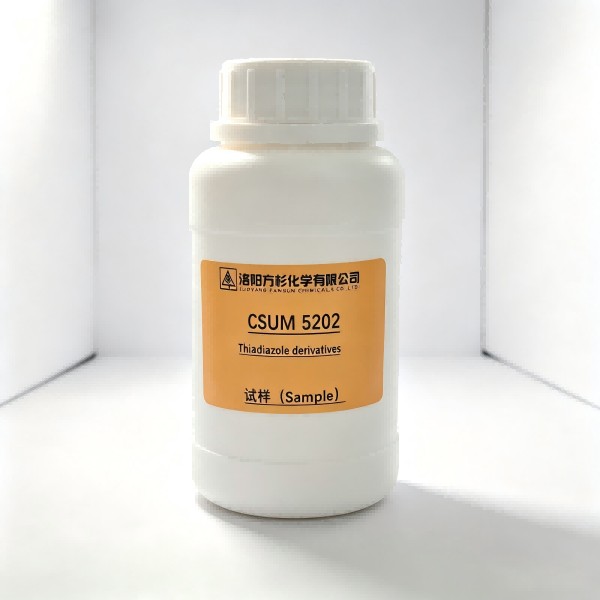
Corrosion protection should be checked whenever an emulsifier or antifoam change is proposed because these materials can affect how protective components distribute at metal surfaces. For formulations that need dedicated metal-protection support, review thiadiazole-based metal corrosion inhibitors alongside the rest of the aqueous system. Compatibility must be verified in the final fluid, especially where multiple metals are present.
Verify a foam-control option with evidence that matches plant conditions
Conclusion: Ask for evaluation evidence that matches the question being asked: make-up foam, persistent recirculation foam, emulsion compatibility, or plant-specific mechanical air entrainment. A single generic statement that an additive is “low foaming” is not enough to select it.
A useful supplier discussion should define the base oil or synthetic component, emulsifier system, corrosion inhibitor system, intended fluid concentration, make-up water source, machine type, circulation route, and the point where foam is observed. It should also state whether the fluid contains tramp oil, cleaner carryover, fines, or other contamination that could change behavior.
Fangshan Chemical can support component-level and package-level selection through its high-performance metalworking fluid additives & water-based series. The company has a research and development team with more than 30 PhD and master’s degree holders and functional chemical production capacity exceeding 10,000 tons. These resources support formulation discussion, but they do not remove the need to validate each coolant in its intended water and equipment conditions.
For sourcing teams that need to evaluate a trial before a production decision, Luoyang Fangshan Chemical offers sample dispatch in 3 days and large-order dispatch in 7 days, with no MOQ stated in the company brief. Its management systems include ISO 9001:2015, ISO 45001:2018, and ISO 14001:2015 certifications. When a quality issue occurs, return arrangements are handled through consultation.
Before approving a change, use this buyer checklist:
- Does the candidate reduce persistent foam in the actual make-up water?
- Has it been checked after realistic circulation or shear exposure?
- Does the emulsion remain visually stable after treatment?
- Have wetting, residue, corrosion-control, and lubrication requirements been reviewed?
- Is the foam source mechanical, chemical, or a combination of both?
- Are the addition order and treatment level documented for production operators?
- Can the supplier provide a sample for testing in the complete formulation rather than only as a standalone material?
Request a sample or formulation-selection discussion with Fangshan Chemical to evaluate foam control in your actual coolant, plant water, and circulation conditions.
 WhatsApp
 Email
 +8616638861155