Match Ashless Additives to Zinc-Free Hydraulic Oils
A spec sheet says "zinc-free." Does that mean you can drop in any antiwear chemistry that contains no zinc? No. Zinc-free only removes one metal. Truly ashless additives contain no metal at all, and that tighter requirement changes which chemistries survive your pump test, your filter and your water exposure. This guide walks a formulator through the matching task in a fixed order: define the constraint, shortlist a chemistry, screen it, and verify the result.
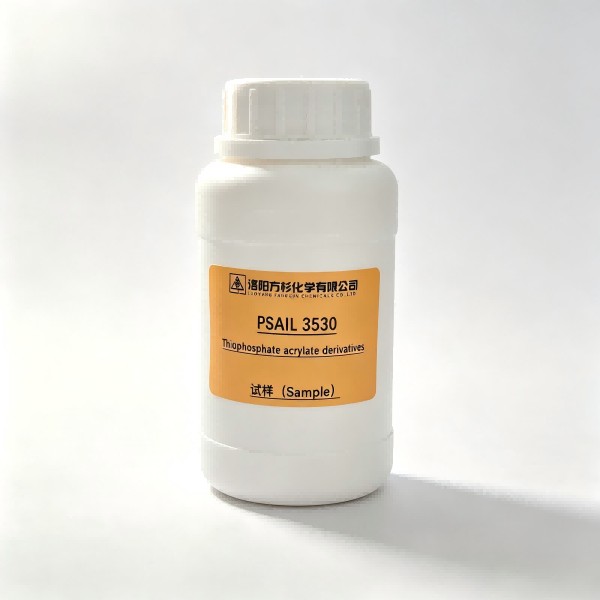
Define the Starting Point: Zinc-Free Versus Truly Ashless
Start by writing down which of the two your customer or OEM actually requires. The answer sets the whole shortlist.
- Zinc-free only: ZDDP is excluded, but other metal-containing components (for example some detergents or rust inhibitors) may still be allowed. You have more freedom.
- Ashless: no metal-bearing component anywhere in the package. Antiwear, rust protection, metal deactivation and demulsifier choices all have to be metal-free.
Where this fits: the zinc-free-only route suits specs that mention only environmental or compatibility reasons. The ashless route suits specs that cite ash-sensitive hardware, strict filter-residue limits or equipment with silver-plated or other zinc-sensitive parts. Where it does not apply: if the spec is silent, ask the buyer before you over-engineer. A fully ashless package costs more screening time than a zinc-free one.
Readiness Checklist Before You Screen Anything
Some inputs block progress. Others can wait until the second round.
| Input | Blocks progress? | Why it matters |
|---|---|---|
| Target viscosity grade and base oil type | Yes | Additive solubility and response change with base oil polarity. |
| Pump type and the pump or wear test you must pass | Yes | Defines the pass/fail target for the final blend. |
| Yellow-metal content (copper, brass, bronze) in the circuit | Yes | Rules sulfur-heavy chemistries in or out. |
| Expected water ingress and filter rating | Yes | Governs hydrolysis risk and filterability. |
| Existing treat rates or a benchmark product | No | Helpful for import substitution, but a first screen can run without it. |
| Seal and paint compatibility lists | No | Confirm in round two. |
Chemistry-to-Application Selection Matrix for Zinc-Free Hydraulic Fluids
This matrix compares the three ashless families most formulators shortlist. Use it to pick one primary and one backup chemistry, not to finalize a formula. Treat rates and final ratios must come from your own screening.
| Chemistry family | Main contribution | Best-fit scenario | Main limit | First screening check |
|---|---|---|---|---|
| Phosphorus (amine phosphates, phosphate esters, phosphorothioates) | Antiwear film formation under boundary lubrication | Vane and piston pumps where wear scar and pump-test performance are the gate | Acidity and hydrolysis in wet systems; can affect filterability and yellow metals if poorly matched | Four-ball wear scar, then acid number and water-separation behavior |
| Sulfur-nitrogen (thiadiazoles, thiazole and triazole deactivators, sulfurized components) | Extreme-pressure support, oxidation resistance, metal deactivation | Systems with load spikes or long drain targets, and mixed-metal circuits when deactivators are included | Active sulfur can stain or attack copper alloys; odor and color need checking | Copper corrosion test plus oxidation test |
| Borate (nitrogen-containing boric acid esters) | Friction reduction and supplementary antiwear | Systems where friction coefficient and energy loss matter alongside wear | Moisture sensitivity; stability in wet service must be proven in your own test | Storage stability and water-tolerance check, then SRV friction test |
Our product range lets you evaluate each family from one supplier. For phosphorus, review phosphate amine salt EP/AW additives and oil-soluble phosphorothioate EP/AW additives. For borate, see nitrogen-containing boric acid esters FMET 2890. For sulfur-nitrogen, start with DMTD additives for lubricant.
How to read the matrix
- Wear is the failing result: begin with phosphorus.
- Copper staining is the failing result: add or adjust a deactivator before changing the antiwear.
- Friction coefficient is high but wear passes: test a borate as a supplementary component.
- Water exposure is frequent: shift weight away from hydrolysis-prone options and verify early.
Executable Sequence: From Shortlist to a Passing Blend
- Fix the pass/fail targets. List each test you must pass, such as wear scar, PB/PD values, SRV friction, oxidation stability, copper corrosion and filterability. Success looks like a one-page target sheet signed off by the buyer. The usual mistake is discovering a missing test after blending.
- Choose one primary chemistry from the matrix. Pick the family that addresses the test most likely to fail. Do not blend three families in the first round.
- Select a metal-free rust and corrosion layer. Ashless status fails if the rust inhibitor carries a metal. Confirm every component is metal-free from its documentation.
- Add yellow-metal protection if copper alloys are present. Triazole and thiazole chemistry, such as triazole derivatives CSAIL 3000, is commonly used as a deactivator. Check that it stays soluble in your base oil.
- Blend a small matrix. Prepare three to four variants of the primary chemistry at different levels. Keep every other component fixed so any change is traceable.
- Run the fast screens first. Four-ball wear scar, SRV friction and copper corrosion take less time than pump tests. Eliminate weak variants here.
- Test water and filter behavior on the survivors. Add controlled water, age the sample, then check clarity, acid number and filtration. A blend that wins the wear test but clogs a filter is not a finished product.
- Run the pump or oxidation test on one or two finalists. This is the expensive step, so it should come last.
If you would rather start from a pre-balanced base, our hydraulic oil additive packages let you screen a complete package and then adjust components around it.
Completion Check and Recovery
The task is complete when the finalist blend meets every item on the target sheet from step 1, with the water and filter checks passed in step 7. Optional gains such as lower friction beyond the spec do not count as completion.
| Symptom | Likely cause | Step to revisit |
|---|---|---|
| Large wear scar | Antiwear level too low or wrong chemistry for the base oil | Step 2, then 5 |
| PB/PD values below the target | Insufficient extreme-pressure contribution | Add a sulfur-nitrogen component and re-run step 6 |
| High friction coefficient in SRV | No friction modifier in the package | Trial a borate or other friction modifier |
| Copper strip discolors | Active sulfur without enough deactivator | Step 4 |
| Acid number rises or haze appears after water exposure | Hydrolysis of the antiwear or borate component | Step 2, shift chemistry or level |
| Weak oxidation result | Insufficient antioxidant support | Review the sulfur-nitrogen portion and base oil |
Common mistakes
- Treating "zinc-free" and "ashless" as the same requirement.
- Changing several components between rounds, which hides the cause of a failure.
- Running pump tests before the quick screens have removed weak candidates.
- Skipping the water test because the circuit is described as "dry" on paper.
Variations That Change the Procedure
Only three situations genuinely alter the steps above.
- Wet or humid duty: move the water and filter test (step 7) ahead of the SRV and pump work, and weight your shortlist toward chemistries that tolerate moisture.
- Mixed-metal circuits: make step 4 mandatory rather than conditional.
- Import substitution against a benchmark: run the benchmark through the same quick screens in step 6 so your comparison uses identical conditions.
On the supply side, we are a professional lubricant additive manufacturer founded in 2017, with a team of more than 30 PhD and master's degree holders on the R&D side and functional-chemical capacity above 10,000 tons. Our facility holds ISO 9001:2015, ISO 45001:2018 and ISO 14001:2015 certification. For screening work, samples ship in 3 days, bulk orders ship in 7 days, and there is no MOQ, so a small trial quantity is possible. If a delivered product has a quality problem, return terms are settled by negotiation.
To shorten your first round, send us your base oil type, target tests and metal list, and I will suggest a primary chemistry and a backup for sample evaluation. Contact Daniel Zhang through our website to request samples or selection advice.
 WhatsApp
 Email
 +8616638861155