Thiadiazole-based corrosion inhibitors work differently in lubricants than in academic acid tests
Many formulators encounter promising data on thiadiazole derivatives from academic studies, often showcasing high inhibition efficiency for mild steel in aggressive acidic media. However, when these results are used to predict performance in an industrial lubricant, the outcomes can be disappointing. The disconnect arises from a fundamental difference in the operating environment. Protecting steel from an aqueous acid attack is a vastly different chemical challenge than preventing the slow, high-temperature corrosion of copper and its alloys in a non-polar oil base.
Understanding this distinction is not just an academic exercise; it is essential for developing stable, long-lasting industrial fluids and greases. Selecting an inhibitor based on irrelevant data can lead to premature fluid degradation, component failure, and costly downtime. As a professional lubricant additive manufacturer, we frequently assist formulators in bridging this gap between theoretical research and practical application. This article clarifies the mechanisms at play and provides a framework for evaluating thiadiazole-based corrosion inhibitors for their intended use in oil-phase systems.
Understanding the Core Mechanism of Thiadiazole Inhibitors
At their core, thiadiazole derivatives function by forming a protective barrier on a metal's surface. Their effectiveness stems from the unique structure of the 1,3,4-thiadiazole ring, which contains nitrogen and sulfur atoms. These heteroatoms have lone pairs of electrons that readily coordinate with metal atoms, forming a durable, passive film.
This process, known as chemisorption, involves several key steps:
- Adsorption: The inhibitor molecule, dispersed in the carrier fluid (oil or water), migrates to the metal surface.
- Coordination: The sulfur and nitrogen atoms in the thiadiazole ring donate their electron pairs to vacant d-orbitals of the metal atoms (like copper or iron). This forms strong coordinate bonds.
- Film Formation: As more molecules adsorb, they organize into a dense, non-porous film. This film acts as a physical barrier, isolating the metal from corrosive species like oxygen, water, and acidic byproducts in the lubricant.
The strength and stability of this protective layer depend heavily on the specific thiadiazole derivative and the environment it operates in. Alkyl or aryl side chains attached to the thiadiazole ring influence the molecule's solubility in the base fluid and the packing density of the protective film. This molecular architecture is a key focus for our R&D team of more than 30 PhD and master’s degree holders, who design additives for specific applications.
Aqueous Acid vs. Oil-Phase Lubricants: A Critical Distinction
The majority of published academic research on thiadiazoles focuses on their performance in aqueous acidic solutions, typically using hydrochloric or sulfuric acid to corrode mild steel. While valuable for understanding fundamental corrosion science, this context is fundamentally different from that of an industrial lubricant. A formulator must recognize these differences to make sound technical decisions.
The following table contrasts the two environments and highlights why data from one cannot be directly extrapolated to the other.
| Parameter | Aqueous Acidic System (Typical Research Scenario) | Oil-Phase Lubricant System (Industrial Application) |
|---|---|---|
| Environment | Aqueous, polar, low pH (highly acidic). Corrosive species (H⁺ ions) are abundant and highly mobile. | Non-polar (hydrocarbon base), neutral to slightly acidic, high temperature. Corrosive species are dissolved oxygen, water, and oil degradation byproducts. |
| Target Metal | Primarily ferrous metals (mild steel, iron). Corrosion is rapid and uniform. | Primarily non-ferrous "yellow metals" (copper, brass, bronze). Copper acts as a catalyst for oil oxidation, and its corrosion is a primary concern. |
| Inhibitor's Role | Prevent catastrophic, rapid metal loss by blocking active corrosion sites from aggressive acid attack. | Act as a metal deactivator and passivator. The goal is to prevent the metal surface from catalyzing oil oxidation and to protect it from slow, long-term degradation. |
| Key Performance Metric | Corrosion rate (e.g., in mm/year) or inhibition efficiency (%). Measured by weight loss or electrochemical methods like potentiodynamic polarization. | Copper strip corrosion rating (e.g., ASTM D130). Measures the visual tarnish and corrosion on a polished copper strip after immersion in hot oil. |
| Solubility Requirement | Water-soluble. The molecular structure is often modified with hydrophilic groups to ensure dispersion in the aqueous phase. | Oil-soluble. The molecule requires long alkyl chains to ensure it remains dissolved in the base oil across a wide temperature range without precipitating. |
This comparison makes it clear: a thiadiazole derivative optimized for water solubility and acid resistance on steel may be completely insoluble and ineffective in a Group II base oil intended to protect a bronze gear. The performance of thiadiazole-based metal corrosion inhibitors is context-dependent.
Common Mistakes When Selecting Thiadiazole Additives
Basing a selection on incomplete or mismatched data can lead to significant formulation challenges. Here are common errors we see formulators make when evaluating these powerful additives for lubricant applications.
- Mistake 1: Prioritizing Acid Inhibition Efficiency for an Oil Application. A 99% inhibition efficiency rating against 1M HCl on mild steel provides almost no useful information about how the additive will perform in an ASTM D130 copper strip test at 121°C for 3 hours. The chemistry and objectives are completely different. Focus on data relevant to your system, such as copper strip ratings, thermal stability, and compatibility with other additives.
- Mistake 2: Ignoring Solubility and Stability. An additive is useless if it doesn't stay dissolved in the base oil. A common failure mode is additive drop-out at low temperatures or thermal degradation at high temperatures. Always verify the additive's solubility in your specific base stock (e.g., paraffinic, naphthenic, synthetic) and its thermal stability profile (e.g., via TGA) to ensure it can withstand the application's operating range.
- Mistake 3: Overlooking Interactions with Other Additives. Lubricants are complex mixtures. A thiadiazole derivative might interact antagonistically with other components, such as certain EP/AW agents or detergents. For instance, some sulfur-containing additives can become aggressive toward yellow metals at high temperatures. Compatibility testing should be a standard part of your validation process. Our work often involves formulating complete high-performance lubricant additive packages & blending solutions, where balancing these interactions is a primary goal.
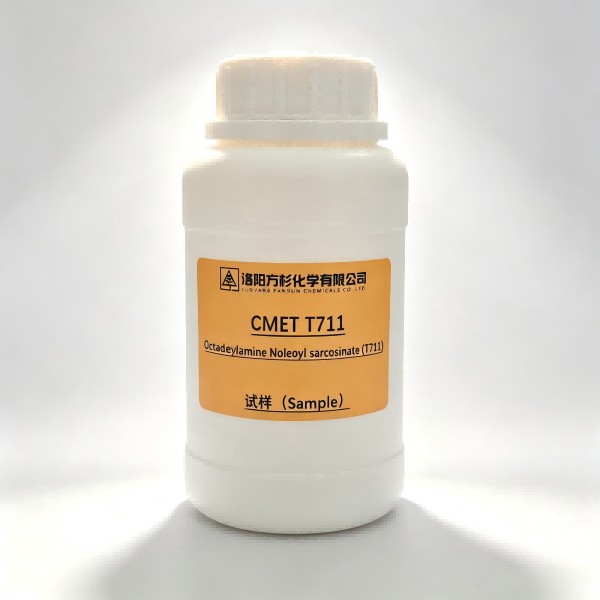
- Mistake 4: Using a Single Additive for Multiple Metals. While thiadiazoles are excellent for yellow metals, they may not provide sufficient protection for ferrous metals in the presence of water contamination. A balanced formulation often requires a combination of inhibitors, such as pairing a thiadiazole for copper protection with N-acyl sarcosine type corrosion inhibitor cmet so for rust prevention on steel surfaces.
A Practical Checklist for Evaluating Thiadiazole Inhibitors
To ensure you select an effective thiadiazole derivative for your lubricant formulation, use a structured evaluation process. This checklist helps you move beyond academic data to focus on real-world performance indicators.
Decision Checklist for Formulators:
-
Define the Application Environment:
- What is the operating temperature range (min, max, typical)?
- What type of base oil is being used (Group I-V, ester, PAG)?
- What are the potential contaminants (water, process fluids, acidic gases)?
-
Identify All Metals Requiring Protection:
- Are you primarily protecting yellow metals (copper, bronze)?
- Are ferrous metals (steel, iron) also present and in need of rust protection?
- Are there any other sensitive materials like silver or lead?
-
Review Supplier Performance Data:
- Request data from relevant lubricant tests (e.g., ASTM D130, ASTM D665 A/B for rust).
- Ask for solubility data in base oils similar to yours.
- Check for thermal stability data (e.g., TGA, pressure differential scanning calorimetry).
-
Assess Supply Chain and Quality:
- Does the supplier operate under a certified quality management system? Our facilities are ISO 9001:2015, ISO 14001:2015, and ISO 45001:2018 certified, ensuring consistent production.
- What are the typical lead times? We offer flexible logistics, with samples shipped in 3 days and large orders in as little as 7 days.
- Is there a Minimum Order Quantity (MOQ)? We support projects of all sizes with no MOQ, allowing for greater R&D flexibility.
-
Conduct Formulation-Specific Testing:
- Perform a compatibility study with your full additive package.
- Run a bench test that simulates your application's conditions.
- Store a blended sample to check for long-term stability and precipitation.
By systematically addressing these points, you can confidently select an inhibitor that provides reliable, long-term protection in your specific lubricant application, ensuring performance and preventing costly failures.
If your formulation requires a specific performance profile or you are looking for an import-substitute product, our technical team can assist. We leverage our deep expertise in additive chemistry to develop and recommend solutions tailored to your needs. Contact us to discuss your project requirements.
 WhatsApp
 Email
 +8616638861155